Understand Artificial Intelligence
Learn what AI is, how it works, the major types of AI, what generative AI means, and why large language models have become so important.
Begin with AI foundationsYou do not need to be a programmer, technology expert, or computer scientist to benefit from artificial intelligence. Begin with the basics, choose the learning path that fits your goals, and discover how AI can help you think, create, work, learn, and build more effectively.
Artificial intelligence can appear complicated because the subject is often explained using technical language. This knowledge center takes a different approach. It focuses on what AI means, how it works, where it can help, where it can fail, and how people can use it responsibly in real life.
You can use AI to organize ideas, research topics, improve writing, analyze information, plan projects, create educational resources, automate repetitive work, explore business opportunities, and make better-informed decisions.
AI should not replace your judgment, creativity, experience, or values. It should strengthen them. The goal of this knowledge center is to help you become a more capable and informed AI user—not someone who simply accepts every answer an AI system provides.
Select the path that best matches your interests. You can follow one path or move between several as your knowledge grows.
Learn what AI is, how it works, the major types of AI, what generative AI means, and why large language models have become so important.
Begin with AI foundationsDiscover practical ways to use AI for planning, learning, organization, personal productivity, decision support, travel, family life, and wellness.
Explore everyday AILearn how AI can assist with email, documents, research, meetings, planning, communication, repetitive tasks, and professional productivity.
Learn AI for workExplore AI-assisted brainstorming, research, outlining, drafting, editing, book descriptions, keywords, marketing, and interconnected publishing systems.
Explore AI for authorsLearn how entrepreneurs can use AI for research, planning, marketing, content production, customer communication, automation, and digital products.
Explore AI for entrepreneursDiscover how AI supports blogging, storytelling, visual design, music, video, social media, presentations, and other creative projects.
Explore AI for creatorsLearn how to compare AI answers, verify claims, recognize hallucinations, evaluate sources, and use several AI systems together.
Improve AI researchExplore responsible AI use for students, teachers, homeschool families, youth programs, classrooms, and independent learning.
Explore AI educationMove beyond individual prompts by learning multi-AI workflows, automation, AI agents, content systems, no-code development, and knowledge ecosystems.
Explore advanced workflowsThe AI Knowledge Center is organized so that you can progress naturally from basic understanding to practical application and advanced systems.
These five pages provide the background every AI user should understand before moving into specialized applications.
Understand the basic meaning of AI and how machines can perform tasks that normally require human intelligence.
Start this lessonLearn how data, algorithms, models, training, prediction, and pattern recognition work together.
Start this lessonExplore narrow AI, generative AI, machine learning, computer vision, robotics, and other major categories.
Start this lessonDiscover how AI systems generate text, images, music, video, computer code, and other original content.
Start this lessonLearn how language models process prompts, predict language, produce responses, and assist with complex tasks.
Start this lessonUnderstand why AI can produce incorrect answers and why important information must still be verified.
Learn the limitationsAI systems can process information quickly, recognize patterns, generate alternatives, and help people move from an idea to a usable first draft. However, they do not possess perfect knowledge, human wisdom, lived experience, or personal responsibility.
The strongest results happen when human experience and artificial intelligence work together. The AI contributes speed, pattern recognition, organization, and generation. The human contributes judgment, context, purpose, ethics, emotion, and final responsibility.
Different AI systems often have different strengths. One may help with writing, another with research, another with images, another with music, and another with application development.
Select AI tools according to the task instead of expecting one platform to be best at every kind of work.
Ask multiple AI systems similar questions and compare the reasoning, sources, assumptions, and conclusions.
You remain the researcher, editor, creator, decision-maker, and person responsible for the final result.
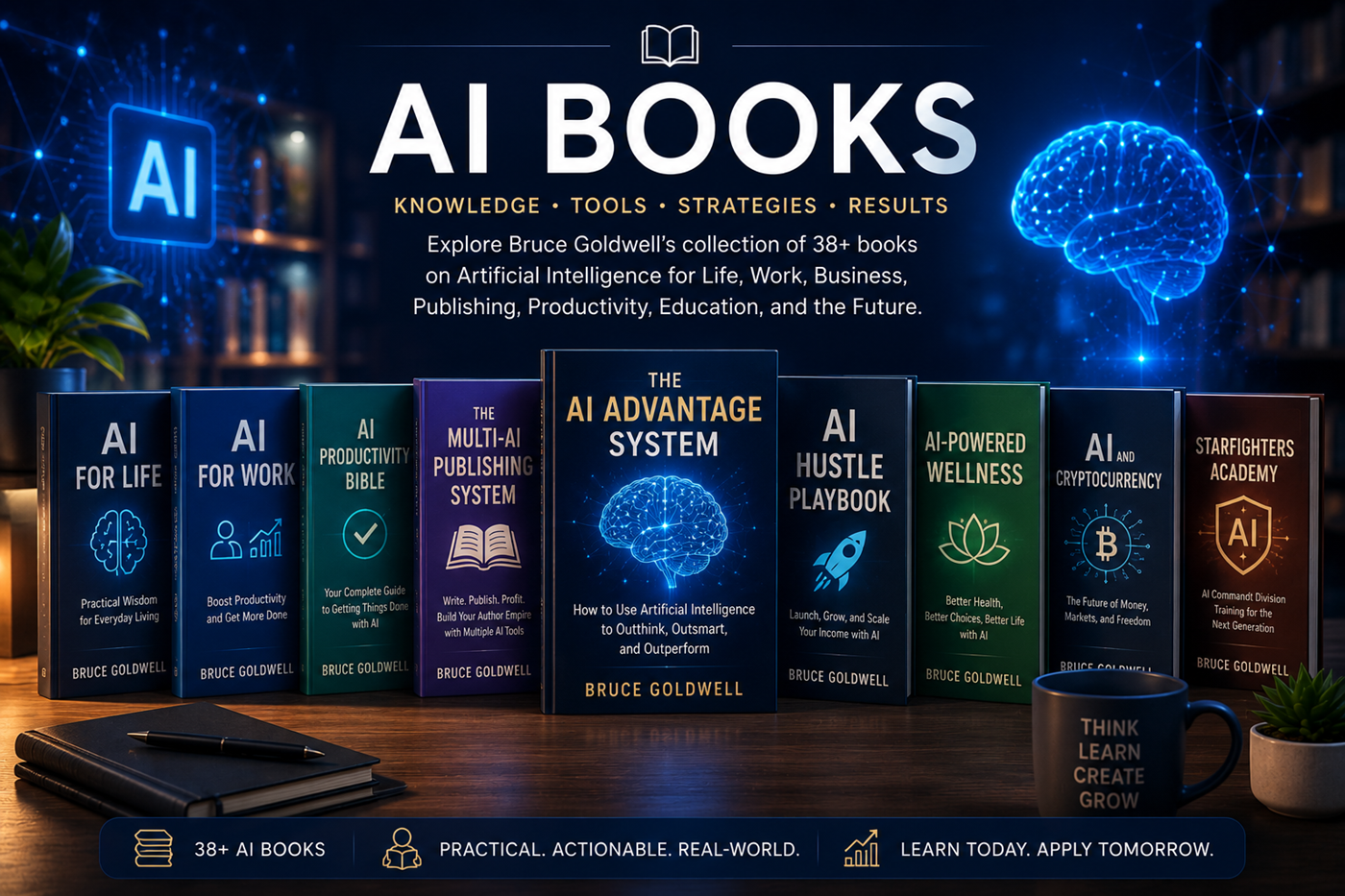
Bruce Goldwell has created approximately 38 books connected to artificial intelligence, practical AI use, publishing, productivity, business, education, wellness, finance, and the future of technology.
The books support the same practical mission as this knowledge center: helping readers understand how AI can be used in real situations rather than treating artificial intelligence as an abstract technical subject.
What is artificial intelligence, what can it really do, and how is it already influencing work, creativity, education, business, communication, and everyday life?