Planning
Create daily plans, project steps, travel outlines, event checklists, study schedules, and weekly priorities.
Use artificial intelligence to plan, learn, organize, write, create, compare options, solve everyday problems, and make better-informed decisions without giving up human judgment.
Artificial intelligence is not only for programmers, large businesses, scientists, or technology experts.
Conversational AI assistants can help ordinary people organize ideas, prepare plans, explain unfamiliar subjects, draft messages, compare choices, develop creative projects, and complete everyday tasks more efficiently.
The goal is not to ask AI to control your life. The goal is to use it as a flexible assistant that helps you think through options, overcome blank-page moments, organize information, and move from confusion to action.
Begin with low-risk tasks that save time, improve organization, or help you learn.
Create daily plans, project steps, travel outlines, event checklists, study schedules, and weekly priorities.
Ask for simple explanations, examples, quizzes, summaries, study guides, and beginner-friendly learning paths.
Draft messages, letters, announcements, invitations, descriptions, notes, and personal project content.
Turn scattered ideas into categorized lists, priorities, schedules, checklists, and action plans.
Build packing lists, itinerary ideas, activity plans, questions to research, and comparison checklists.
Plan room organization, maintenance schedules, shopping lists, meal ideas, and step-by-step home projects.
Brainstorm stories, songs, hobbies, decorations, gifts, family activities, recipes, and personal projects.
Compare options, list advantages and disadvantages, identify missing questions, and organize decision factors.
The best way to become comfortable with AI is to apply it to one real task.
Choose something small and useful. Ask the AI to organize a list, improve a message, explain a difficult subject, create a plan, or help you brainstorm alternatives.
Review the answer, ask follow-up questions, and notice which details improved the result. This builds skill faster than trying to memorize hundreds of technical terms.
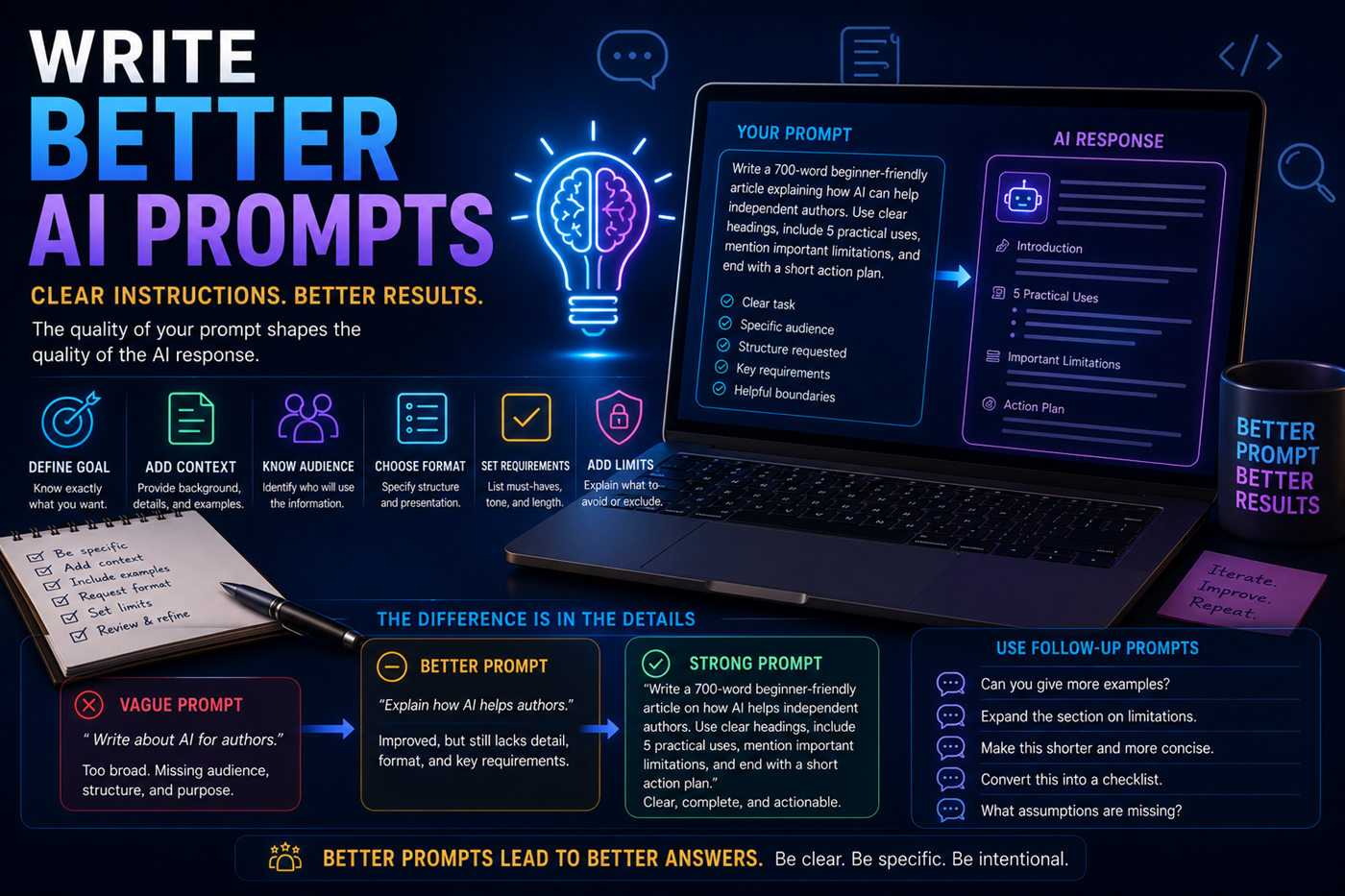
A good everyday AI process combines clear instructions with human review.
Decide what problem, task, question, or project you want help with.
Explain the situation, audience, limits, and important background.
Check whether the response is useful, clear, and relevant.
Confirm important facts, prices, laws, health claims, and current information.
Use your own judgment before sharing, buying, publishing, or acting.
Adapt these examples to your own needs.
AI can help reveal options, tradeoffs, missing questions, and areas that require more research.
Avoid sharing passwords, account numbers, Social Security numbers, private health records, confidential documents, or information that could identify another person.
Check current prices, schedules, rules, laws, medical claims, product information, and other facts that may change.
AI can invent quotations, dates, sources, statistics, names, or details while sounding confident.
Continue using your own memory, judgment, creativity, problem-solving, and communication skills.
Read generated messages, posts, documents, and plans before sending or publishing them.
Privacy rules, memory settings, data use, pricing, and capabilities differ among AI services.
Use AI for explanations, technology help, writing assistance, travel preparation, learning, organization, and questions to discuss with professionals.
Explore AI for seniorsUse AI to explain concepts, generate practice questions, build study plans, review writing, and identify knowledge gaps.
Explore AI for studentsPlan activities, organize schedules, create learning games, prepare trips, generate meal ideas, and support family projects.
Explore AI for familiesBrainstorm stories, songs, images, videos, presentations, social posts, and personal creative projects.
Explore AI for creatorsResearch, outline, edit, describe, market, organize, and expand books into larger content ecosystems.
Explore AI for authorsImprove emails, documents, meetings, planning, research, organization, communication, and professional productivity.
Explore AI for workBruce Goldwell's AI for Life explores how artificial intelligence can support everyday thinking, planning, learning, productivity, and better-informed choices.
It is part of the broader AI Advantage System, which also includes practical guidance for work and other real-world applications.
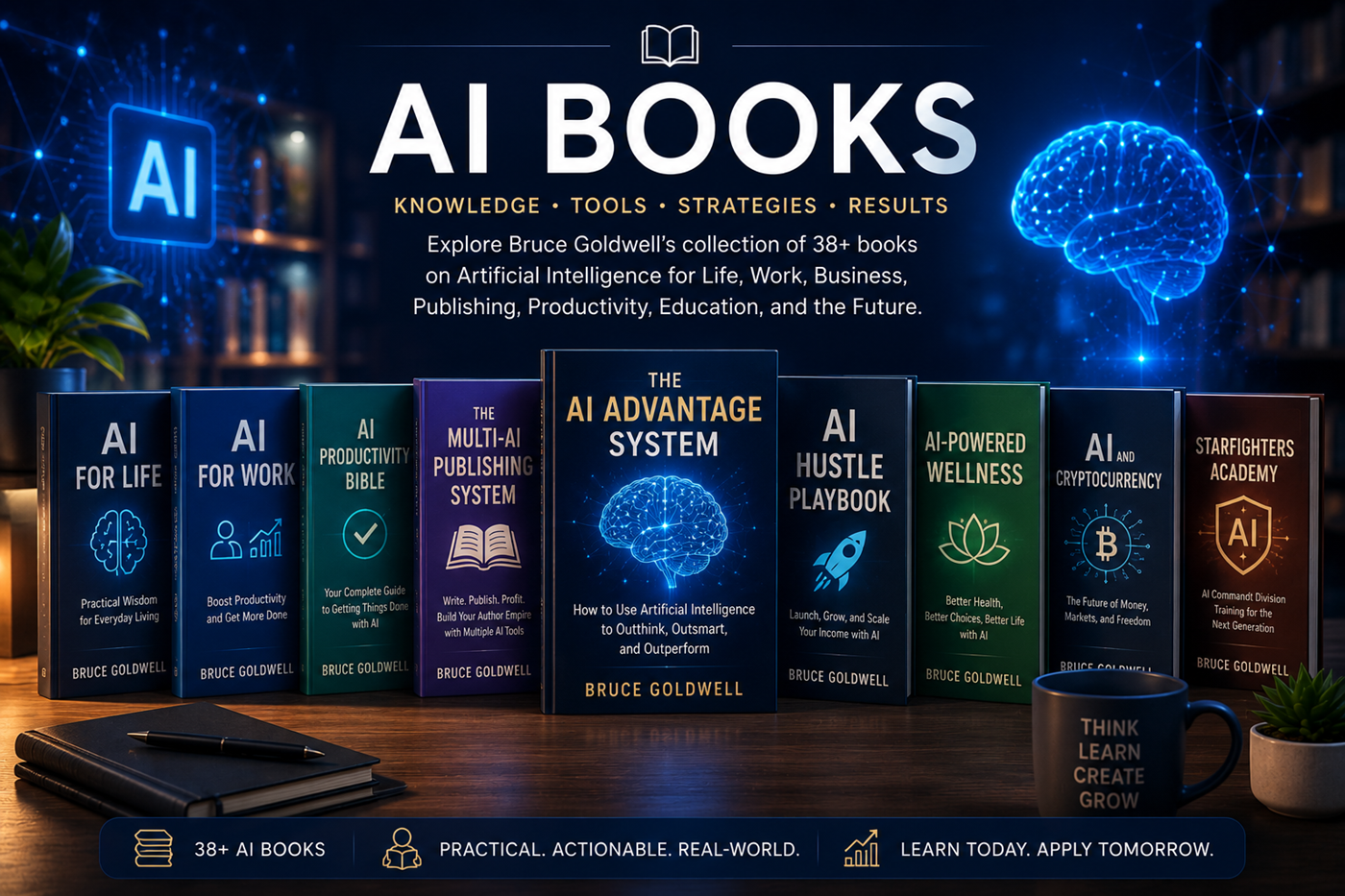
Bruce Goldwell's growing AI library includes more than 38 AI-related books covering productivity, publishing, business, wellness, creativity, education, finance, and future technology.
Begin with one simple task such as organizing a list, improving a message, explaining a topic, or building a basic plan. Review the response and ask follow-up questions.
Yes. AI can turn notes into categories, tasks into schedules, ideas into priorities, and large projects into smaller action steps.
AI can organize factors, compare choices, and identify missing questions. It should not replace human judgment or qualified professional advice for important decisions.
No. AI can produce incomplete, outdated, biased, or invented information. Verify important claims before relying on them.
Yes. AI can explain unfamiliar technology, assist with writing, organize information, prepare questions, support learning, and help plan everyday tasks. Sensitive and high-impact information still requires careful verification.
Learn how artificial intelligence describes the broader field while machine learning provides one of the most important methods used to build intelligent systems.