1
Training Examples
The model studies large collections of text, images, audio, video, code, or other content.
Generative artificial intelligence creates new content—including text, images, music, video, computer code, voices, designs, plans, and other digital material—based on patterns learned during training.
Instead of only recognizing, sorting, or predicting information, generative AI can produce something new in response to a prompt.
A person might ask a generative AI system to draft an email, create a book outline, generate an image, compose a song, write computer code, summarize a document, design a lesson plan, or produce ideas for a business.
The system does not normally retrieve one fixed answer from a database. It generates an output by using patterns learned from training data, combined with the instructions, context, examples, and limits provided by the user.
Different systems use different technical methods, but the basic process often follows these five stages.
The model studies large collections of text, images, audio, video, code, or other content.
It learns relationships between words, shapes, colors, sounds, styles, structures, and concepts.
A user describes the task, goal, subject, tone, audience, style, format, or desired result.
The model predicts and assembles an output that fits the prompt and available context.
The user reviews, verifies, edits, improves, and decides whether the result should be used.
Generative AI now supports many kinds of creative, professional, educational, and technical work.
Articles, stories, emails, reports, outlines, summaries, product descriptions, lesson plans, scripts, and conversations.
Illustrations, concept art, book-cover ideas, promotional graphics, educational visuals, characters, scenes, and designs.
Instrumental tracks, vocal concepts, melodies, arrangements, soundscapes, background music, and song demonstrations.
Short clips, animated scenes, presentations, advertising concepts, visual storytelling, and educational demonstrations.
Websites, applications, scripts, data tools, automation, software prototypes, debugging suggestions, and technical explanations.
Narration, synthetic speech, voiceovers, translation, pronunciation guides, podcasts, and accessibility resources.
Layout ideas, branding concepts, presentations, logos, product mockups, interfaces, diagrams, and visual themes.
Business plans, learning paths, publishing workflows, marketing strategies, project outlines, schedules, and checklists.
Clear instructions help the AI understand the purpose, audience, tone, style, length, structure, and limitations of the desired result.
This prompt explains the task, audience, tone, length, and content requirements.
The AI may generate a structured article containing:
The author would then review the article, verify claims, revise the wording, add personal experience, and decide what should be published.
Some AI systems predict or classify information, while generative systems produce new material.
Predictive AI analyzes information to estimate what is likely to happen or which category an item belongs to.
Generative AI produces a new output based on patterns learned during training and instructions from the user.
Generative AI can assist many kinds of people, but the strongest results still require human direction, review, and judgment.
Brainstorming, research support, outlines, editing, descriptions, keywords, marketing, world-building, and publishing systems.
Explore AI for authorsBusiness ideas, market research, customer profiles, marketing content, digital products, plans, and automation.
Explore AI for entrepreneursImages, stories, songs, videos, social posts, scripts, presentations, websites, and multimedia campaigns.
Explore AI for creatorsLesson plans, quizzes, examples, explanations, discussion questions, worksheets, study guides, and customized learning material.
Explore AI for educationEmails, reports, meeting summaries, presentations, proposals, research notes, plans, and communication.
Explore AI for workPlanning, learning, travel, organization, family activities, personal projects, explanations, and idea development.
Explore everyday AILarge language models are trained to process and generate human language.
They can help draft content, explain ideas, summarize documents, translate languages, write code, analyze information, and support extended conversations.
Systems such as ChatGPT, Claude, Gemini, and Grok use large language models as a major part of their capabilities, although individual platforms may also include image tools, web search, file analysis, coding tools, voice features, and connected services.
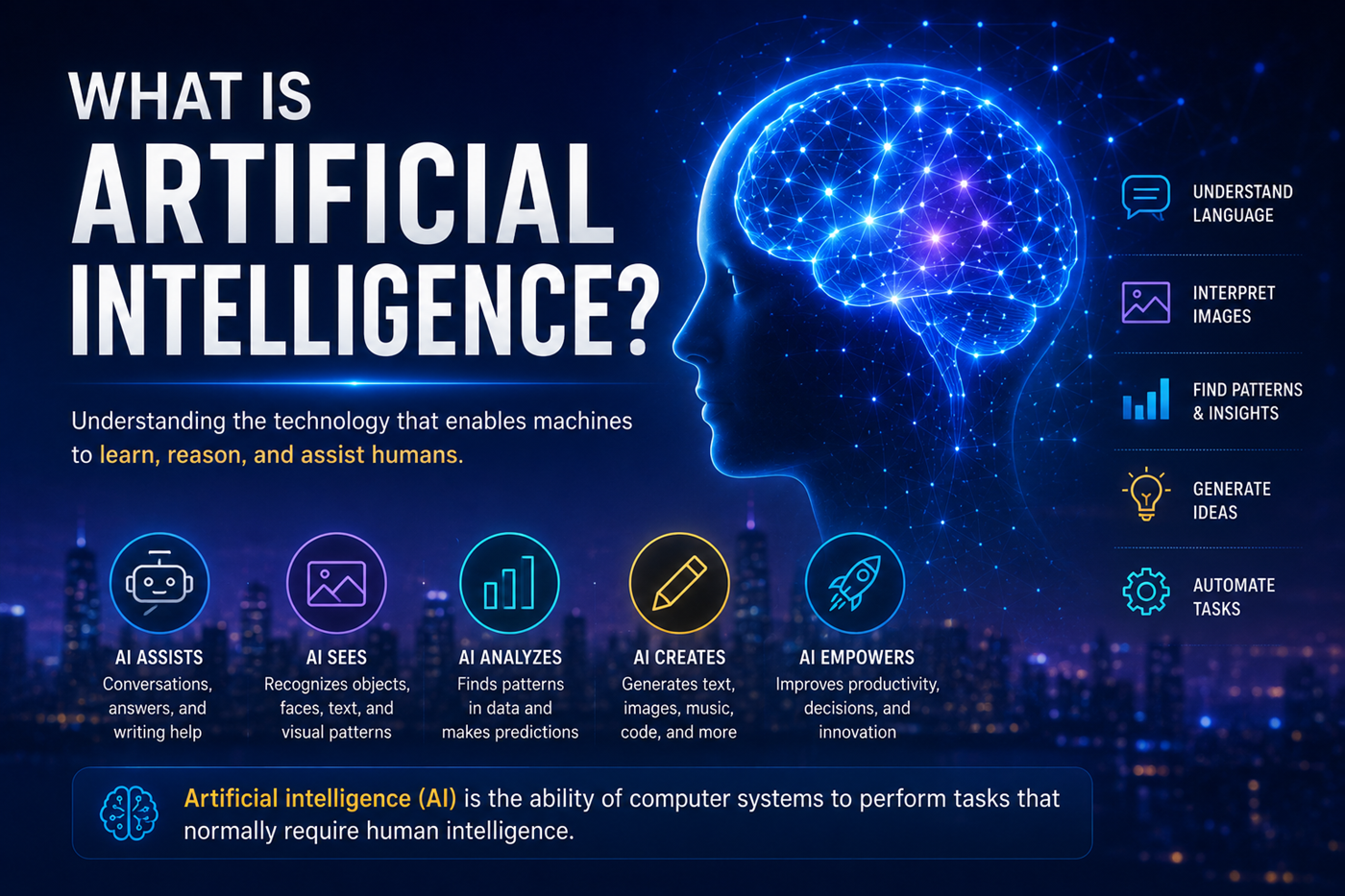
Generative AI can produce drafts, options, outlines, summaries, and creative concepts in seconds.
It can generate several alternatives, styles, angles, formats, and versions of the same idea.
People can use conversational instructions instead of needing advanced technical or artistic skills.
AI may invent details, citations, events, statistics, names, or explanations that sound believable but are incorrect.
Generated content is based on learned patterns and may feel repetitive, generic, overly familiar, or insufficiently original.
Outputs may reflect bias, overlook personal circumstances, or fail to understand cultural, emotional, legal, or professional context.
Generative AI works best when it strengthens human creativity instead of replacing human responsibility.
Decide what you want to create and why it matters.
Explain the audience, purpose, tone, format, and boundaries.
Ask for alternatives, examples, outlines, or creative directions.
Check facts, relevance, quality, originality, and possible bias.
Add experience, emotion, judgment, purpose, and personal voice.
You remain responsible for the final content and how it is used.
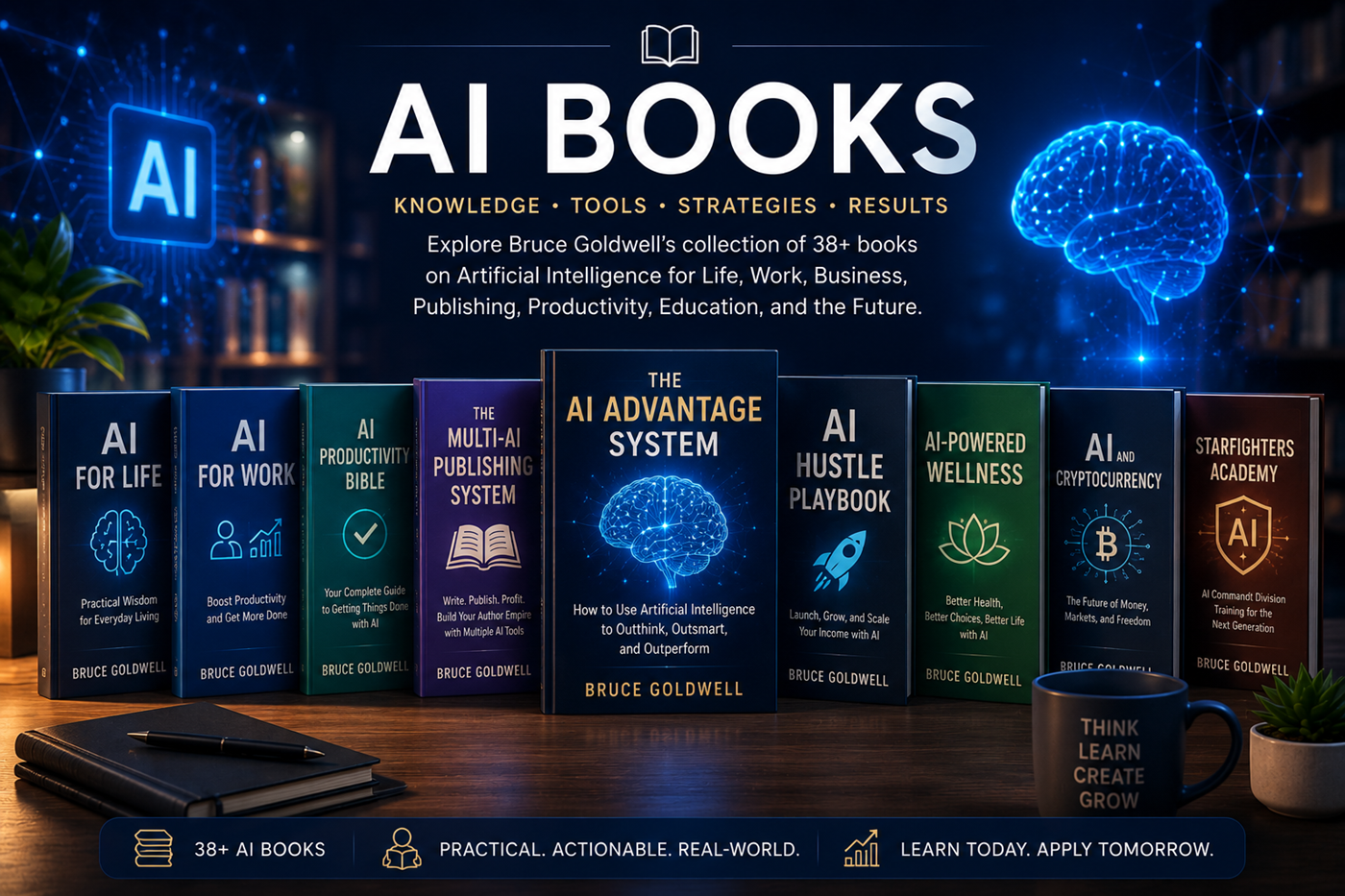
Bruce Goldwell's AI library explores practical uses of generative artificial intelligence across writing, publishing, work, business, creativity, education, productivity, wellness, finance, and technology.
Titles such as The Multi-AI Publishing System, AI Productivity Bible 2026, AI for Work, AI for Life, and The AI Hustle Playbook show how generative AI can become part of larger human-directed systems.
Generative AI is artificial intelligence that creates new content such as text, images, music, video, computer code, designs, voices, or plans in response to a prompt.
Yes. ChatGPT is a generative AI system built around large language models. It generates responses based on prompts, training patterns, conversation context, and available tools.
Generative models normally create outputs from learned patterns rather than retrieving one exact stored answer. However, outputs may resemble familiar material, and users should still check originality, copyright, trademarks, and platform rules.
Generative AI can assist with ideas, drafts, variations, and production, but meaningful creative work still depends on human direction, taste, emotion, experience, ethics, and responsibility.
Generative AI predicts likely outputs from learned patterns. It may produce a plausible-sounding response even when reliable information is missing. This is often called an AI hallucination.
Explore the technology behind many conversational AI tools and learn how prompts, tokens, context, training, and probability shape language-model responses.