Narrow AI
Narrow AI is designed to perform one task or a limited set of related tasks. Most AI systems in use today fall into this category.
- Speech recognition
- Image classification
- Recommendation systems
- Fraud detection
- Language generation
Artificial intelligence includes many different technologies. Some recognize images, some generate content, some make predictions, some automate tasks, and some help people complete complex workflows.
AI is not one single machine, program, or type of software. It is a broad field containing many systems designed for different kinds of intelligent tasks.
A recommendation engine that suggests a movie, a language model that writes an article, a computer vision system that recognizes an object, and a robot that navigates a warehouse may all use artificial intelligence, but they perform very different functions.
Some AI categories describe what a system does. Others describe how it learns. Still others describe the level of independence or complexity the system can achieve.
These categories explain many of the AI systems people encounter in everyday life and professional work.
Narrow AI is designed to perform one task or a limited set of related tasks. Most AI systems in use today fall into this category.
Machine learning enables systems to identify patterns from data and improve performance without relying entirely on fixed rules.
Generative AI creates new content based on patterns learned during training.
Large language models process and generate language for conversation, explanation, drafting, summarization, analysis, and translation.
Computer vision enables machines to analyze and interpret photographs, video, scans, documents, faces, objects, and physical environments.
Speech and audio AI processes spoken language, voices, sounds, music, and acoustic patterns.
Recommendation systems analyze behavior, preferences, and patterns to suggest products, videos, books, music, services, or information.
Robotics combines AI with sensors, machines, controls, and physical movement.
AI agents can plan actions, use tools, complete multiple steps, track progress, and operate toward a defined goal.
Artificial intelligence is also commonly discussed according to how broad or advanced its capabilities are.
Artificial Narrow Intelligence performs specific tasks within defined limits.
Artificial General Intelligence usually refers to a hypothetical system able to learn and perform across a broad range of intellectual tasks at or near human capability.
Artificial Superintelligence refers to a hypothetical future system that would exceed human capabilities across many intellectual areas.
AI systems can also be understood by how much they can do without direct human guidance.
Follows predefined rules and performs simple programmed actions.
Classifies, predicts, or recommends based on patterns in data.
Produces text, images, audio, video, designs, or code.
Uses search, files, code, calculators, databases, or connected tools.
Plans and completes several steps toward a goal with defined limits.
Machine learning is one of the most important methods used to build modern artificial intelligence.
Instead of programming every decision manually, developers provide examples and allow a model to identify patterns. The system can then use those patterns to classify new information, make predictions, recommend options, or generate outputs.
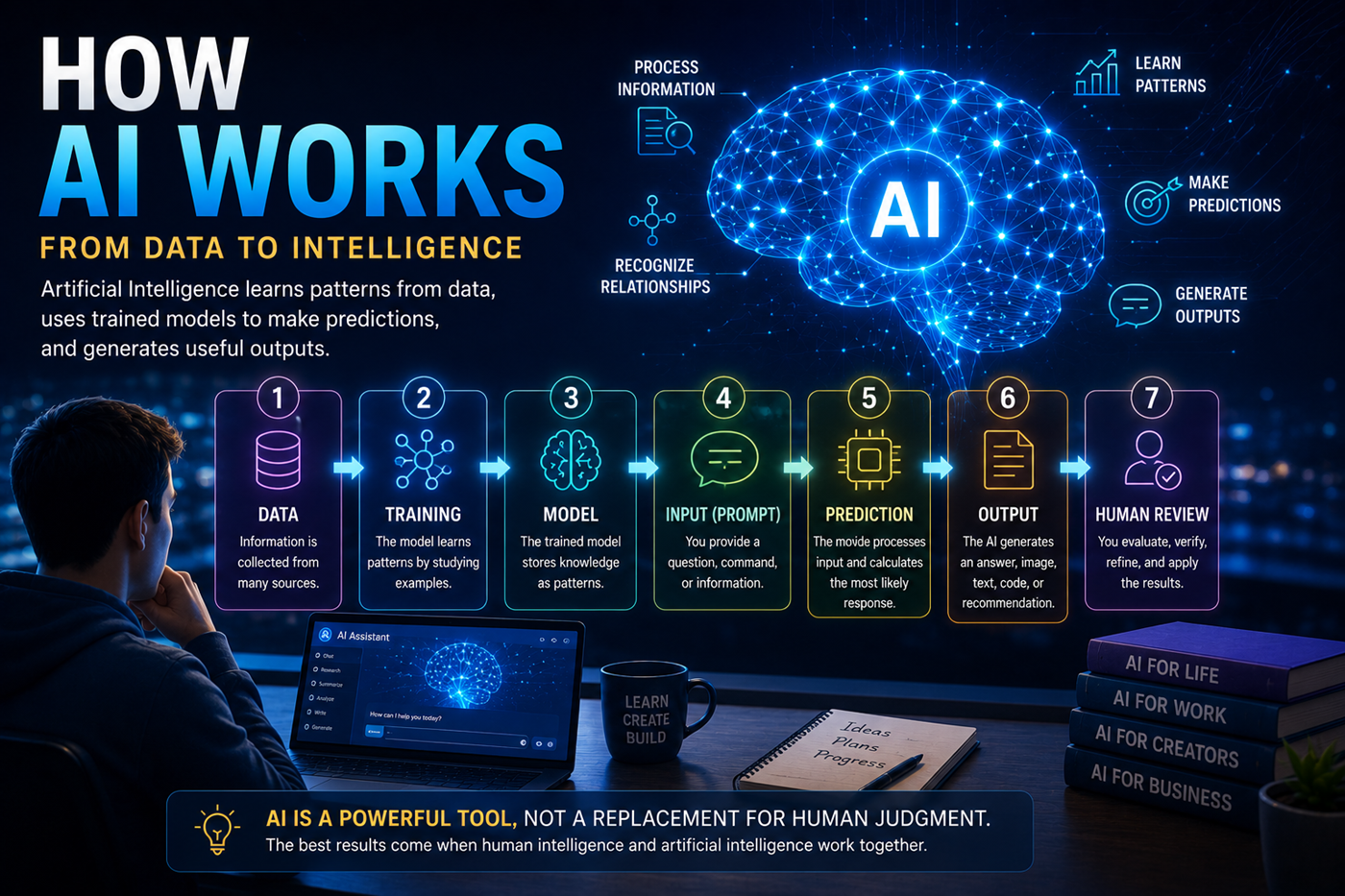
The most useful AI system depends on what you are trying to accomplish.
Large language models and generative AI are commonly used for drafting, explanation, brainstorming, summarization, and dialogue.
Computer vision analyzes visual information, while generative image and video models create new visual content.
Machine learning models can identify patterns, estimate outcomes, detect anomalies, and assist with predictions.
Speech and audio AI can transcribe, generate voices, translate speech, analyze sound, and create music.
AI agents and connected workflows can complete several digital steps using tools and predefined goals.
Robotics combines AI, sensors, controls, and machines to act in physical environments.
Recommendation systems help tailor shopping, entertainment, education, and information feeds.
Language models, search systems, machine learning, and data tools can work together to explore and organize information.
| Type of AI | Main Purpose | Common Output | Example Uses |
|---|---|---|---|
| Narrow AI | Perform a defined task | Decision, classification, or action | Spam filtering, fraud detection, voice assistants |
| Machine Learning | Learn patterns from data | Prediction or classification | Forecasting, recommendations, anomaly detection |
| Generative AI | Create new content | Text, images, audio, video, or code | Writing, design, music, coding |
| Language Models | Process and generate language | Written or spoken responses | Chatbots, summaries, translation, drafting |
| Computer Vision | Interpret visual information | Recognition or analysis | Medical scans, face detection, quality inspection |
| Speech and Audio AI | Process sound and spoken language | Text, voice, audio, or music | Transcription, voice generation, music creation |
| Recommendation Systems | Personalize options | Ranked suggestions | Shopping, video, music, learning |
| Robotics | Act in the physical world | Movement or physical action | Warehouses, manufacturing, drones |
| AI Agents | Complete multi-step goals | Actions, plans, files, or completed tasks | Research, automation, scheduling, tool use |
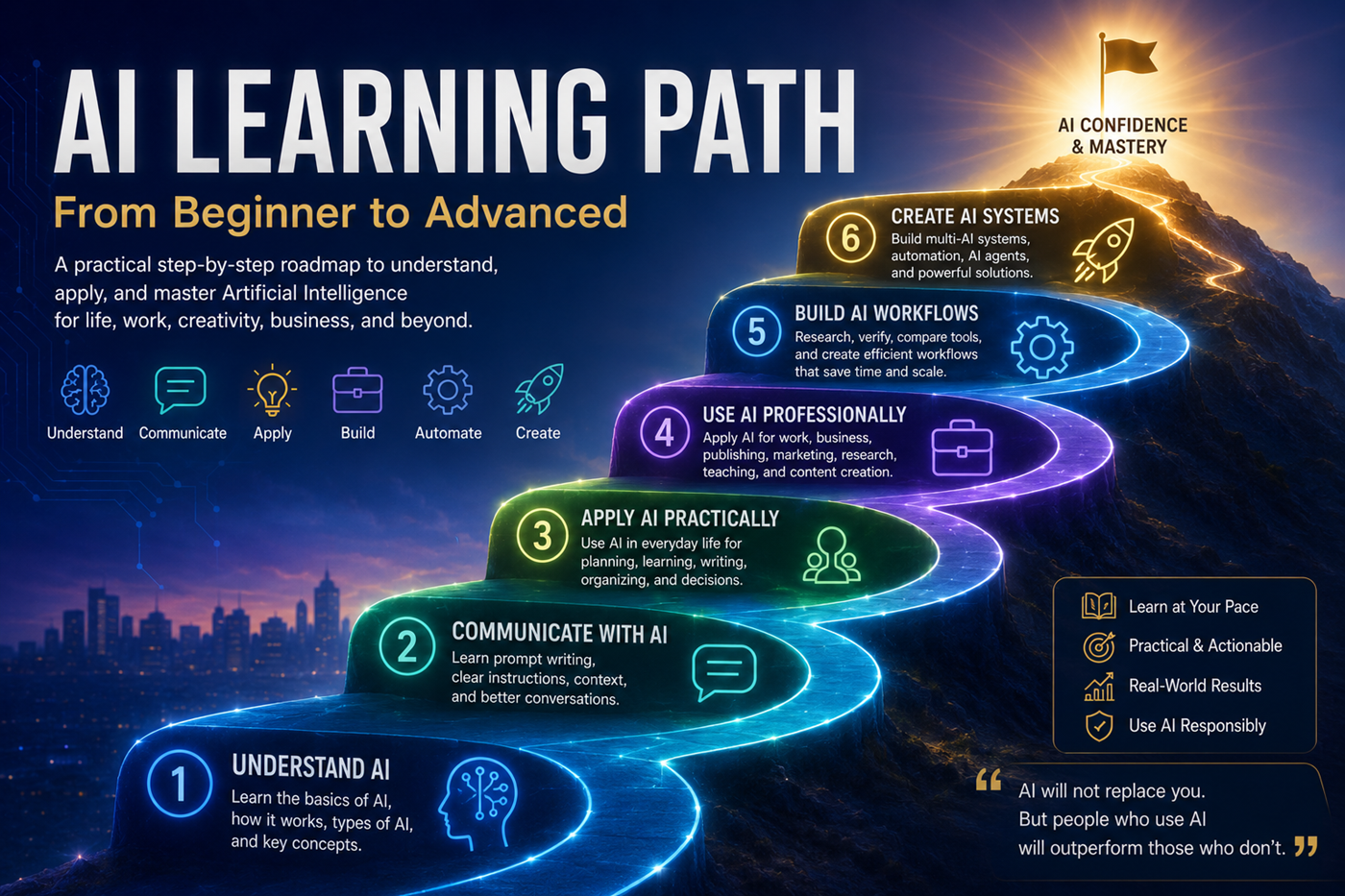
Generative AI is one of the most visible and widely used forms of artificial intelligence.
It can create text, images, music, video, software code, presentations, websites, and other digital content. Learning how generative AI works will help you understand tools such as ChatGPT, Claude, Gemini, Grok, image generators, music platforms, and AI coding assistants.
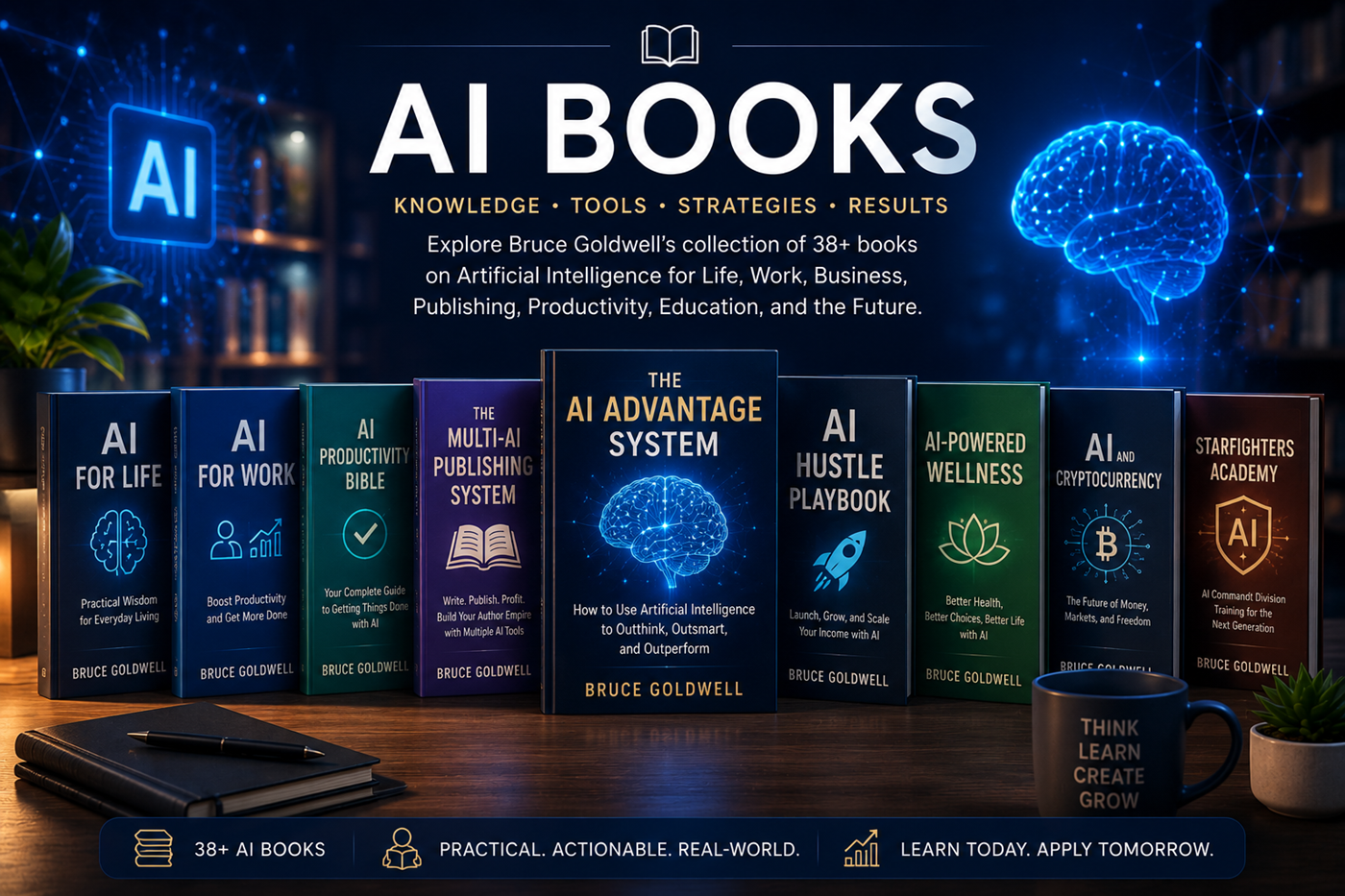
Bruce Goldwell's library of more than 38 AI-related books explores artificial intelligence across life, work, publishing, entrepreneurship, productivity, education, wellness, creativity, finance, and future technology.
The collection helps readers move beyond AI definitions and discover how different tools and systems can be applied to practical goals.
Major types include narrow AI, machine learning, generative AI, language models, computer vision, speech and audio AI, recommendation systems, robotics, and AI agents.
ChatGPT is a generative AI system built around large language models. It is designed to process prompts and generate language-based responses, although it may also use connected tools and multimodal capabilities.
Machine learning is part of the broader field of artificial intelligence. AI describes the larger goal of building intelligent systems, while machine learning is one method used to achieve that goal.
Yes. Generative AI systems may perform many tasks, but they still operate within designed systems, training, instructions, and limitations. They are generally considered forms of narrow AI rather than human-level general intelligence.
AI agents, workflow automation systems, and tool-connected language models are often used for multi-step digital automation. The best choice depends on the task, level of risk, required tools, and amount of human oversight.
Learn how artificial intelligence can generate text, images, music, video, code, designs, and other digital material.