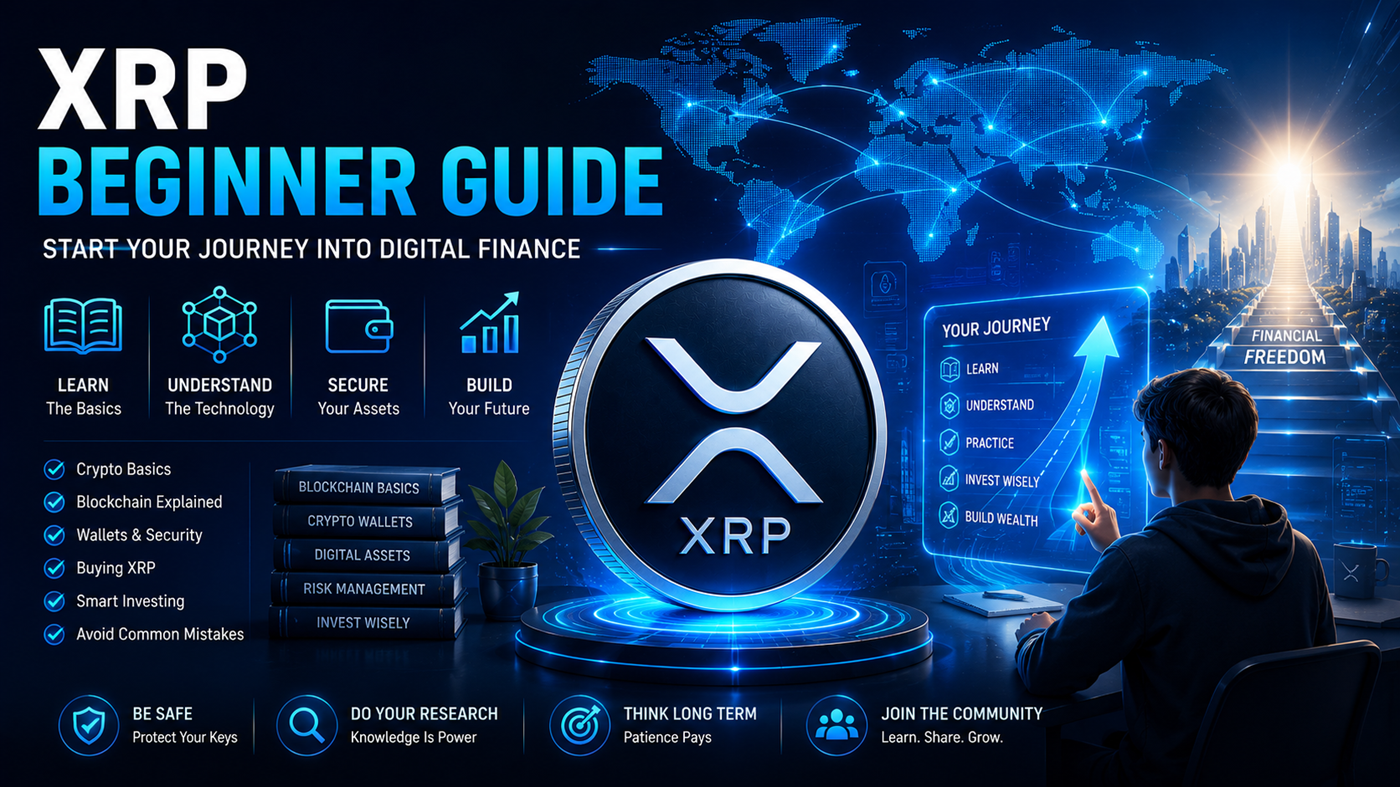
This XRP Beginner Guide is designed to help new readers learn XRP in the right order. Instead of jumping straight into price predictions, this guide starts with the foundation: what XRP is, how it works, what the XRP Ledger does, how wallets work, and why risk management matters.
A strong XRP education begins with clarity. The more you understand the basics, the easier it becomes to separate real information from hype, rumors, and unrealistic expectations.
Many beginners make the mistake of starting with price predictions. That usually creates confusion. A better path is to first understand the asset, then the network, then the risks, and only then the valuation possibilities.
XRP is a digital asset designed for fast, low-cost value transfer. It operates on the XRP Ledger, a public blockchain built for efficient settlement. Before studying price or adoption, beginners should understand what XRP is and what it is not.
Start here: XRP is not Ripple stock. XRP is not Bitcoin. XRP is the native digital asset of the XRP Ledger.
The XRP Ledger, also called XRPL, is the blockchain network where XRP transactions happen. It records balances, validates transactions, updates the ledger, and allows XRP to move.
If XRP is the asset, XRPL is the system that gives XRP its working environment. That is why every beginner should learn the ledger before trying to understand long-term utility.
XRP is easier to understand when you compare it with other major digital assets. Bitcoin teaches scarcity. Ethereum teaches programmability. XRP teaches value movement, settlement, and liquidity.
Compare XRP with Bitcoin by purpose, supply, settlement, and value narrative.
CompareCompare XRP with Ethereum by utility, ecosystem, fees, smart contracts, and speed.
CompareLearn the broader crypto concepts that make XRP easier to understand.
Learn CryptoReview key terms like wallet, ledger, liquidity, market cap, custody, and settlement.
View GlossaryBuying XRP is only one part of the learning process. Knowing how wallets work is just as important. A wallet does not physically hold coins. It holds the keys that control access to XRP balances recorded on the ledger.
Beginners should understand exchanges, self-custody, private keys, seed phrases, hardware wallets, and common security mistakes before moving large amounts of crypto.
Buying XRP usually involves using a crypto exchange, funding an account, placing an order, and deciding whether to keep XRP on the exchange or move it to a wallet. The exact steps may vary by country, platform, and regulation.
Before buying, beginners should understand exchange risk, custody risk, market volatility, fees, taxes, and the importance of doing independent research.
Once you understand XRP basics, you can begin studying valuation. This means looking beyond simple price predictions and asking better questions about supply, market cap, liquidity, utility, regulation, adoption, and risk.
Learn practical ways to think about XRP valuation beyond hype and guesses.
Learn ValuationSeparate real-world use from investor excitement and social media narratives.
Learn MoreA balanced book focused on XRP valuation, risk, liquidity, and realistic expectations.
View BookPrice targets are exciting, but they are not education. Learn the fundamentals first.
Ripple is a company. XRP is a digital asset. The XRP Ledger is the network.
Crypto responsibility includes protecting private keys, seed phrases, and exchange accounts.
News, rumors, partnerships, lawsuits, ETFs, and social posts should all be researched carefully.
Learn XRP in order: crypto basics, XRP basics, Ripple vs XRP, XRPL, wallets, buying, storage, mistakes, and valuation. Knowledge gives you more confidence than hype ever will.
A beginner-friendly guide to XRP, Ripple, XRPL, and digital finance.
View BookA broader introduction to blockchain, crypto, wallets, exchanges, and digital assets.
View BookA practical look at XRP valuation, risk, hype, liquidity, and realistic expectations.
View Book