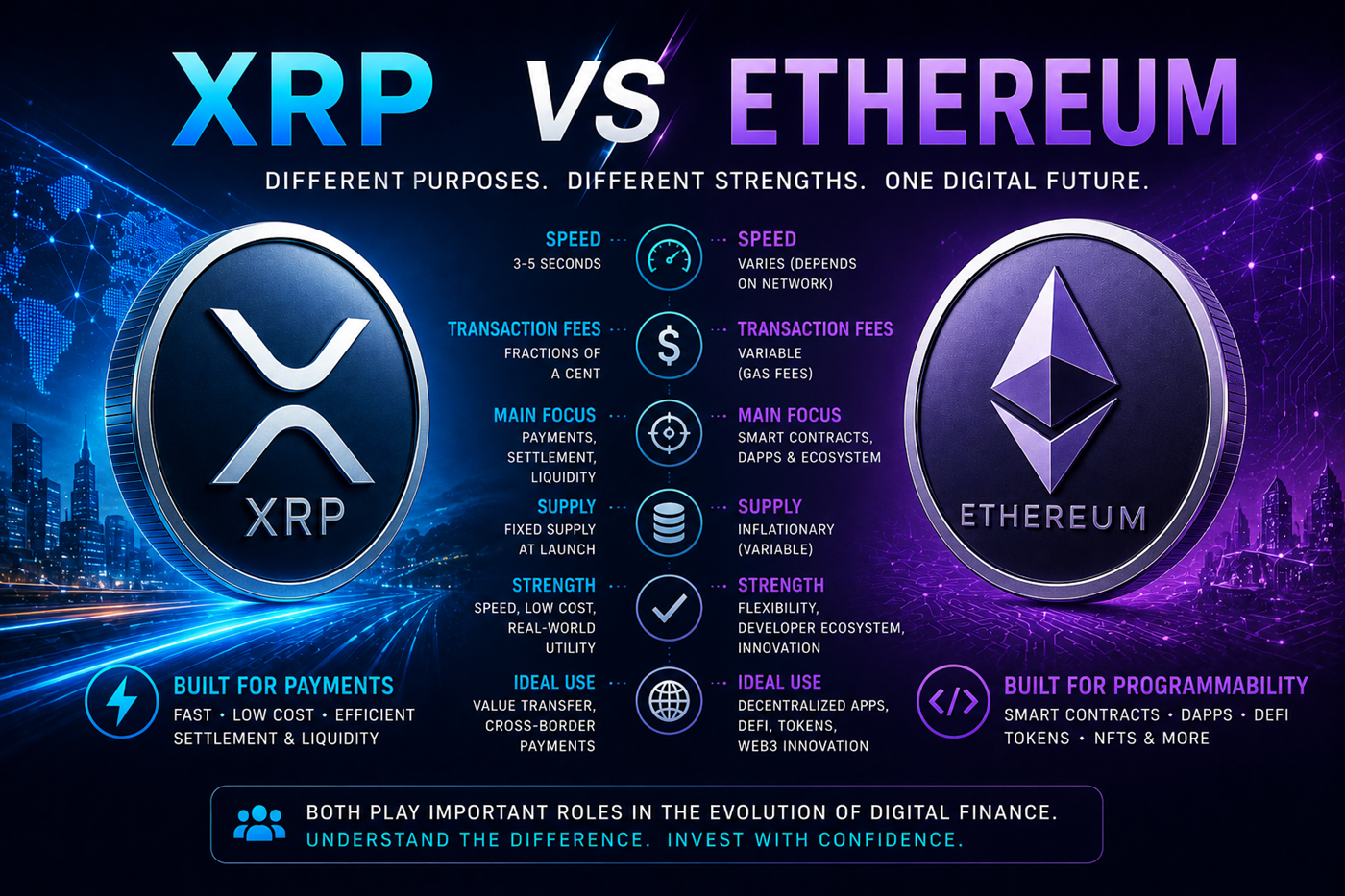
XRP and Ethereum are both major digital asset ecosystems, but they were designed for different purposes. Ethereum is best known as a programmable blockchain for smart contracts, decentralized applications, and token creation. XRP is best known for fast, low-cost value transfer and settlement through the XRP Ledger.
The important question is not which one is “better” in every way. The better question is what each network was designed to do and where each one may fit in the future of digital finance.
| Category | Ethereum | XRP |
|---|---|---|
| Main Purpose | Programmable blockchain for smart contracts and decentralized applications. | Fast, low-cost value transfer, settlement, and liquidity movement. |
| Native Asset | ETH | XRP |
| Network | Ethereum blockchain | XRP Ledger |
| Main Strength | Developer ecosystem, smart contracts, DeFi, NFTs, token creation. | Speed, low fees, payments, settlement, liquidity, and efficiency. |
| Common Narrative | World computer and programmable finance. | Bridge asset and payment-focused settlement network. |
Ethereum was designed to support smart contracts. That means developers can build decentralized applications, tokens, DeFi protocols, NFTs, and many other blockchain-based systems.
XRP and the XRP Ledger focus on moving value quickly and affordably. The XRP value story is often connected to payments, liquidity, settlement, and financial infrastructure.
Ethereum is often compared to a platform. XRP is often compared to a settlement asset. That difference explains why the two ecosystems attract different types of builders, users, and investors.
Ethereum supports complex applications, but that flexibility can also create higher demand for block space.
XRP is designed for fast settlement and efficient movement of value through the XRP Ledger.
Ethereum transactions require gas fees, which may vary based on network demand and activity.
XRP network fees are typically very small, supporting frequent transfers and payment use cases.
Ethereum is known for smart contracts. Smart contracts allow code to run on the blockchain and make Ethereum useful for applications like DeFi, decentralized exchanges, lending platforms, stablecoins, NFTs, and token launches.
XRP is known more for settlement efficiency. Its strength is not trying to be everything for every type of application. Its strength is moving value quickly, cheaply, and reliably.
Beginner takeaway: Ethereum is built for programmable applications. XRP is built for efficient value movement. Both may matter, but they solve different problems.
XRP is designed for fast, low-cost value transfer, which makes it attractive in payment and settlement discussions.
XRP is often studied as a bridge asset that may help connect different currencies, corridors, or value systems.
For basic value transfer, XRP can be easier to understand than complex smart contract platforms.
Very small fees can make XRP practical for repeated movement of value.
Ethereum has one of the largest blockchain developer communities and application ecosystems.
Ethereum is widely used for programmable finance, decentralized applications, and token systems.
Much of the decentralized finance and NFT movement grew around Ethereum and Ethereum-compatible systems.
Ethereum benefits from strong ecosystem recognition, developer tooling, and institutional awareness.
Study XRP first if your main interest is payments, settlement, liquidity, fast transfers, and cross-border value movement. Study Ethereum first if your main interest is smart contracts, decentralized apps, DeFi, NFTs, and blockchain programming.
For a strong crypto education, learning both is useful. Bitcoin teaches scarcity. Ethereum teaches programmability. XRP teaches settlement and liquidity. Together, they help explain why digital assets are not all trying to do the same job.
Ethereum is a programmable blockchain ecosystem built around smart contracts and applications. XRP is a settlement-focused digital asset built around speed, low cost, and value movement. They are both important, but they represent different visions of what blockchain can do.
A beginner-friendly guide to XRP, Ripple, XRPL, and digital finance.
View BookExplore how crypto connects financial education, freedom, and digital transformation.
View BookA balanced guide to XRP valuation, hype, liquidity, risk, and practical expectations.
View Book