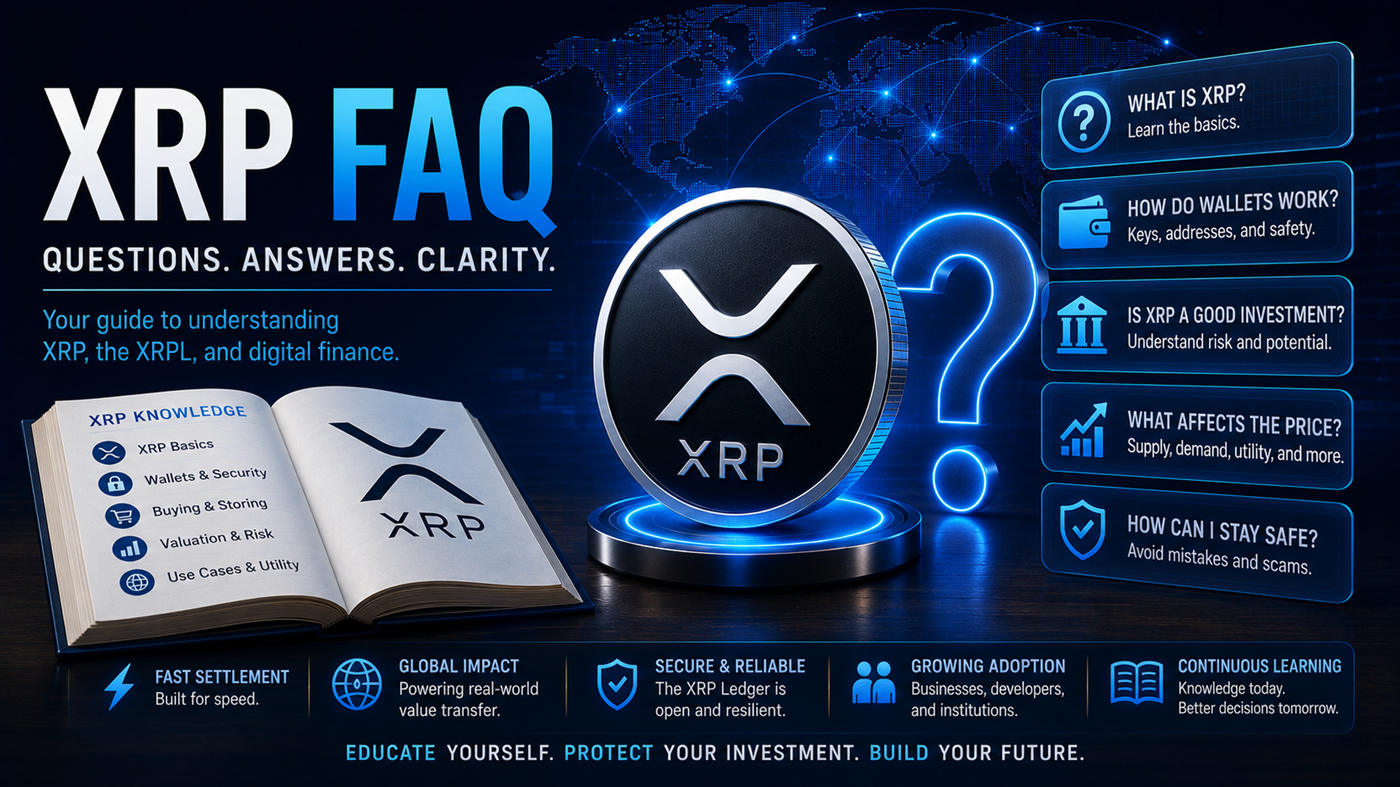
This FAQ answers common beginner questions about XRP, Ripple, the XRP Ledger, wallets, buying XRP, storage, valuation, market cap, and risk. Use it as a quick reference while exploring the XRP Knowledge Center.
XRP is the native digital asset of the XRP Ledger. It is designed for fast, low-cost value transfer and is often discussed in connection with payments, liquidity, and settlement.
The XRP Ledger, or XRPL, is the public blockchain network where XRP transactions are recorded and settled.
No. Ripple is a financial technology company. XRP is a digital asset. The XRP Ledger is the blockchain network.
No. Bitcoin is commonly viewed as digital scarcity and store-of-value technology. XRP is focused more on speed, settlement, liquidity, and value movement.
Most beginners buy XRP through a crypto exchange or platform. They create an account, verify identity, fund the account, search for XRP, and place an order.
One option is Uphold. You can open an account here: https://bit.ly/CryptoAcct
You can hold XRP on an exchange or move it to a personal wallet. A wallet controls access to XRP recorded on the ledger through keys.
A destination tag is sometimes required when sending XRP to an exchange. It helps the exchange identify which customer account should receive the XRP.
Exchange storage can be convenient, but you rely on the platform and your account security. Self-custody gives more control but requires more responsibility.
Self-custody means you control your own private keys or recovery phrase instead of relying on an exchange to hold your crypto.
Hardware wallets are often used for longer-term storage because they help keep keys offline. Beginners should study how they work before moving large amounts.
Sharing or losing a seed phrase is one of the biggest wallet mistakes. Never share your recovery phrase with anyone.
XRP can rise or fall like other crypto assets. Price depends on supply, demand, liquidity, regulation, adoption, speculation, and broader market conditions.
No. Utility matters, but it does not automatically create a specific price. Valuation also depends on demand, liquidity, token reuse, market behavior, and risk.
Market cap is price multiplied by circulating supply. It can help compare assets, but it does not tell the full valuation story.
Yes. XRP and all crypto assets involve volatility, custody risk, regulatory uncertainty, security risk, liquidity risk, and emotional market cycles.
The best XRP decisions begin with education. Understand XRP, Ripple, XRPL, wallets, storage, valuation, risk, and common mistakes before making financial decisions.