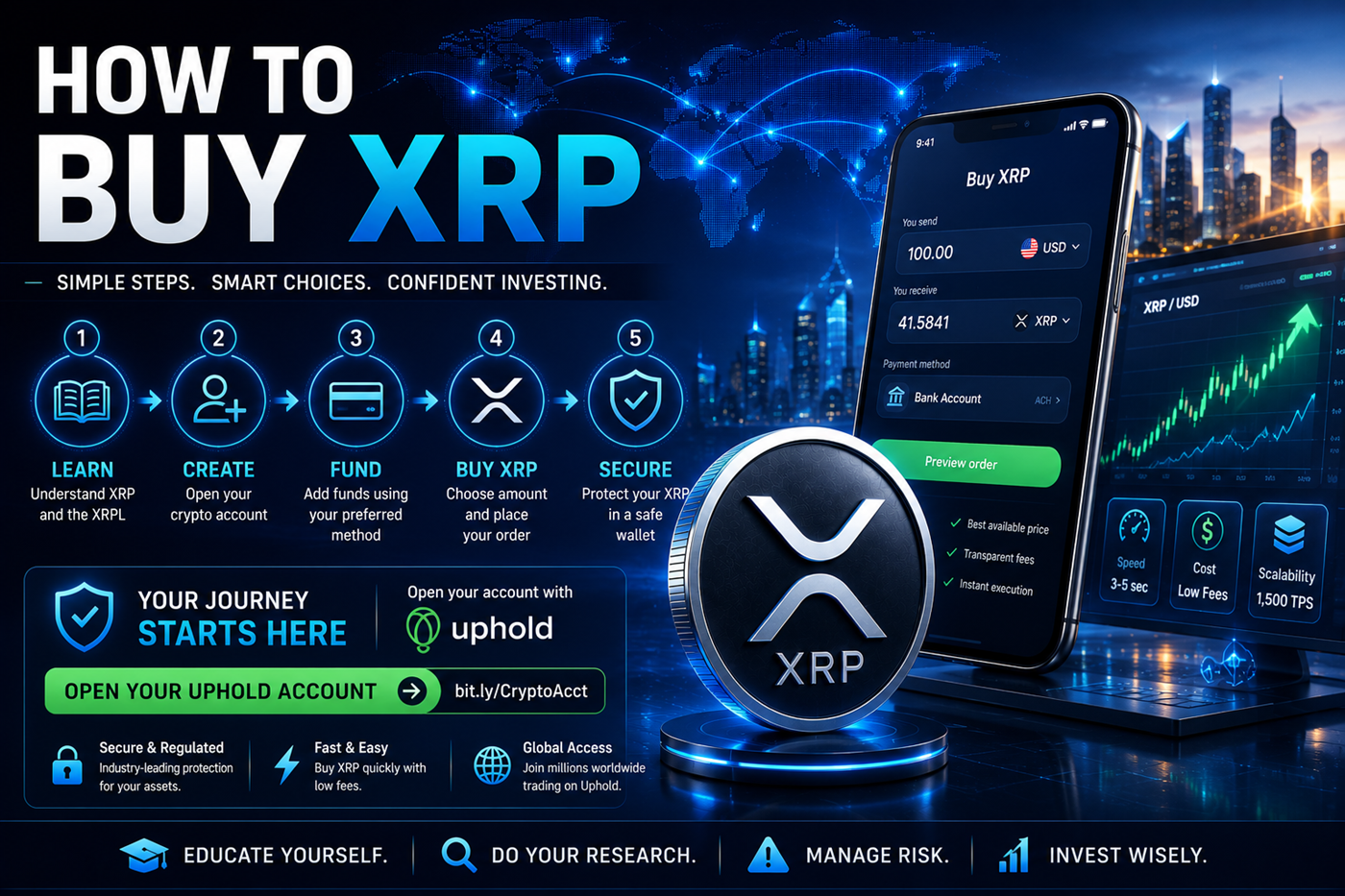
Buying XRP begins with education. Before opening an account or placing an order, make sure you understand what XRP is, how the XRP Ledger works, and the risks that come with all digital assets.
This guide explains the basic steps for buying XRP, including choosing an exchange, setting up an account, funding it, placing an order, and deciding whether to keep XRP on the exchange or move it to your own wallet.
Do not rush the process. The goal is not only to buy XRP. The goal is to understand what you are buying, how to protect it, and how to avoid common beginner mistakes.
XRP is the native digital asset of the XRP Ledger. It is often discussed in connection with fast settlement, low transaction costs, liquidity, cross-border payments, and digital finance.
Before buying XRP, take time to understand the difference between XRP, Ripple, and the XRP Ledger. That one distinction can help you read news and research much more clearly.
To buy XRP, most beginners use a crypto exchange or crypto platform. A platform allows you to create an account, connect a payment method, and buy or sell digital assets.
One beginner-friendly option to consider is Uphold. You can open an account using this referral link:
Disclosure: This may be a referral link. If you use it, Bruce Goldwell may receive a benefit at no additional cost to you.
Always compare platforms based on availability in your region, fees, supported payment methods, security features, customer support, and whether XRP is available for buying, selling, and transferring.
Sign up with your chosen exchange or platform and follow the account setup process.
Most regulated platforms require identity verification before buying crypto.
Use a strong password and enable two-factor authentication whenever possible.
Connect an approved bank account, debit card, or other supported payment method.
Once your account is approved and funded, search for XRP on the platform. Review the amount you want to buy, check the fees, confirm the order details, and only proceed if everything looks correct.
A market order buys at the current available market price. It is simple, but the final price may vary slightly during fast-moving markets.
A limit order sets the price you are willing to pay. It may not fill if the market does not reach your chosen price.
Beginners should start small until they understand the platform, fees, account security, and transfer process.
After buying XRP, you usually have two broad choices: leave it on the exchange or move it to a personal wallet. Each option has benefits and risks.
| Storage Choice | Pros | Risks |
|---|---|---|
| Exchange Account | Convenient, easy to trade, simple for beginners. | You rely on the platform to hold and protect the asset. |
| Personal Wallet | You control your own keys and custody. | You are responsible for protecting keys, seed phrases, and access. |
XRP and all crypto assets can be volatile. Prices may rise or fall quickly.
Scammers often use promises of easy gains, secret signals, fake giveaways, or fake support agents.
Use strong passwords, two-factor authentication, and secure storage for any recovery information.
Crypto transfers are usually final. Always verify wallet addresses and any required destination tags before sending.
Buying XRP does not automatically mean you understand XRP. The real advantage comes from continued learning. Study XRP utility, XRPL technology, wallets, liquidity, market cap, adoption, regulation, and valuation risk.
Avoid beginner mistakes involving hype, storage, scams, and unrealistic expectations.
Avoid MistakesIf you decide XRP fits your research and risk tolerance, you can open a crypto account and continue learning before making any major decisions. Knowledge first. Action second.
A beginner-friendly guide to XRP, Ripple, XRPL, buying basics, and digital finance.
View BookA broader beginner guide to crypto, blockchain, wallets, exchanges, and digital assets.
View BookA balanced look at XRP valuation, hype, liquidity, risk, and realistic expectations.
View Book