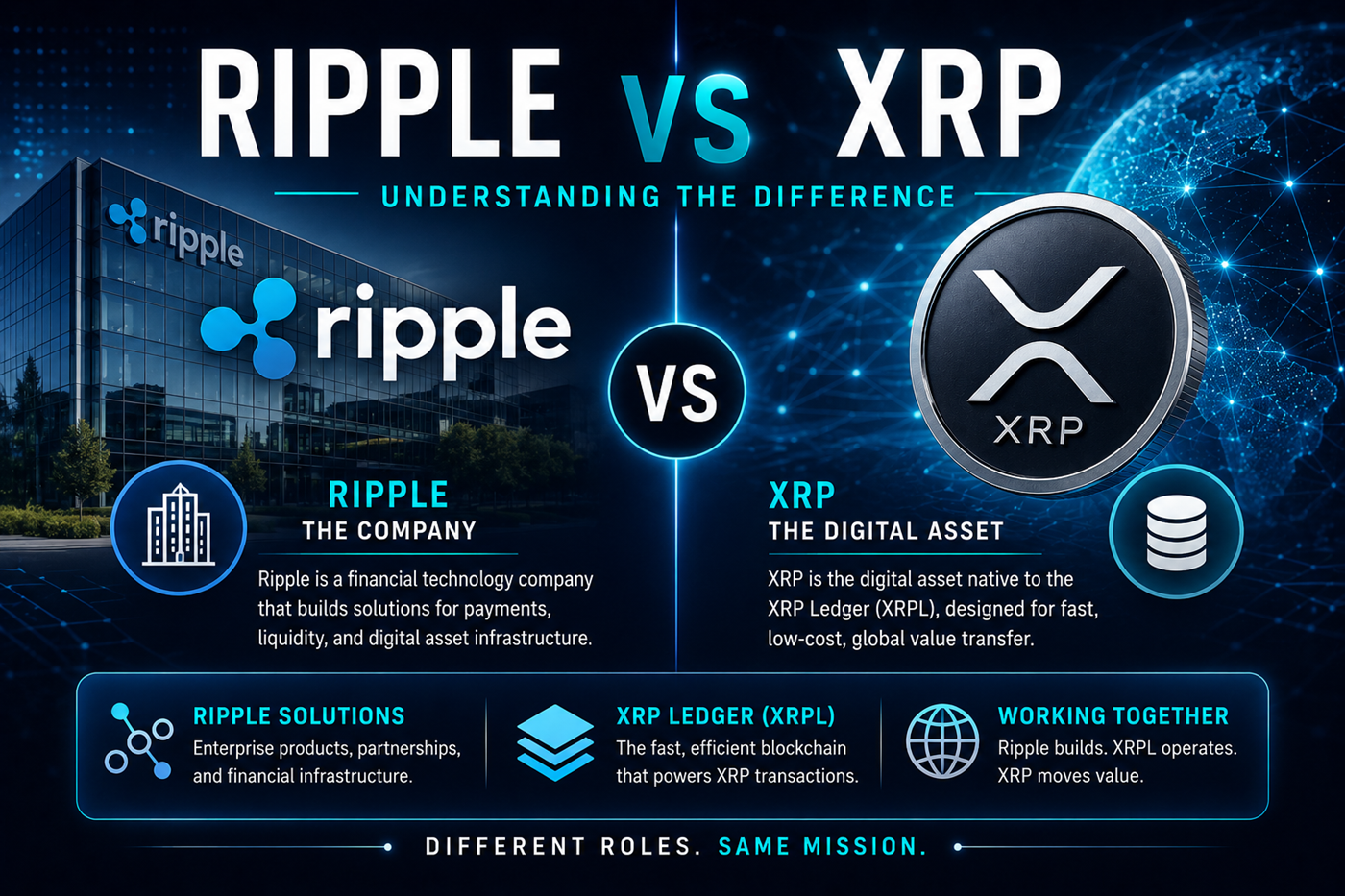
One of the most common beginner mistakes is thinking Ripple and XRP are the same thing. They are connected, but they are not identical. Understanding the difference helps you read news, research adoption, and evaluate XRP more clearly.
Ripple is a company. XRP is a digital asset. The XRP Ledger is the blockchain network where XRP transactions happen. Those three pieces work together in many conversations, but each has its own role.
Ripple is a financial technology company that builds payment and blockchain-based financial infrastructure solutions. It is a business with products, partnerships, employees, legal responsibilities, and corporate goals.
XRP is the digital asset used on the XRP Ledger. It can be transferred between wallets and is often discussed in connection with speed, settlement, liquidity, and cross-border value movement.
The XRP Ledger, often called XRPL, is the public blockchain network that processes XRP transactions. It is separate from Ripple as a company.
When news says Ripple announced something, that does not always mean XRP price will move. When XRP moves in the market, that does not always mean Ripple caused it. The distinction matters.
| Term | What It Means |
|---|---|
| Ripple | A technology company focused on payment and financial infrastructure solutions. |
| XRP | The digital asset native to the XRP Ledger. |
| XRP Ledger | The public blockchain network where XRP transactions are recorded and settled. |
| RippleNet / Ripple Payments | Ripple's payment-related business products and services. |
| XRP Investor | A person who buys or holds XRP. This is not the same as owning shares of Ripple. |
The confusion exists because Ripple has been one of the most visible companies associated with XRP. Ripple has built products around payments, liquidity, and blockchain-based financial infrastructure, and XRP has often been discussed in connection with those efforts.
However, a company using, supporting, or holding a digital asset does not make the company and the asset the same thing. This is similar to how a business may build software using open internet protocols without owning the entire internet.
Beginner takeaway: Ripple can influence the XRP ecosystem, but Ripple is not XRP. XRP can exist and move on the XRP Ledger regardless of whether a specific company is mentioned in the news.
Ripple has historically held a significant amount of XRP, including XRP placed in escrow. That has made Ripple an important participant in the XRP ecosystem. But holding XRP is not the same as being XRP.
For beginners, the key idea is simple: Ripple may hold XRP, use XRP, build around XRP, and promote XRP-related utility. But XRP itself is the digital asset, and the XRP Ledger is the network.
You can better understand headlines when you know whether the news is about Ripple, XRP, or the XRP Ledger.
You avoid assuming every Ripple partnership automatically creates direct XRP demand.
You can separate company-related legal issues from broader XRP market behavior and ecosystem use.
You learn to ask better questions before believing hype, rumors, or exaggerated price claims.
No. Buying XRP is not the same as buying shares of Ripple. XRP is a digital asset. Ripple is a private company.
No. Some Ripple products, clients, or partnerships may involve XRP, while others may not. That is why details matter.
XRP exists on the XRP Ledger. Ripple is an important company in the ecosystem, but XRP and the XRPL are not the same thing as Ripple the company.
The XRP Ledger is a public blockchain network. Ripple participates in the ecosystem, but beginners should avoid reducing the entire network to one company.
Ripple is the company. XRP is the digital asset. The XRP Ledger is the blockchain. Once you understand this difference, XRP news, adoption claims, valuation arguments, and beginner research become much easier to evaluate.
A beginner-friendly guide to XRP, Ripple, digital finance, and the future of payments.
View BookLearn how crypto connects personal freedom, financial education, and digital transformation.
View BookA balanced guide to XRP valuation, risk, liquidity, stablecoins, and realistic expectations.
View Book