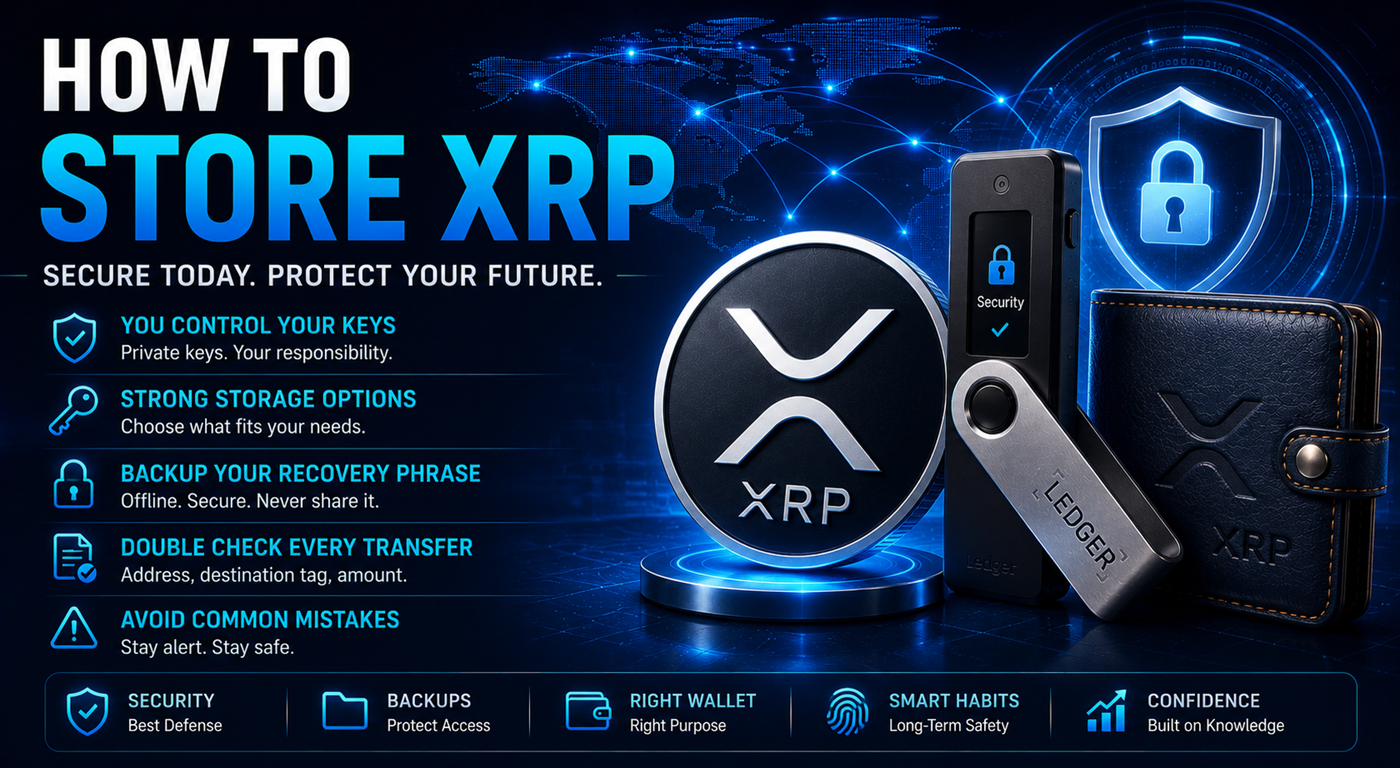
Storing XRP safely is one of the most important lessons for every beginner. Buying XRP is only the first step. Protecting access to it is what determines whether you can keep control of it over time.
XRP balances are recorded on the XRP Ledger. Wallets and exchanges give you access to those balances. The key question is who controls the keys: you or a platform.
Your XRP stays inside your exchange account. This is convenient for beginners and active traders, but you depend on the platform to protect the asset and process withdrawals.
You move XRP to a wallet where you control the private keys or recovery phrase. This gives more control, but also more personal responsibility.
Simple and convenient, but you rely on the exchange’s security, policies, and account access.
Useful for access and smaller amounts, but your phone security becomes very important.
Gives wallet control through a computer, but depends on device security and backups.
A physical device designed to keep wallet keys offline, often used for longer-term holding.
| Storage Type | Best For | Main Responsibility |
|---|---|---|
| Exchange Storage | Beginners, small amounts, frequent trading, learning the basics. | Protect your exchange login, password, and two-factor authentication. |
| Mobile Wallet | Convenient access and smaller personal holdings. | Protect your phone, wallet password, and recovery phrase. |
| Desktop Wallet | Users comfortable managing wallet software on a computer. | Protect your computer, backups, and private keys. |
| Hardware Wallet | Longer-term holding and stronger self-custody security. | Protect the device, PIN, and seed phrase offline. |
A private key gives control over a crypto address. A seed phrase can restore access to a wallet. These are the most sensitive parts of self-custody.
If someone gets your private key or seed phrase, they may be able to move your XRP. If you lose your private key or seed phrase, you may lose access to your XRP.
Never store your seed phrase only in screenshots, cloud storage, email, text messages, or notes apps. Keep recovery information offline, private, and protected from fire, water, theft, and accidental loss.
XRP transfers may require a destination tag when sending to an exchange. A destination tag helps the exchange know which customer account should receive the XRP.
Before sending XRP, verify the wallet address, destination tag, network, and amount. When learning, consider sending a small test transaction first.
Protect exchange accounts and wallet software with strong, unique passwords.
Use two-factor authentication on exchanges and important crypto-related accounts.
Write down recovery information and store it somewhere private, secure, and durable.
Crypto transfers are usually final. Always verify the receiving address and destination tag.
Scammers may pretend to be wallet support, exchange support, or community helpers. Never share recovery phrases.
Practice with small amounts before moving larger balances.
There is no single answer for everyone. Some people keep small amounts on an exchange for convenience. Others move longer-term holdings into self-custody. The right choice depends on your experience, security habits, amount held, and comfort level.
A common learning approach is to keep things simple at first, then gradually study wallets, self-custody, and hardware wallet options before moving larger amounts.
Some exchange deposits require a destination tag. Skipping it can delay or complicate deposits.
No legitimate person should ask for your seed phrase or private key.
Weak passwords and no two-factor authentication can put accounts at risk.
Losing your recovery phrase, device, or access information can create serious problems.
Safe XRP storage comes down to control and responsibility. Exchange storage is convenient. Self-custody gives control. Hardware wallets can improve security. But every option requires learning, caution, and good habits.
Avoid common XRP mistakes involving wallets, scams, hype, and storage.
Avoid MistakesA beginner-friendly guide to XRP, Ripple, XRPL, wallets, and digital finance.
View BookA broader guide to crypto basics, wallets, exchanges, and digital assets.
View Book