```html AI vs. Machine Learning | What Is the Difference?
AI Foundations

AI vs. Machine Learning

Artificial intelligence is the broader field of creating machines that perform intelligent tasks. Machine learning is one of the most important methods used to build those systems.

The Simple Answer

Machine Learning Is Part of Artificial Intelligence

Artificial intelligence describes the larger goal. Machine learning describes one way of reaching that goal.

Artificial intelligence includes computer systems designed to perform tasks such as understanding language, recognizing images, solving problems, making recommendations, generating content, planning actions, and assisting with decisions.

Machine learning is a method that allows a computer system to identify patterns from data. Instead of programmers writing every possible rule, the system learns relationships from examples and uses those patterns to process new information.

Easy way to remember it: Artificial intelligence is the destination. Machine learning is one of the roads used to get there.
How They Fit Together

Machine Learning Sits Inside the Larger Field of AI

Artificial Intelligence

The broad field of building systems that perform intelligent tasks.

Machine Learning

Systems learn patterns from data and examples.

Side-by-Side Comparison

Artificial Intelligence and Machine Learning Compared

Broader Field

Artificial Intelligence

Artificial intelligence focuses on creating systems that can perform tasks associated with intelligence.

  • Includes many different methods
  • May use rules, logic, search, planning, or learning
  • Can generate content and complete actions
  • Can include robotics and expert systems
  • Describes the overall goal of intelligent machines
Learning Method

Machine Learning

Machine learning focuses on helping systems identify patterns from data and improve performance through examples.

  • Uses training data
  • Finds patterns and relationships
  • Makes predictions or classifications
  • Improves through training and feedback
  • Is one important part of artificial intelligence
Quick Comparison Table

Key Differences at a Glance

Category Artificial Intelligence Machine Learning
Main meaning The broad field of creating intelligent computer systems A method that helps computers learn patterns from data
Primary goal Perform tasks that normally require intelligence Improve predictions or decisions through examples
Common methods Rules, logic, planning, search, machine learning, language models Supervised, unsupervised, reinforcement, and deep learning
Common outputs Answers, actions, content, recommendations, plans, automation Predictions, classifications, rankings, detected patterns
Examples Chatbots, robots, expert systems, AI agents, generative AI Fraud detection, recommendations, image classification, forecasting
Relationship Contains machine learning as one approach Exists within the broader field of AI
Learning from Examples

How Machine Learning Works

Machine learning systems study examples, recognize patterns, make predictions, measure mistakes, and adjust.

Imagine training a system to recognize photographs of cats and dogs. Developers provide many labeled examples. The system analyzes shapes, colors, textures, and other visual patterns.

When the model sees a new photograph, it uses what it learned to estimate whether the image is more likely to contain a cat or a dog.

  • Collect useful data
  • Prepare and label examples
  • Train the model
  • Measure errors
  • Adjust the model
  • Test on new information
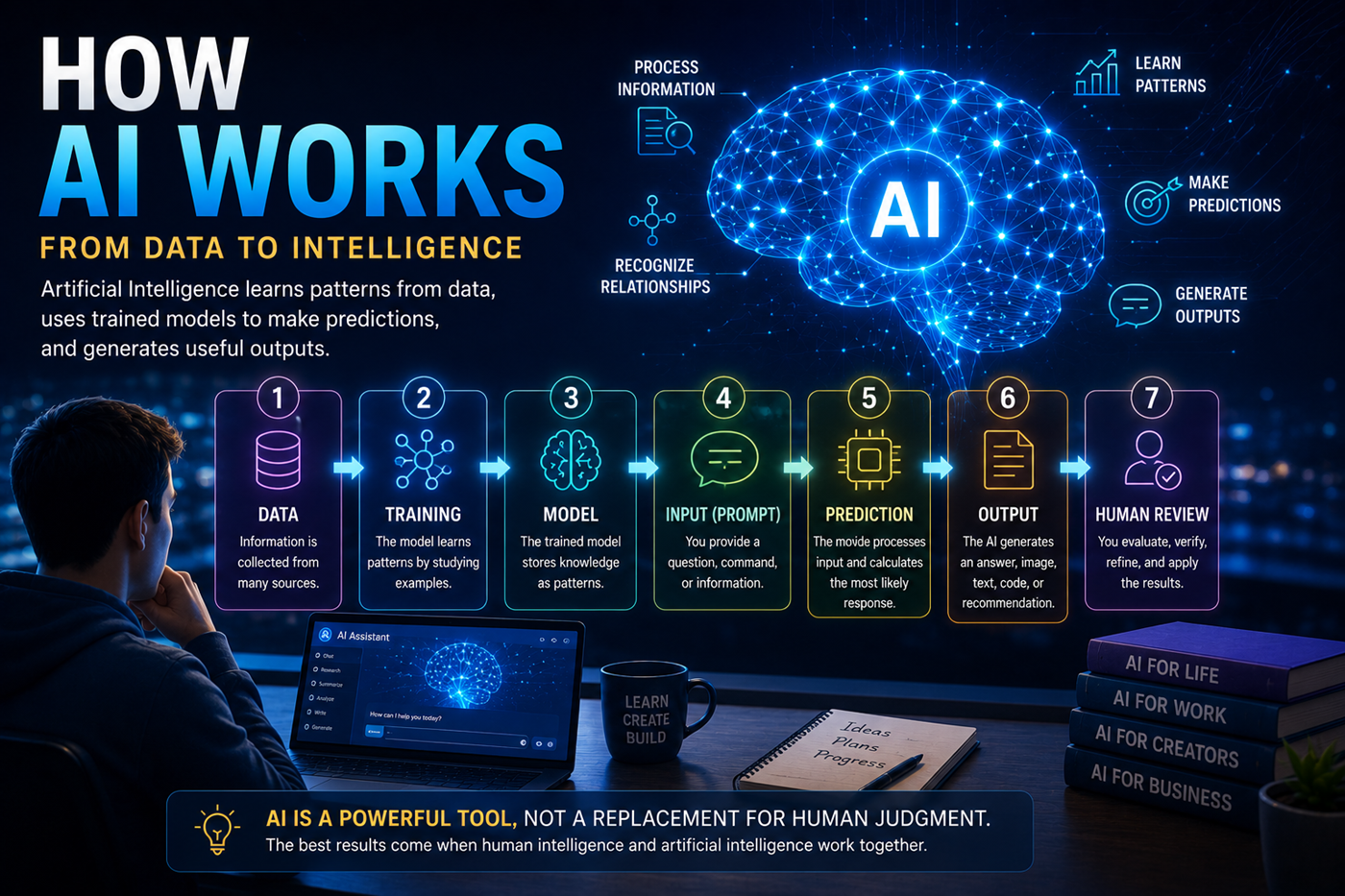
Artificial intelligence process using data, training, models, predictions, outputs, and human review
Machine Learning Process

From Data to Prediction

1

Collect Data

Gather examples related to the task or problem.

2

Prepare Data

Clean, organize, label, and format the examples.

3

Train Model

Let the model identify patterns and relationships.

4

Test Results

Measure performance using new examples.

5

Improve Model

Adjust the system when predictions are weak.

6

Use and Monitor

Apply the model and watch for mistakes or changing data.

Main Learning Methods

Types of Machine Learning

Machine learning systems can learn from data in several different ways.

Supervised Learning

The model learns from examples that include correct labels or expected answers.

  • Spam detection
  • Image classification
  • Price prediction
  • Medical pattern recognition
  • Customer-risk scoring

Unsupervised Learning

The model searches for groups, relationships, or hidden patterns without being given correct labels.

  • Customer grouping
  • Pattern discovery
  • Anomaly detection
  • Behavior analysis
  • Data organization

Reinforcement Learning

The model learns through actions, feedback, rewards, and penalties.

  • Game-playing systems
  • Robotics
  • Resource optimization
  • Navigation
  • Decision strategies
AI, Machine Learning, and Deep Learning

Understanding the Technology Hierarchy

Artificial Intelligence

The broad field of building machines that perform intelligent tasks.

Machine Learning

A branch of AI that learns patterns from data.

Deep Learning

A branch of machine learning using layered neural networks.

Think of three nested levels: Deep learning is part of machine learning, and machine learning is part of artificial intelligence.
Everyday Examples

Where AI and Machine Learning Appear in Real Life

Email Spam Filters

Machine learning identifies patterns in unwanted messages, while the overall filtering system is an AI application.

Streaming Recommendations

Machine learning analyzes viewing patterns, while AI systems rank and present personalized suggestions.

Voice Assistants

Machine learning supports speech recognition while AI manages language interpretation and task completion.

Fraud Detection

Machine learning detects unusual patterns while AI systems flag, review, or respond to suspicious activity.

Image Recognition

Machine learning identifies visual patterns while AI applications classify objects, faces, documents, or medical images.

Generative AI

Machine learning and deep learning help models learn patterns that can be used to generate text, images, audio, video, and code.

Smart Navigation

Machine learning helps predict traffic while AI systems calculate routes and adapt recommendations.

AI Agents

Machine learning may support language and decision models while AI agents plan steps, use tools, and complete tasks.

What AI Includes Beyond Machine Learning

Not Every AI System Learns from Data

Artificial intelligence existed before modern machine learning became dominant.

Rule-Based Systems

Programs follow predefined rules such as “if this happens, perform that action.”

Expert Systems

Structured knowledge and rules are used to imitate decisions within a specialized field.

Search and Planning

AI can explore possible paths or actions to find a solution or reach a goal.

Logic Systems

Symbolic rules and reasoning methods can help systems draw conclusions.

Robotics

AI may combine programmed rules, sensors, planning, machine learning, and physical control.

AI Agents

Agents combine models, tools, memory, planning, instructions, and safeguards to complete multi-step tasks.

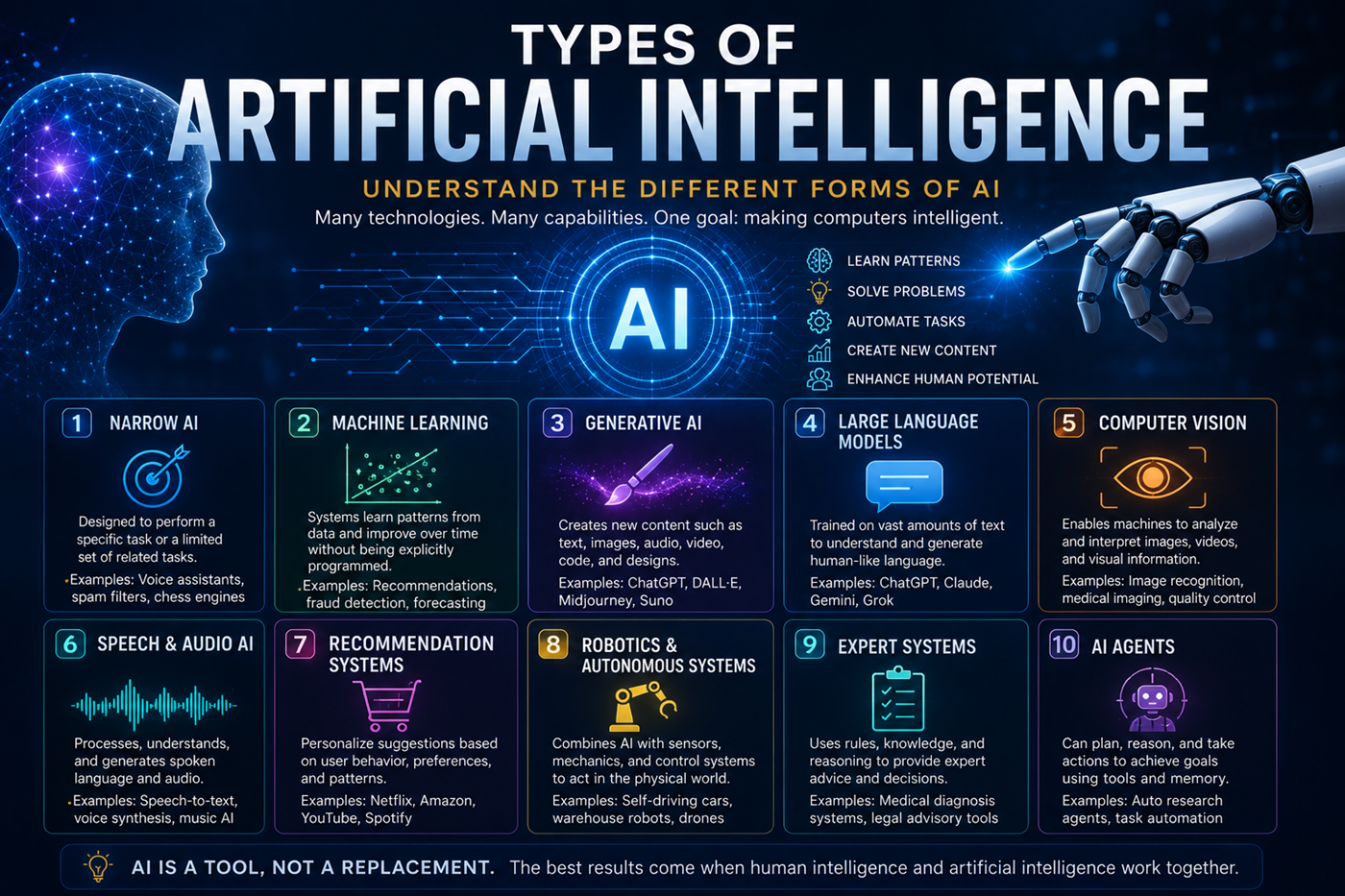
An infographic showing narrow AI, machine learning, generative AI, language models, computer vision, robotics, and AI agents
Continue Learning

Explore How AI Agents Complete Multi-Step Tasks

AI agents move beyond one answer by planning actions, using tools, tracking progress, and working toward a defined goal.

They may combine language models, search, files, applications, code, memory, and automation while operating within permissions and limits.

AI Books by Bruce Goldwell

Explore Practical Artificial Intelligence

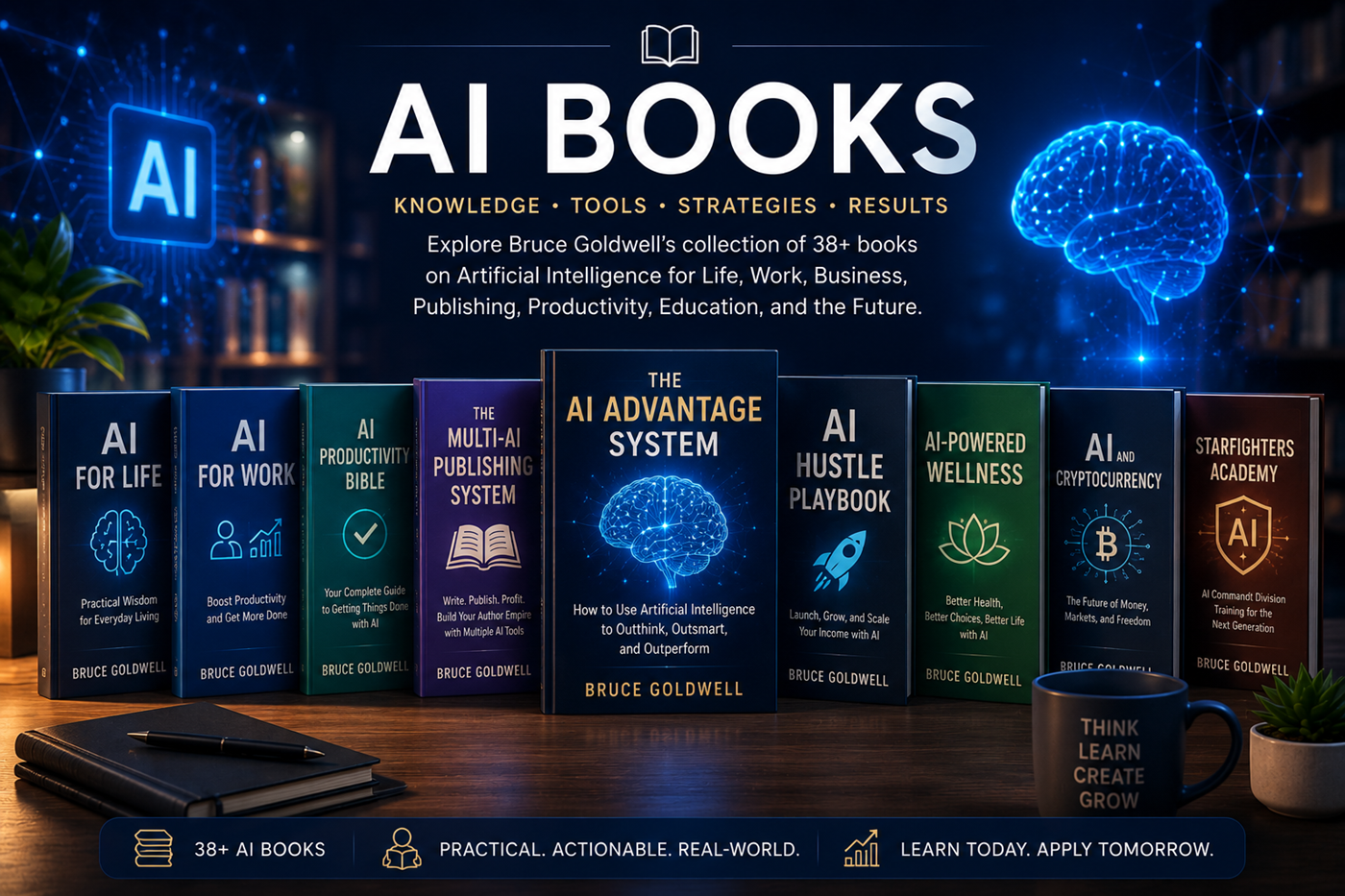
Bruce Goldwell's growing library of more than 38 AI-related books explores artificial intelligence for life, work, productivity, publishing, entrepreneurship, wellness, education, finance, creativity, and future technology.

The collection helps readers understand both the foundations of AI and the practical systems being built with modern machine learning and generative technologies.

Bruce Goldwell books covering artificial intelligence, machine learning applications, productivity, publishing, and business
Frequently Asked Questions

Questions About AI and Machine Learning

Is AI the same as machine learning?

No. Artificial intelligence is the broader field. Machine learning is one method used to create AI systems.

Is ChatGPT machine learning or artificial intelligence?

ChatGPT is an artificial intelligence product built using machine learning and deep-learning language models. It may also use tools, search, files, images, code, and connected services.

Can AI work without machine learning?

Yes. Rule-based systems, expert systems, search algorithms, logic systems, and some planning systems can perform AI tasks without machine learning.

What is deep learning?

Deep learning is a form of machine learning that uses layered artificial neural networks to identify complex patterns in large datasets.

Why is machine learning important?

Machine learning allows systems to recognize complex patterns, adapt to examples, and perform tasks that would be difficult to describe through fixed rules alone.

Continue the Foundation Series

Learn How AI Agents Plan and Complete Tasks

Explore how agent systems combine artificial intelligence, tools, instructions, planning, memory, and human oversight.

Educational disclaimer: This page provides general educational information. Artificial intelligence terminology, machine-learning methods, platform capabilities, and technical definitions continue to evolve. Verify important and current technical information through authoritative sources.
```