1
Define the Task
State exactly what you want the AI to do.
- Write an article
- Summarize a document
- Create a lesson plan
- Compare two options
- Develop a marketing strategy
Learn how to give artificial intelligence clear instructions, useful context, examples, formats, and boundaries so it can produce more relevant, accurate, structured, and useful results.
A prompt is the question, command, description, example, file, or set of instructions you give an artificial intelligence system.
Prompt engineering means organizing those instructions so the AI understands what you want, who the result is for, what information matters, how the answer should be structured, and what limits it should follow.
The phrase may sound technical, but the basic skill is familiar. It is similar to giving clear directions to a writer, researcher, designer, assistant, teacher, or business partner.
You do not need to use complicated formulas. You need to communicate the goal clearly enough for the AI to produce a result that is closer to what you actually need.
Not every prompt requires all six elements, but this structure provides a reliable starting point.
State exactly what you want the AI to do.
Explain the background, situation, purpose, source material, or problem the AI needs to understand.
Tell the AI who will read, watch, hear, or use the result.
Explain how the final answer should be organized or presented.
State the important ideas, examples, keywords, sections, tone, and details that must appear.
Explain what the AI should avoid, exclude, verify, or treat carefully.
The same basic request can produce very different results depending on how clearly it is written.
The task is broad and leaves the AI to guess almost everything.
The topic and audience are clearer, but the structure and requirements remain open.
The task, audience, length, tone, structure, and important content are clearly defined.
The first response does not need to be the final response. Treat AI interaction as a process of review and refinement.
Ask the AI to explain a confusing section more clearly.
Request more detail, examples, steps, or supporting information.
Ask for a more concise version without losing the central message.
Change the answer into another structure.
Adjust the style for a different audience or purpose.
Ask the AI to identify weaknesses, assumptions, or missing viewpoints.
Ask which parts require current sources or outside confirmation.
Add details about your situation so the next answer becomes more relevant.
Strong prompting combines preparation, communication, review, and human judgment.
Decide what result you need before writing the prompt.
Collect the facts, examples, files, and background the AI needs.
State the task, audience, format, requirements, and limits.
Check whether the response actually meets the goal.
Correct errors, add missing context, and request improvements.
Apply your judgment, experience, ethics, creativity, and voice.
Problem: The AI must guess the goal, audience, format, and level of detail.
Improvement: Explain what you want and how the result will be used.
Problem: The response may be generic or based on incorrect assumptions.
Improvement: Include relevant facts, examples, files, and project background.
Problem: A complicated prompt may produce a scattered or incomplete response.
Improvement: Divide large projects into stages.
Problem: The answer may be too technical, too simple, or written in the wrong tone.
Improvement: Identify who will receive the content.
Problem: Errors, repetition, missing context, or weak writing may remain.
Improvement: Review, question, refine, and edit the result.
Problem: AI may invent facts, quotations, dates, statistics, or sources.
Improvement: Verify important information through authoritative sources.
Research, outlines, chapters, editing, book descriptions, keywords, marketing, series development, and world-building.
Explore author promptsMarket research, planning, customer profiles, product ideas, marketing, communication, and operations.
Explore business promptsPlanning, prioritization, organization, meetings, emails, schedules, checklists, and task management.
Explore productivity promptsQuestions, comparisons, summaries, source evaluation, fact-checking, assumptions, and knowledge gaps.
Explore research promptsStories, videos, music, images, blogs, social posts, campaigns, presentations, and multimedia ideas.
Explore creator promptsLesson plans, explanations, quizzes, study guides, discussion questions, activities, and learning paths.
Explore education promptsA strong prompt improves the chance of receiving a useful response, but it cannot eliminate every AI limitation.
AI can still misunderstand context, use outdated information, overlook important facts, reflect bias, produce generic writing, or invent details.
The user remains responsible for evaluating the response, verifying important claims, protecting private information, and deciding whether the output should be used.
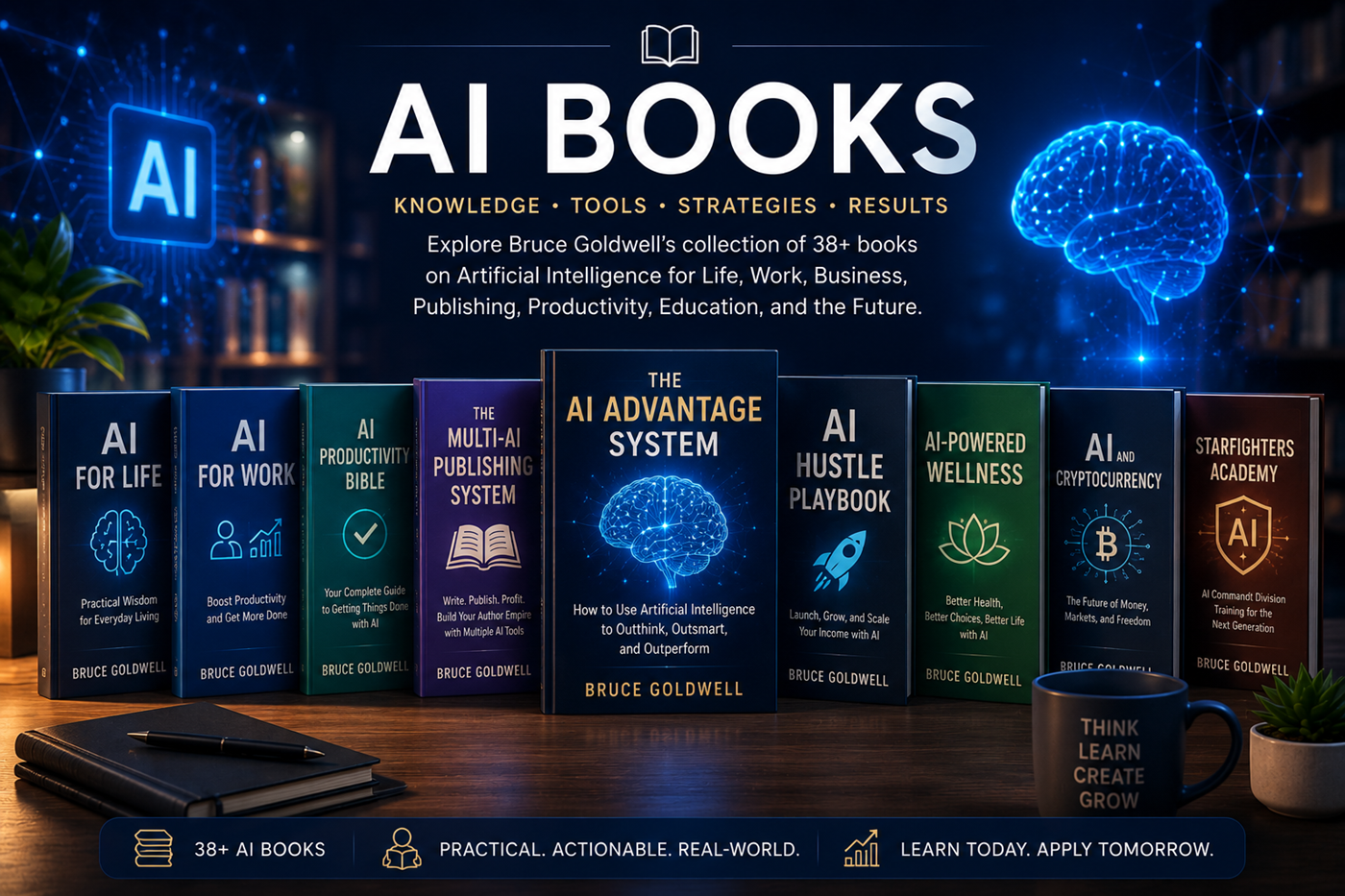
Bruce Goldwell's growing AI library includes books about prompts, productivity, work, publishing, entrepreneurship, education, wellness, and practical artificial intelligence.
AI Productivity Bible 2026 includes more than 300 prompts for ChatGPT, Claude, AI agents, business, work, creativity, and everyday productivity.
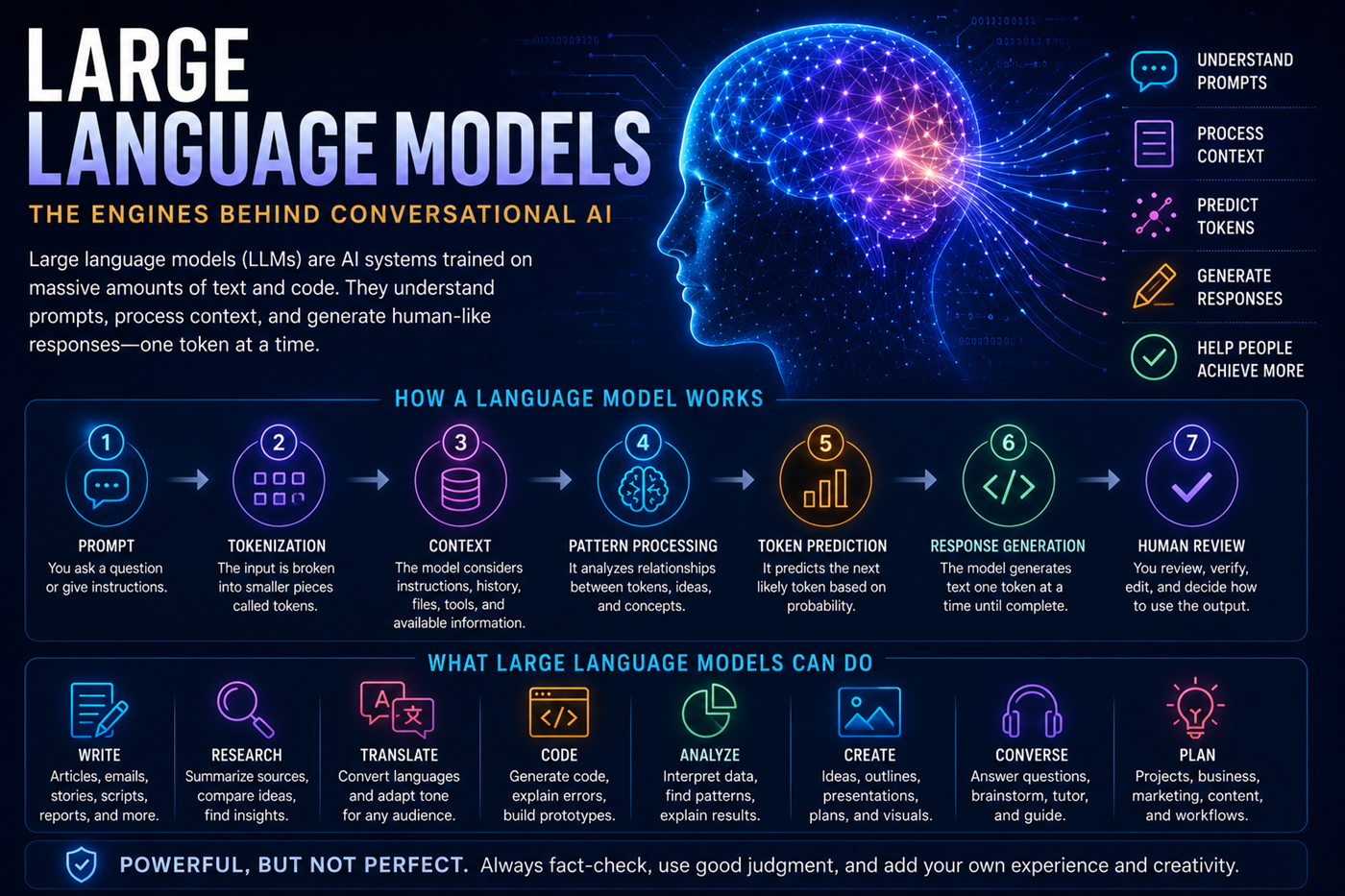
Prompt engineering is the practice of writing and refining instructions that help an AI system understand the task, context, audience, format, requirements, and limits of the desired result.
No. Clear communication, relevant context, examples, and careful review are usually more important than programming knowledge.
A prompt should be long enough to explain the goal and important requirements, but not filled with unnecessary information. Clarity matters more than length.
Yes. Strong prompts can become reusable templates. Update the topic, audience, facts, format, and requirements for each new task.
AI responses can vary because language generation is probabilistic and may be affected by model updates, system instructions, conversation history, settings, tools, and available context.
The next guide provides practical examples, prompt upgrades, reusable patterns, and step-by-step methods for improving everyday AI conversations.