AI Tools and Platforms

How to Verify AI Information

Learn how to check AI-generated facts, citations, quotations, statistics, dates, sources, images, calculations, and conclusions before publishing, sharing, or acting.

Trust, but Verify

Why AI Answers Need Verification

Artificial intelligence can produce clear, detailed, and convincing answers even when parts of the response are incorrect, outdated, unsupported, or completely invented.

AI systems generate responses by identifying patterns and predicting useful language. They do not automatically know whether every fact, quotation, statistic, source, date, or conclusion is true.

Web search, citations, uploaded files, source-grounded notebooks, and research modes can improve reliability, but none of these features eliminates the need for human review.

Verification is especially important when information affects health, law, money, safety, education, reputation, public claims, business decisions, software, or published work.

The central verification principle: Treat an AI answer as a useful starting point—not as final evidence. Important claims become trustworthy only after they are supported by current, relevant, authoritative sources.

Know What You Are Checking

Not Every Statement Has the Same Verification Need

Begin by identifying the kind of information contained in the AI response.

Lower Verification Risk

These tasks often involve style, organization, brainstorming, or subjective choices rather than factual claims.

  • Rewriting your own text
  • Brainstorming titles
  • Creating an outline
  • Changing tone or format
  • Generating fictional ideas
  • Organizing supplied notes

Moderate Verification Risk

These tasks may mix general knowledge, interpretation, source material, and generated conclusions.

  • Historical summaries
  • Product comparisons
  • Educational explanations
  • Business research
  • Technical instructions
  • Document summaries

High Verification Risk

These subjects require careful source review, professional judgment, or direct confirmation.

  • Medical information
  • Legal information
  • Financial decisions
  • Breaking news
  • Public accusations
  • Safety-critical instructions
Eight-Step Verification Method

From AI Answer to Verified Information

Use the following process whenever accuracy matters.

Identify Every Important Claim

Separate the response into facts, dates, names, quotations, statistics, interpretations, estimates, predictions, recommendations, and conclusions.

Mark the claims that would cause harm, embarrassment, financial loss, legal trouble, or reputational damage if they were wrong.

Check the Date and Timeframe

Determine when the information was true, when the source was published, and whether the subject may have changed.

Laws, prices, software features, officeholders, regulations, research findings, product specifications, and current events require recent confirmation.

Find the Original Source

Look for the primary evidence behind the claim: an official statement, law, filing, research paper, dataset, court record, transcript, technical document, interview, or direct publication.

A summary of a summary is weaker than the original evidence.

Open and Inspect the Citation

Confirm that the linked source exists, is accessible, and supports the exact statement the AI made.

Read the surrounding context. A citation may be real while the AI’s interpretation is inaccurate or overstated.

Compare Independent Sources

Determine whether several credible sources agree, whether they are all repeating one original report, and whether important disagreement exists.

Independence matters. Ten websites copying one incorrect claim do not create ten confirmations.

Verify Quotations, Numbers, and Calculations

Confirm quotations word for word. Recalculate percentages, totals, averages, conversions, projections, and other numerical claims.

Check units, definitions, sample sizes, assumptions, time periods, and whether numbers were adjusted or rounded.

Identify Uncertainty and Missing Context

Separate what is known from what is estimated, predicted, disputed, interpreted, or still unknown.

Look for exceptions, limitations, alternative explanations, omitted evidence, and information that could change the conclusion.

Apply Human Judgment

Decide whether the verified information is relevant, complete enough, ethically appropriate, and safe to publish, share, submit, purchase, automate, or act upon.

Verification is complete only when a responsible human reviews the evidence and accepts responsibility for the result.

Source Quality

Use the Strongest Available Evidence

Sources differ in authority, independence, methods, transparency, and relevance.

Stronger Source Types

  • Original research papers
  • Official government documents
  • Statutes and court records
  • Company filings and reports
  • Technical documentation
  • Original datasets
  • Direct transcripts and recordings
  • Official organizational statements

Useful Secondary Sources

  • Established journalism
  • Academic reviews
  • Professional associations
  • Expert analysis
  • Industry publications
  • Educational institutions
  • Reference works
  • Independent technical reviews

Sources Requiring Caution

  • Anonymous social posts
  • Copied content farms
  • Promotional sales pages
  • Unverified screenshots
  • Unsourced videos
  • AI-generated articles
  • Outdated summaries
  • Claims without named evidence
Important distinction: An official source is strongest for confirming what an organization said or published. It may not be independent evidence that the organization’s interpretation is correct.
Citation Verification

A Citation Is a Trail, Not Automatic Proof

Open every important citation and inspect it directly.

1

Does the Source Exist?

Confirm that the page, paper, book, law, report, or document is real and accessible.

2

Does It Support the Claim?

Determine whether the source actually states or demonstrates what the AI response says.

3

Is the Context Accurate?

Read the paragraphs, section, table, or transcript surrounding the cited material.

4

Is the Source Current?

Check publication dates, revision dates, updated findings, replacements, corrections, and later developments.

5

Is the Source Authoritative?

Identify the author, publisher, organization, expertise, methods, evidence, and possible conflicts of interest.

6

Is It the Original Source?

Follow references backward until you locate the original report, data, statement, or record whenever possible.

Signs of a Strong Citation

  • The source is identifiable
  • The publication date is visible
  • The author or organization is credible
  • The claim appears in context
  • Evidence or methods are explained
  • Limitations are acknowledged
  • The source links to original evidence
  • Independent sources reach similar conclusions

Warning Signs

  • The link does not work
  • The source never states the claim
  • The date is missing or outdated
  • The article copies another page
  • The headline exaggerates the evidence
  • The source is selling the claimed solution
  • The quotation cannot be located
  • The citation supports only part of the sentence
Verify Specific Information Types

Different Claims Require Different Checks

Names and Titles

Confirm spelling, current roles, organizational affiliation, dates of service, and whether the title has changed.

Dates and Timelines

Verify the exact date, time zone, sequence of events, publication date, and whether later corrections changed the timeline.

Quotations

Locate the original speech, transcript, book, interview, video, record, or publication and confirm exact wording and context.

Statistics

Find the original dataset or report and check definitions, sample size, units, methodology, date, and calculation.

Laws and Regulations

Consult the current statute, regulation, agency guidance, court ruling, jurisdiction, effective date, and qualified legal advice.

Medical Claims

Use current clinical guidance, peer-reviewed research, recognized medical institutions, and a qualified healthcare professional.

Financial Information

Verify prices, filings, market data, assumptions, risks, fees, tax rules, dates, and professional guidance when necessary.

Software Instructions

Check the current official documentation, version number, supported environment, dependencies, security notices, and test results.

News and Current Events

Confirm the event date, original reporting, official statements, independent coverage, corrections, and what remains uncertain.

Numbers and Calculations

Recalculate Instead of Trusting the Result

1

Extract

List the values, units, dates, percentages, formulas, and assumptions used.

2

Confirm

Verify that every input came from a reliable and current source.

3

Recalculate

Use a calculator, spreadsheet, code, or an independent method.

4

Check Units

Confirm currencies, percentages, dimensions, time periods, and conversions.

5

Test Assumptions

Change the assumptions and determine how strongly they affect the conclusion.

6

Label Estimates

Separate exact values from projections, ranges, averages, forecasts, and scenarios.

Images, Audio, and Video

Verify Media Before Treating It as Evidence

1

Find the Original Upload

Look for the earliest credible publication rather than relying on a repost, screenshot, or cropped copy.

2

Check the Date and Location

Confirm when and where the media was recorded and whether it belongs to the event being discussed.

3

Inspect Editing and Cropping

Determine whether missing frames, cuts, captions, filters, or altered audio change the meaning.

4

Compare Landmarks and Details

Check signs, weather, architecture, clothing, shadows, language, vehicles, and other visible clues.

5

Look for Independent Confirmation

Determine whether credible witnesses, official records, or independent media confirm the event.

6

Consider AI Generation

Treat highly realistic media cautiously when its origin, creator, metadata, and supporting evidence are unclear.

Useful Verification Prompts

Ask AI to Expose Its Weakest Points

These prompts can help identify what requires human checking.

Claims

Extract Factual Statements

“List every factual claim in this response. Separate names, dates, quotations, statistics, laws, technical claims, predictions, opinions, and conclusions.”
Sources

Request Primary Evidence

“For each important claim, identify the strongest available primary source. Do not cite summaries when an original law, filing, paper, transcript, dataset, or official document is available.”
Audit

Challenge the Answer

“Audit this response as a skeptical fact-checker. Identify unsupported statements, missing context, outdated information, weak citations, assumptions, possible bias, and conclusions that go beyond the evidence.”
Dates

Check Timeliness

“Identify every claim that may have changed recently. State the date that must be verified and explain which current source should be consulted.”
Disagreement

Find Competing Views

“Identify credible sources or experts who disagree with this conclusion. Explain whether the disagreement concerns facts, methods, assumptions, interpretation, or values.”
Confidence

Label Certainty

“Classify each major statement as verified fact, supported interpretation, disputed claim, estimate, prediction, opinion, or unknown. Explain the evidence for each classification.”
Remember: Asking an AI to critique itself can reveal problems, but the final verification must come from the evidence—not from the AI’s confidence rating.
Publication Checklist

Verify Before You Publish, Share, or Act

Verification Checklist

  • I identified the important factual claims
  • I checked whether the information is current
  • I located the original or strongest source
  • I opened and inspected every important citation
  • I confirmed quotations word for word
  • I recalculated statistics and numerical claims
  • I compared independent sources
  • I separated facts from opinions and predictions
  • I identified uncertainty and missing context
  • I checked privacy, copyright, and permissions
  • I reviewed possible harm if the claim is wrong
  • A responsible human approved the final result

Do Not Publish Yet If

  • The source cannot be found
  • The citation does not support the claim
  • The quotation cannot be confirmed
  • The statistic has no original dataset
  • The information may be outdated
  • Credible sources strongly disagree
  • The claim could damage someone’s reputation
  • The conclusion affects health, law, money, or safety
  • Private information is exposed
  • Copyright or permission is unclear
  • The evidence is weaker than the wording
  • No qualified human has reviewed it
Common Problems

Verification Mistakes People Make

Trusting Confident Language

A polished and detailed answer can still contain errors, weak assumptions, or fabricated information.

Counting Repeated Claims as Confirmation

Many pages may repeat the same unsupported source rather than provide independent evidence.

Reading Only the Headline

Headlines may exaggerate, simplify, or omit qualifications contained in the article or research.

Ignoring Dates

Information that was once correct may become misleading after laws, prices, roles, products, or evidence change.

Using AI Agreement as Proof

Several AI systems can repeat the same false claim because they rely on similar sources or patterns.

Verifying Only Convenient Claims

People often check surprising claims while overlooking familiar statements that may also be wrong.

High-Stakes Information

Some Decisions Require Qualified Professionals

Medical Decisions

Use qualified healthcare professionals and current clinical guidance for diagnosis, treatment, medication, and emergency decisions.

Legal Decisions

Laws depend on jurisdiction, facts, dates, court decisions, and professional interpretation.

Financial Decisions

Investments, taxes, credit, insurance, retirement, and business decisions require current data and qualified advice where appropriate.

Safety Instructions

Construction, electrical, chemical, mechanical, emergency, and physical-safety information must follow professional standards.

Public Accusations

Do not repeat allegations about identifiable people without reliable evidence, context, fairness, and legal review when necessary.

Human Responsibility

AI can assist with information gathering, but the person making or publishing the decision remains responsible.

Verification in a Multi-AI Workflow

Separate Research, Creation, and Approval

Large projects become safer when research, source organization, drafting, critique, verification, and publication are treated as separate stages.

One AI can locate sources. Another can organize supplied documents. Another can create the draft. A second system can challenge the reasoning. Human reviewers can then inspect evidence and approve the result.

  • Keep a source register
  • Label verified and unverified claims
  • Preserve original citations
  • Use independent critique
  • Record important decisions
  • Maintain version history
  • Require human approval
Artificial intelligence research workflow involving primary sources, citations, fact-checking, evidence, and human verification
Verification for Authors

Protect the Credibility of Books and Knowledge Pages

Authors and publishers are responsible for factual claims even when AI helped research, draft, edit, or organize the content.

  • Verify names, titles, dates, and quotations
  • Confirm statistics through original reports
  • Preserve source links and publication details
  • Update time-sensitive information
  • Separate fact from interpretation
  • Review medical, legal, and financial statements
  • Check copyright and permissions
  • Correct errors transparently
Author fact-checking sources, quotations, statistics, dates, and citations before publishing a book or knowledge page
Frequently Asked Questions

Questions About Verifying AI Information

Why can AI sound confident when it is wrong?

AI systems are designed to generate useful and coherent language. Fluency and confidence are properties of the response style, not proof that the underlying information is correct.

Does web search make AI answers reliable?

Web search can improve access to current information and supporting sources, but search results can still be weak, outdated, biased, promotional, copied, or misunderstood.

Important sources must be opened and evaluated.

Does a citation prove that the answer is correct?

No. A citation proves only that the AI linked to a source. It does not prove that the source is reliable or that it supports the exact claim.

What is a primary source?

A primary source is original evidence, such as a law, court record, research paper, dataset, filing, transcript, interview, official statement, photograph, recording, or technical document.

How many sources should I check?

The number depends on the importance and complexity of the claim. A basic factual statement may require one authoritative source, while a disputed or high-stakes conclusion may require several independent sources and professional review.

Can I use another AI to fact-check the answer?

Yes. A second AI can identify weak claims, missing evidence, inconsistencies, and alternative interpretations.

The final judgment must still be based on real sources and human review.

How do I verify a quotation?

Find the original recording, transcript, book, article, speech, interview, court record, or official document.

Confirm the exact wording, speaker, date, punctuation, and surrounding context.

How do I verify a statistic?

Locate the original dataset, research paper, survey, filing, government table, or report.

Check the date, population, sample size, units, definitions, methodology, exclusions, and calculation.

How do I know whether a source is independent?

Determine whether the source conducted its own reporting or analysis, or whether it copied another article, press release, company statement, or social post.

Follow the citations backward until the original evidence is identified.

What should I do when credible sources disagree?

Explain the disagreement accurately. Identify whether it concerns facts, methods, assumptions, definitions, interpretation, values, or incomplete evidence.

Do not present a disputed conclusion as settled fact.

How can I verify information in an uploaded document?

Confirm that the file is authentic, complete, current, and correctly attributed. Check whether the AI accurately represented the document’s wording, tables, figures, methods, and conclusions.

Is NotebookLM automatically accurate because it uses my sources?

No. Source grounding makes answers easier to trace, but NotebookLM can still misunderstand a source, omit context, or connect ideas incorrectly.

The supplied source may also be inaccurate or outdated.

When should I consult a professional?

Consult qualified professionals when information affects health, law, finance, safety, taxes, engineering, compliance, public accusations, or other high-stakes decisions.

Learn Through Books

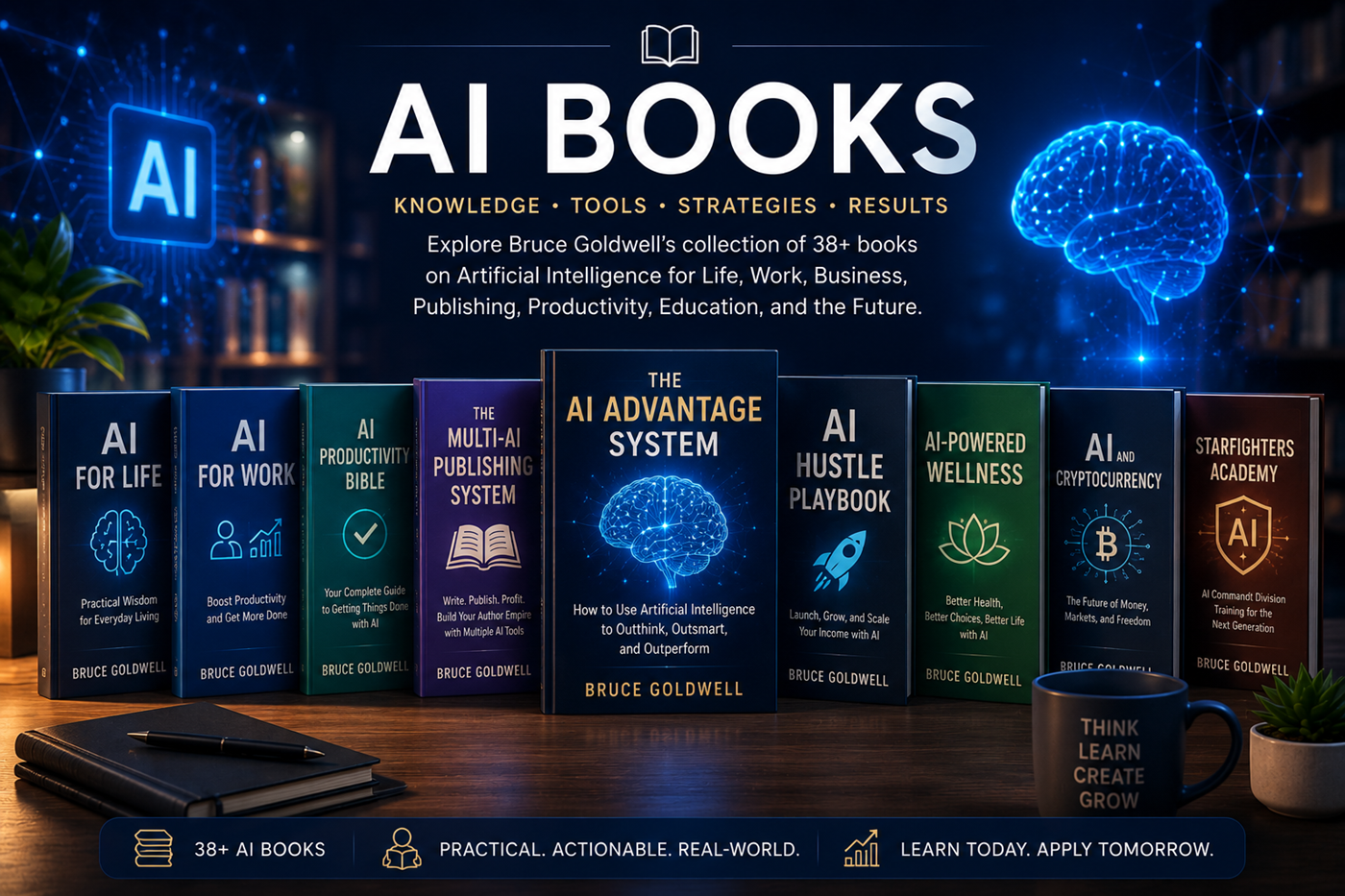
Explore Bruce Goldwell’s AI Library

Bruce Goldwell’s AI-related books explore prompts, research, productivity, publishing, business, education, applications, verification, automation, and future technology.

The books connect practical AI use with responsible research, human judgment, and larger systems for authors, entrepreneurs, creators, students, professionals, and lifelong learners.

Bruce Goldwell books covering artificial intelligence research, verification, prompts, publishing, productivity, and responsible AI use
Understand Why Errors Happen

Continue to the AI Hallucinations Guide

Learn why AI systems invent facts, quotations, citations, links, statistics, and explanations—and how to reduce the risk.

Educational disclaimer: This guide provides general information about verifying AI-generated content. It is not a substitute for qualified medical, legal, financial, technical, safety, academic, or professional advice. Verification standards should match the seriousness and potential consequences of the decision.