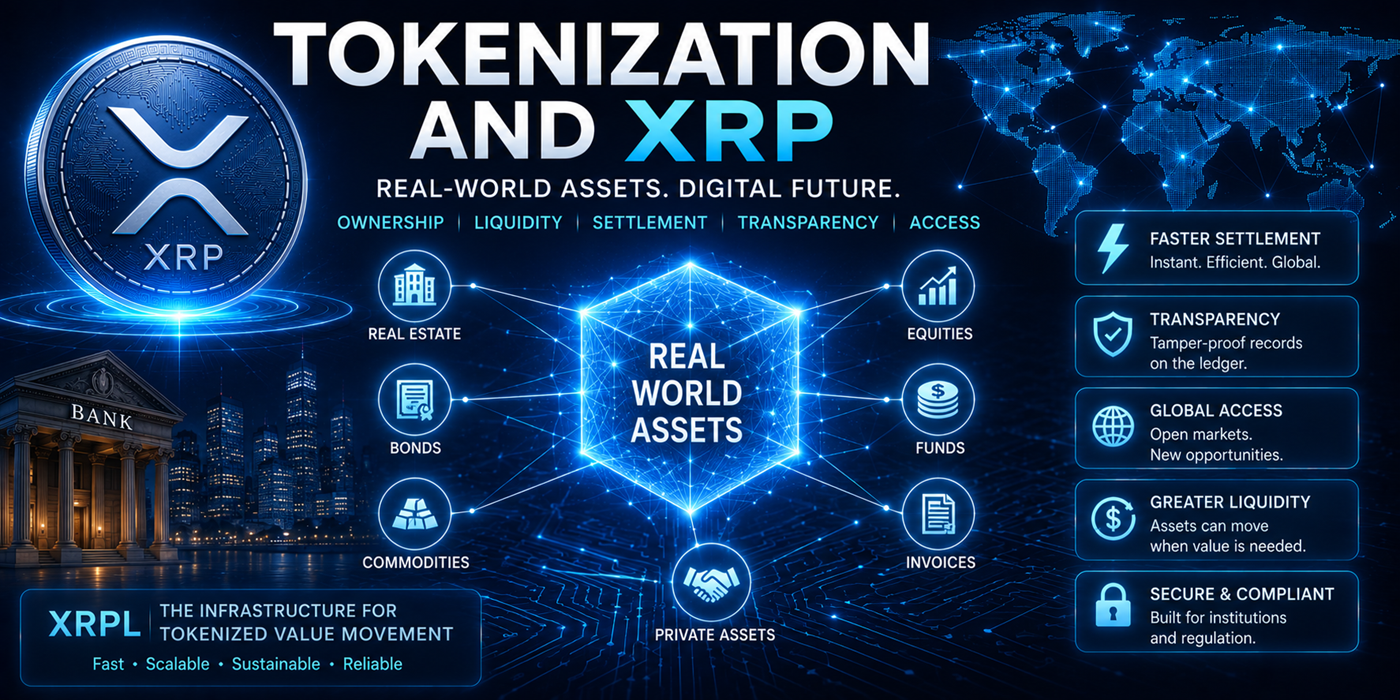
Tokenization is one of the most important long-term themes in digital finance. It refers to the process of representing real-world assets, financial instruments, or rights on a blockchain or digital ledger.
For XRP valuation, tokenization matters because tokenized assets may need fast settlement, reliable liquidity, compliance-ready infrastructure, and efficient movement of value across markets.
Tokenization converts ownership, claims, or value into digital tokens. These tokens may represent real estate, bonds, stocks, commodities, funds, invoices, carbon credits, loyalty points, or other financial and commercial assets.
Instead of only moving information about assets, tokenized systems can allow assets themselves to move, settle, and interact digitally.
Tokenized markets may require fast, reliable settlement rails that can move value efficiently between participants.
Tokenized assets may need liquidity pathways that connect buyers, sellers, institutions, exchanges, and payment systems.
Real estate, bonds, funds, commodities, and other assets may become easier to divide, transfer, and settle through tokenized systems.
The more value becomes digital, the more important secure settlement infrastructure may become.
| Asset Type | Possible Tokenization Use |
|---|---|
| Real Estate | Fractional ownership, faster transfers, improved access to property investment. |
| Bonds | Digital issuance, faster settlement, automated coupon payments, improved transparency. |
| Commodities | Digital claims on gold, silver, energy, or other physical assets. |
| Funds | Tokenized shares, faster subscription and redemption, broader investor access. |
| Invoices | Trade finance, receivables, and business payment settlement. |
| Digital Securities | Regulated assets represented and transferred through blockchain-based systems. |
Tokenized assets still need settlement. When assets move between participants, value must also move. This is where liquidity, stablecoins, XRP, payment rails, exchanges, and institutional systems may interact.
XRP’s valuation case becomes stronger if tokenized markets require fast value movement and XRP becomes part of the infrastructure supporting that movement.
Some tokenized markets may rely on stablecoins, fiat rails, CBDCs, or direct settlement. Others may need bridge assets or liquidity tools to connect markets efficiently.
It can if XRP becomes useful within tokenized settlement, liquidity movement, market access, or cross-asset transfer systems. Tokenization alone does not guarantee XRP demand.
Tokenized assets often involve securities, property rights, custody, compliance, and investor protection rules. Regulation may determine how quickly tokenized markets develop.
Tokenized assets need secure, scalable infrastructure before they can support larger markets.
Liquidity determines whether tokenized value can move efficiently between participants.
Stablecoins may become important settlement tools inside tokenized markets.
Tokenization may affect conservative, moderate, bullish, and risk-based XRP valuation scenarios.
Tokenization may bring more real-world assets into digital financial systems. If those systems require fast settlement, liquidity, interoperability, and institutional-grade infrastructure, XRP may become part of a much larger valuation conversation.