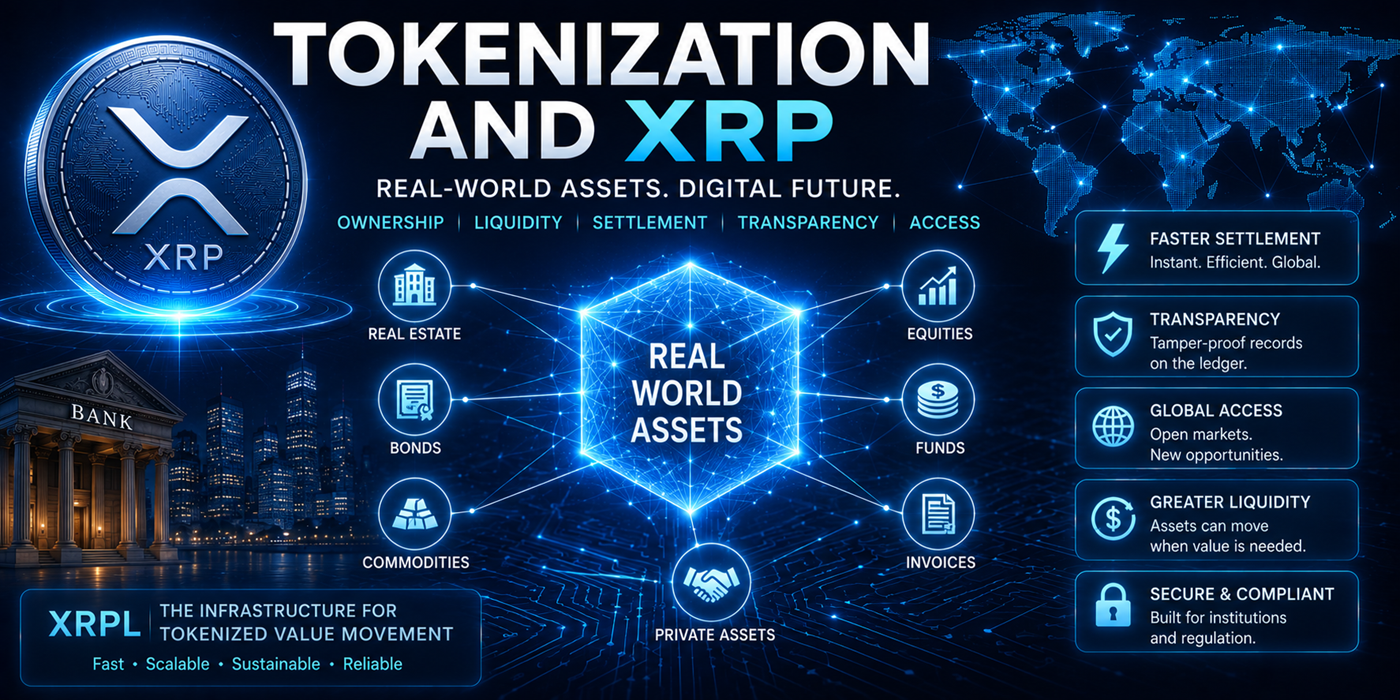
Tokenization is the process of representing real-world value as digital tokens on a blockchain or digital ledger. These tokens may represent assets, ownership rights, claims, financial instruments, or units of value.
XRP and the XRP Ledger enter this conversation because tokenized finance depends on fast, efficient digital rails, reliable settlement, liquidity, and infrastructure that can move value across markets.
Tokenization takes something of value and creates a digital representation of it. That value might be connected to real estate, bonds, commodities, invoices, funds, collectibles, carbon credits, loyalty points, stablecoins, or other assets.
The bigger idea is that financial assets may become easier to issue, transfer, track, settle, and manage when they exist on digital rails.
Property interests may be represented digitally, potentially allowing easier fractional ownership, transfer, or recordkeeping.
Financial instruments may be issued or tracked on digital ledgers to improve settlement, reporting, and market efficiency.
Assets such as gold, energy, or other commodities may be represented by digital tokens connected to real-world value.
Stablecoins are one of the clearest examples of tokenized value because they represent digital units tied to a reference asset.
Tokenized assets may settle faster than traditional systems when supported by reliable digital infrastructure.
Digital ledgers can make ownership, transfers, and transaction history easier to verify depending on the system design.
Tokenization may allow assets to be divided into smaller units, potentially expanding access to certain markets.
Tokenized finance is part of the larger shift toward programmable assets, digital settlement, and modern financial infrastructure.
XRP itself is not the same thing as tokenization. XRP is a digital asset, while tokenization is the broader process of representing value digitally. However, XRP and XRPL are often discussed in tokenization conversations because tokenized assets need digital networks, liquidity, and settlement infrastructure.
The XRP Ledger may be studied as a network where digital assets can be issued, transferred, and settled. XRP may be studied as part of the liquidity and value movement layer connected to that broader ecosystem.
| Topic | Traditional Asset Systems | Tokenized Systems |
|---|---|---|
| Ownership Records | Often stored across separate institutions, databases, custodians, or registries. | May use digital ledgers to track ownership and transfers more directly. |
| Settlement | May take time depending on asset type, intermediaries, and market rules. | Can be designed for faster settlement on digital rails. |
| Access | May be limited by geography, minimum investment size, or institutional gatekeepers. | May allow new forms of access, fractionalization, and global participation. |
| Liquidity | Some assets are difficult to sell or transfer quickly. | Tokenization may improve liquidity if markets, compliance, and demand develop. |
No. Tokenization may improve access, settlement, and transferability, but value still depends on the underlying asset, market demand, legal structure, liquidity, and trust.
No. Tokenized assets can involve legal, technical, custody, liquidity, regulatory, and market risks. The token is only as reliable as the system and claims behind it.
Institutions may study tokenization because it could improve settlement, reporting, access, efficiency, collateral movement, and the management of financial instruments.
XRP connects through the larger themes of XRPL infrastructure, liquidity, digital settlement, and value movement across future financial rails.
Learn why RWAs are one of the biggest themes in tokenized finance.
Explore one of the most common forms of tokenized value used in digital finance.
Understand why tokenized markets still need depth, access, buyers, sellers, and trust.
Study how institutions may shape the future of tokenized finance.
Connects ISO 20022, XRP, and the next financial revolution.
Explores how liquidity and institutions may shape future digital finance.
A future-focused book on digital money becoming real money.
A grounded look at practical valuation, utility, and realistic assumptions.
Tokenization matters because the future of finance may involve more assets moving, settling, and interacting on digital rails. XRP and XRPL belong to that larger conversation because future digital value still needs speed, liquidity, trust, and settlement.