Two Very Different Ideas
The words reformation and restoration can sound similar.
They are not.
To reform something is to correct, improve, or repair what already exists.
To restore something is to bring back what has been lost.
Reformation: Something remains, but it needs correction.
Restoration: Something essential has disappeared and must be returned.
That distinction creates one of the largest questions in Christian history.
What Happened to the Church Jesus Established?
Did it continue with divine authority?
Did it change but remain legitimate?
Did important teachings become corrupted while authority remained?
Or was something essential lost that only God could restore?
Begin With the Original Church
Before deciding whether Christianity required reform or restoration, we need a reference point.
The New Testament gives us one.
Jesus chose apostles.
The Church had prophets.
There were evangelists, pastors, teachers, bishops or overseers, elders, and deacons.
People were called and sent.
Authority mattered.
Baptism was practiced.
The Holy Ghost was received.
Hands were laid upon believers.
The Lord's Supper was observed.
The sick were anointed with oil.
Spiritual gifts operated.
Revelation continued.
Missionaries were sent.
And when a serious doctrinal dispute arose, apostles and elders gathered to seek a unified answer.
That gives us a biblical blueprint.
Examine: What Church Did Jesus Establish? →
Then the Apostles Began to Disappear
The New Testament itself records the death of James the brother of John.
Judas had already died and was replaced by Matthias.
Paul's letters show him expecting imprisonment and suffering.
Later Christian tradition associates the deaths of Peter and Paul with Rome during the first century.
Eventually, the generation that had personally known Jesus and led the earliest Christian movement disappeared.
Christianity did not disappear.
Churches continued.
Bishops, presbyters, deacons, teachers, and other leaders continued.
Christian writings continued.
Believers continued to worship Christ.
But the disappearance of the apostles raises an important question.
What Happened to Apostolic Authority?
Was it transferred?
Did the apostolic office simply end?
Did bishops inherit its authority?
Or did something disappear when the apostles were gone?
The New Testament Warned That Trouble Was Coming
The possibility of doctrinal corruption did not surprise the earliest Christians.
Jesus warned about false prophets.
Paul warned about false teachers and people turning away from sound doctrine.
Peter warned that false teachers would arise.
John warned about deceivers.
Acts records Paul warning church leaders that serious problems would arise even from within the Christian community.
These warnings demonstrate that the apostles did not assume Christian teaching would automatically remain pure simply because the Church existed.
But there is an important distinction.
Warnings Are Not Proof of a Total Apostasy
The New Testament clearly predicts false teaching and departure from truth.
Whether those warnings predict a complete loss of divine authority is a separate question.
Christianity Continued to Grow
Despite persecution and internal controversy, Christianity spread throughout the Roman world.
Local congregations developed.
Bishops became increasingly important in preserving unity, teaching doctrine, administering worship, and resisting teachings they considered false.
Early Christian writers defended the faith and appealed to the teaching handed down from the apostles.
This historical continuity is important.
Any claim of apostasy must account for it.
Christianity did not vanish from history for centuries and then suddenly reappear.
There was a continuing Christian community.
The real question is more specific.
What continued—and with what authority?
The Catholic Claim: Apostolic Succession
The Catholic Church teaches that Christ gave authority to His apostles and that this apostolic ministry continued through successors, particularly bishops.
Peter is understood as having a special role among the apostles, with the Bishop of Rome succeeding to that Petrine ministry.
From this perspective, there was no need for a later restoration of the Church because Christ's Church never disappeared.
It continued through apostolic succession, sacraments, ordained ministry, and the teaching authority of the Church.
This is a major historical and theological claim.
It cannot simply be dismissed.
It should be examined.
The Orthodox Claim: Continuity With the Ancient Church
Eastern Orthodox Christianity also claims continuity with the apostolic Church.
Orthodox Christians emphasize the historic episcopate, the sacraments, the councils, the Church Fathers, and the preservation of apostolic faith within the worshiping Church.
Orthodoxy does not accept later claims of universal papal jurisdiction in the same way Roman Catholicism does.
From the Orthodox perspective, the ancient Church continued, but later divisions separated Christians from one another.
Again, this is a continuity claim.
Then Christianity Divided
Christian history did not remain institutionally united.
Tensions between Eastern and Western Christianity developed over centuries.
Differences involved language, culture, political authority, church governance, and theology.
The division commonly associated with the Great Schism of 1054 did not create every difference overnight, but it became a major symbol of the separation between Eastern Orthodox and Roman Catholic Christianity.
Now there were competing claims to continuity with the ancient Church.
If Apostolic Christianity Continued, Where?
Rome?
Constantinople and the Eastern churches?
Both despite their separation?
Or had the original pattern already changed in important ways?
Then Came the Protestant Reformation
By the early sixteenth century, criticism of Western Christianity had reached a breaking point.
Martin Luther became one of the central figures of what became the Protestant Reformation.
Other reformers followed or developed movements of their own.
They challenged doctrines, practices, institutional authority, and interpretations they believed were inconsistent with Scripture.
The Reformation was not one single movement with one single theology.
Lutherans, Reformed Christians, Anglicans, Anabaptists, and later Protestant traditions developed in different directions.
But they shared a willingness to challenge existing religious authority in light of what they understood Scripture to teach.
The Reformers Asked an Important Question
What happens when church tradition and Scripture appear to conflict?
For many Protestants, Scripture became the decisive standard by which Christian teaching should be judged.
That principle helped produce enormous religious change.
The Bible was translated and distributed more widely.
Old assumptions were challenged.
Doctrines were debated again.
The Reformers forced Christianity to confront questions that could no longer easily be ignored.
But the Reformation created another question.
Who Authorized the Reformers?
Suppose a reformer correctly identifies a false doctrine.
He can expose it.
He can teach something different.
He can organize believers.
He can translate Scripture.
He can call people back to what he believes the Bible teaches.
But if the original Church required divine authority to perform ordinances and govern the Church, where does that authority come from?
Can Correct Doctrine Create Divine Authority?
Or must authority be received from God?
That question becomes crucial when comparing Reformation and Restoration.
Imagine a Broken Chain
Suppose apostolic authority continued unbroken from the original apostles through later bishops.
Then restoration would not be necessary.
Reform might still be needed.
Corruption might need correction.
Practices might need improvement.
But authority would still exist.
Now suppose the opposite.
Suppose the authority Christ gave His apostles disappeared.
A person living centuries later could read every verse correctly and still face one problem.
He could rediscover truth.
But could he restore authority to himself?
This Is the Difference
Truth can be rediscovered through study.
Authority, if it must come from God, cannot simply be rediscovered in a book.
Can a Bible Give Someone Authority?
The Bible can tell us that Jesus chose apostles.
It can tell us that they were given authority.
It can tell us that Peter received keys.
It can tell us about baptism.
It can tell us about laying on of hands.
It can tell us about ordination.
It can preserve the words of Jesus.
But reading about authority is not necessarily the same thing as receiving authority.
A document can describe an appointment without making the reader the person appointed.
That simple distinction sits near the center of the Restoration claim.
Protestants Answer the Authority Question Differently
Many Protestant traditions would reject the premise that a continuous line of priesthood ordination is required for the Church to exist legitimately.
They may understand the Church primarily as the community of believers united to Christ through faith.
Christ remains the head of His Church.
Scripture preserves apostolic teaching.
Ministers may be called and recognized by Christian communities without requiring the kind of authority claimed by Catholic, Orthodox, or Latter-day Saint traditions.
Under this understanding, the Reformation did not need to recover a vanished priesthood.
It needed to recover biblical truth.
That is a coherent competing explanation.
The question is which understanding best fits the New Testament pattern.
What Does the Restoration Claim?
The Restoration claim begins with a different premise.
It says the problem was not merely that Christianity had accumulated incorrect doctrines or practices.
Something essential had been lost.
According to the teachings of The Church of Jesus Christ of Latter-day Saints, apostolic priesthood authority was no longer present in its original fullness and therefore could not simply be recovered through reform.
It had to be restored by God.
That claim eventually brings us to Joseph Smith.
But Joseph Smith should not be the starting point.
The starting point should be the New Testament.
Was Anything Actually Lost?
If the answer is no, restoration is unnecessary.
If the answer is yes, then restoration becomes a possibility worth investigating.
What Would Have to Be Restored?
If the Restoration claim is correct, what exactly would we expect to return?
We can compare the claim with the New Testament blueprint.
Apostles.
Prophets.
Divine authority.
Priesthood or authorized ministry.
Ordination.
Baptism.
Laying on of hands.
The gift of the Holy Ghost.
Continuing revelation.
Spiritual gifts.
Missionary work.
A restoration claim should be testable against what supposedly needed restoration.
Acts Speaks of a “Restitution of All Things”
One passage has particular importance within Restorationist Christianity.
After the Resurrection and Ascension of Jesus, Peter speaks of Christ remaining in heaven until:
The Greek term can carry the idea of restoration.
Christians interpret the scope of this passage differently.
Many understand it in connection with the final renewal of creation and fulfillment of God's promises.
Latter-day Saints also connect it with a latter-day restoration of Gospel authority, ordinances, revelation, and truth before the return of Christ.
The passage does not by itself prove the Latter-day Saint interpretation.
But it does place restoration language within the New Testament and connects it with events preceding Christ's return.
What About Elijah?
The final verses of the Old Testament contain another restoration theme.
Malachi speaks of Elijah being sent before the coming of the great and dreadful day of the Lord.
The New Testament connects aspects of Elijah's prophetic role with John the Baptist.
Latter-day Saints additionally believe Malachi's prophecy received a latter-day fulfillment when Elijah appeared in the Kirtland Temple in 1836.
That is a specific historical and religious claim.
It should not be assumed merely because a church teaches it.
It should be investigated like every other claim.
Then We Arrive at Joseph Smith
Joseph Smith enters the story in the early nineteenth century.
According to his account, he lived in an environment filled with competing Christian denominations.
Different churches taught different doctrines while appealing to the same Bible.
Joseph wanted to know which church he should join.
That question eventually led to a much larger claim.
Joseph said God had not merely called him to join or reform one of the existing churches.
He claimed that God began a restoration.
The Restoration Claim Is Extraordinary
According to Joseph Smith and the movement that followed him, heavenly messengers restored divine authority.
John the Baptist is said to have restored authority connected with baptism.
Peter, James, and John are said to have restored higher apostolic authority.
Other heavenly messengers are associated with additional keys and responsibilities.
The movement eventually organized a church containing apostles, prophets, elders, bishops, deacons, teachers, missionary work, ordinances, spiritual gifts, and continuing revelation.
That is a remarkable claim.
It is also a claim that can be compared with the New Testament pattern.
Do Not Believe It Simply Because It Is Claimed
A claim of restoration is not proof of restoration.
Anyone can claim authority.
Anyone can claim revelation.
Anyone can organize a church.
So the question must remain:
What Is the Evidence?
Does the Restoration claim fit the biblical pattern?
Are its historical claims credible?
Does the Book of Mormon provide evidence for or against it?
Does continuing revelation produce truth that can be tested?
The evidence-first approach does not require accepting Joseph Smith before examining him.
It requires being willing to examine the claim.
Three Competing Explanations
We can now place three broad Christian explanations beside one another.
Continuous Church: Christ's authorized Church continued historically through apostolic succession and therefore never required restoration.
Reformation: Christianity became corrupted in important ways, but Scripture preserved apostolic truth and allowed believers to recover biblical Christianity without a new restoration of priesthood authority.
Restoration: essential apostolic authority and other elements of Christ's original Church were lost and therefore had to be returned by divine intervention.
Each explanation makes predictions.
Each can be compared with Scripture and history.
Each deserves to be represented fairly.
Ask the Questions in the Right Order
It is tempting to begin with:
“Was Joseph Smith a prophet?”
But there are earlier questions.
What did Jesus establish?
Did authority matter?
Were apostles intended to continue?
What happened after the apostles?
Did apostolic authority continue?
If it disappeared, could reform restore it?
If not, would God have to restore it?
Only then does the Joseph Smith question arrive in its proper context.
The Reformers May Have Prepared the Way
Reformation and Restoration do not necessarily have to be viewed as enemies.
From a Restorationist perspective, the Reformers accomplished something enormously important.
They challenged entrenched religious authority.
They emphasized Scripture.
They translated the Bible.
They helped create a world in which religious freedom could expand.
They reopened questions that had sometimes been settled by institutional authority.
A Restorationist can therefore honor the courage and contributions of the Reformers while still asking whether reform was the final step.
What If Both Were Part of the Story?
Perhaps the Reformation helped prepare the conditions in which a Restoration claim could later be heard.
That does not prove the Restoration occurred.
But it changes the choice from:
“Were the Reformers right or was restoration necessary?”
to a more interesting possibility:
Could Reformation Have Prepared the Way for Restoration?
That possibility deserves consideration alongside the competing Catholic, Orthodox, Protestant, and Latter-day Saint explanations.
Then Comes the Question of Revelation
Ultimately, restoration depends on something larger than church organization.
It depends on whether God can still act.
Can God call a prophet today?
Can Christ call apostles again?
Can divine authority be given again?
Can God reveal additional truth?
Can heaven speak after the Bible?
If the answer is no, the Restoration claim fails before it begins.
But if God still speaks, then the investigation remains open.
Does God Still Speak?
That may be the question beneath all the others.
Continue: Does God Still Speak? →
Start With What Jesus Established
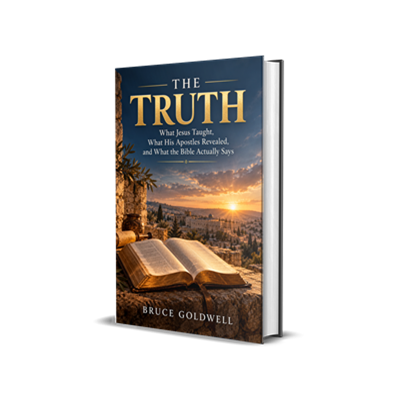
THE TRUTH examines what Jesus taught, what His apostles revealed, and what the Bible actually says about the original Church, authority, ordinances, the afterlife, Resurrection, apostasy, and restoration.
The investigation does not begin by asking you to accept a denomination.
It begins with the evidence.
Build the New Testament blueprint. Follow the history. Then compare the claims.