Begin With What the New Testament Actually Shows
Today, Christians are accustomed to churches led by pastors, priests, ministers, bishops, elders, or other religious leaders.
But when we open the New Testament, two titles appear repeatedly that are absent from the leadership structure of many modern Christian churches:
Apostles and prophets.
That immediately raises several questions.
Why Did Jesus Establish Apostles?
Why did prophets continue after Jesus?
What responsibilities did they have?
Were they needed only temporarily?
If so, when did the need end?
If not, what happened to them?
Jesus Personally Chose Twelve Apostles
The Twelve were not created by later Christianity.
Jesus Himself chose them.
Luke describes Jesus praying before making the selection.
Notice the distinction.
Jesus had disciples.
From among those disciples, He selected twelve and named them apostles.
That means disciple and apostle were not simply interchangeable terms.
Many followed Jesus.
Twelve received a particular calling.
Why Twelve?
The number appears deliberate.
Ancient Israel consisted of twelve tribes.
Jesus organizes a leadership body of Twelve.
He later tells the apostles that they will sit upon twelve thrones, judging the twelve tribes of Israel.
The selection therefore appears connected with Jesus' larger message concerning Israel and the Kingdom of God.
The Twelve were not simply twelve friends traveling with Jesus.
They had symbolic and organizational significance.
What Does “Apostle” Mean?
The Greek term translated as apostle carries the basic idea of one who is sent.
But in the New Testament, an apostle is more than a messenger delivering information.
The Twelve are commissioned representatives of Jesus Christ.
Jesus teaches them.
He sends them.
He gives them responsibilities.
And He gives them authority.
Jesus Gave the Apostles Authority
Matthew describes Jesus calling the Twelve and giving them power or authority.
They are then sent to preach, heal, and minister.
The pattern is important.
Jesus called them.
Jesus authorized them.
Jesus sent them.
They did not simply decide one morning that they were apostles.
Jesus Gave Peter Keys
One of the most important statements concerning authority occurs after Peter declares Jesus to be the Christ.
Jesus tells Peter:
Christians disagree about exactly how Peter's authority should be understood and whether it continued through later church leaders.
But before debating succession, we should recognize what the passage itself establishes.
Jesus speaks of keys.
Authority in His Church is not presented merely as enthusiasm, education, sincerity, or popularity.
The Apostles Became Witnesses of the Resurrection
After the death and Resurrection of Jesus, the role of the apostles became even more important.
They were witnesses that Jesus had risen.
Peter's preaching in Acts repeatedly centers on that testimony.
The apostles were not merely preserving the ethical teachings of a deceased religious leader.
They were proclaiming:
Jesus Christ is alive.
That testimony became foundational to the Christian movement.
Then Judas Was Gone
Judas Iscariot had been one of the Twelve.
After betraying Jesus, Judas died.
That left eleven apostles.
At this point something happened that deserves far more attention than it often receives.
The remaining apostles did not simply say:
“There were originally twelve, but now there are eleven.”
They sought someone to fill the vacancy.
Matthias Replaced Judas
Acts 1 describes Peter addressing the assembled believers.
Candidates were considered from among those who had accompanied the disciples during Jesus' ministry.
The group prayed for divine guidance.
Matthias was selected.
Acts concludes:
Why Replace Judas?
Jesus had already ascended.
His mortal ministry was complete.
Yet the apostles filled the vacancy.
Why?
Whatever conclusion we eventually reach about later apostolic succession, Acts clearly shows that the death of an apostle did not initially mean the office itself had ended.
Paul Was Also Called an Apostle
The story becomes even more interesting with Paul.
Paul was not one of the original Twelve.
He had not followed Jesus during His Galilean ministry.
In fact, Paul originally opposed the Christian movement.
Then Paul experienced what he understood as an appearance and calling from the risen Christ.
He later repeatedly identifies himself as an apostle.
Paul therefore presents apostleship as a living calling within the expanding Church, not merely an honorary title for the original companions of Jesus.
Were There Apostles Beyond the Twelve?
The New Testament uses apostolic language beyond the original list of Twelve.
Paul and Barnabas, for example, are called apostles in Acts.
This has produced discussion about whether the word always refers to the same office or can sometimes be used more broadly for commissioned messengers.
That distinction is worth examining.
But either way, apostolic ministry clearly continued after the Resurrection and Ascension of Jesus.
What About Prophets?
Some people associate prophets almost entirely with the Old Testament.
Moses.
Isaiah.
Jeremiah.
Ezekiel.
Elijah.
But prophets did not disappear when Jesus came.
The New Testament contains prophets too.
Jesus Spoke About Prophets
Jesus warned about false prophets.
That warning itself assumes that the concept of prophecy remained meaningful.
Jesus also lamented Jerusalem's history of rejecting prophets and spoke about messengers God continued to send.
The early Christian movement then openly describes prophets operating within the Church.
Prophets Appear in Acts
Acts records:
One of them was Agabus.
He prophesied concerning a coming famine.
Later in Acts, Agabus gives another prophetic warning concerning Paul.
These passages are important because they occur after Jesus' Resurrection and Ascension.
Prophecy Did Not End When Jesus Ascended
The New Testament Church continued to recognize people identified as prophets.
Antioch Had Prophets and Teachers
Acts describes the church at Antioch this way:
The passage then describes the Holy Spirit directing missionary work.
Barnabas and Saul are set apart and sent.
This is a picture of a Church expecting continuing divine guidance.
Paul Said Christ Gave Apostles and Prophets
Perhaps the most direct statement about Church organization appears in Paul's letter to the Ephesians.
This passage does not present apostles and prophets as mistakes the early Church would eventually outgrow.
Paul says Christ gave them.
Then Paul explains why.
Why Did Christ Give Them?
According to Ephesians, these ministries served several purposes.
To equip or perfect the Saints.
For the work of ministry.
For building up the body of Christ.
To help bring believers toward unity of faith.
To help believers mature spiritually.
To protect believers from being carried about by conflicting doctrines.
Those purposes immediately create a question for modern Christianity.
When Was Their Work Finished?
Paul describes apostles, prophets, and other ministries continuing toward a goal.
That goal includes unity of faith and maturity in Christ.
Look at Christianity today.
Christians disagree about baptism.
They disagree about salvation.
They disagree about authority.
They disagree about Communion.
They disagree about spiritual gifts.
They disagree about church government.
They disagree about the nature of God.
They disagree about whether revelation continues.
They disagree about apostles and prophets.
Have We Reached the Unity Paul Described?
If not, why would the ministries intended to help create that unity no longer be needed?
That question does not by itself prove that apostles and prophets must exist today.
But it deserves an answer.
What Was the Foundation of the Church?
Paul uses another striking image in Ephesians.
Speaking to believers, he says they are members of God's household:
Christ is the chief cornerstone.
Apostles and prophets are described as part of the foundation.
Different Christian traditions interpret the continuing implications of this imagery differently.
Some argue that a foundation is laid once and does not need to be laid again.
Others emphasize that living apostles and prophets were part of the functioning Church Christ established.
Both interpretations should be examined.
Were Apostles Only for the First Century?
This is one of the major competing interpretations.
Many Christians believe the apostles had a unique foundational role.
They personally witnessed the ministry and Resurrection of Christ, received His teaching, and helped establish the Church.
Once their testimony was preserved and the apostolic message was transmitted to later generations, the office of apostle in the original sense was no longer required.
Under this view, the authority of the apostles continues primarily through their teaching preserved in Scripture.
That is a serious argument.
But it creates questions of its own.
Where Does the New Testament Say the Office Would End?
Why was Judas replaced?
Why was Paul called later?
Why did Christ give apostles for purposes that appear unfinished?
Did Apostolic Authority Continue Through Bishops?
Catholic and Orthodox Christianity answer the continuity question differently.
They maintain that the apostolic ministry continued through bishops who succeeded the apostles in governing and teaching the Church.
Under this understanding, the Church did not lose apostolic authority when the original apostles died.
The form of leadership developed, but continuity remained.
This claim has deep historical roots and deserves serious examination.
The important question becomes:
Did the Apostles Transfer Their Full Authority to Successors?
And if they did, what historical and scriptural evidence demonstrates that succession?
Did Authority Disappear?
The Church of Jesus Christ of Latter-day Saints makes a different claim.
It teaches that after the deaths of the apostles and the gradual loss of authorized apostolic leadership, essential priesthood authority was no longer present in its original fullness.
Under that interpretation, Christianity continued.
Believers continued.
Scripture continued.
Faith continued.
Much truth continued.
But something essential had been lost:
divinely authorized apostolic authority.
That leads to the claim that authority later had to be restored, not merely reformed.
Whether that claim is true is another question.
But first we need to determine whether the New Testament makes authority essential in the first place.
What About Prophets Today?
Christians also disagree sharply over continuing prophecy.
Some believe public revelation ended with the apostolic age and that Scripture now contains everything necessary for Christian faith.
Some charismatic and Pentecostal Christians believe gifts of prophecy continue, while distinguishing modern prophecy from the authority of biblical Scripture.
Latter-day Saints believe God continues to call prophets with authority to receive revelation for the Church.
These are very different claims.
Rather than beginning with the modern disagreement, we can begin with the biblical pattern.
God called prophets before Christ.
Prophets existed during the ministry of Christ.
Prophets existed after Christ's Ascension.
Paul listed prophets among the ministries Christ gave to His Church.
Revelation continued in the apostolic Church.
Then we can ask:
When did God say He would stop speaking?
What About False Prophets?
Jesus warned that false prophets would arise.
Some people conclude that the safest response is therefore to reject anyone claiming prophetic revelation.
But notice what Jesus actually warned about.
He warned against false prophets.
A warning about counterfeit money does not prove that real money does not exist.
Likewise, the existence of false prophecy does not logically demonstrate that genuine prophecy is impossible.
Instead, it creates the need for discernment.
How Do You Recognize a True Prophet?
That may be a more useful question than simply asking whether anyone can be a prophet at all.
Does Having a Bible Eliminate the Need for Revelation?
Another argument says that apostles and prophets were necessary before the New Testament was completed, but once Christians had the Bible, continuing revelation was no longer needed.
That explanation is common in some Christian traditions.
But the Bible itself does not contain a statement saying:
“When these writings are collected into one volume, God will no longer call apostles or prophets.”
The New Testament documents were written over time and circulated among different churches before eventually being collected into the canon Christians know today.
The question therefore remains:
Did Scripture Replace Revelation—or Preserve Revelation?
After all, the Bible exists because people believed God had spoken.
What Pattern Do We Actually See?
If we strip away later denominational labels and simply list the New Testament evidence, the pattern looks something like this:
Jesus chooses apostles.
He gives them authority.
He gives Peter keys.
The apostles become witnesses of the Resurrection.
Judas dies.
Matthias replaces him.
Paul is later called as an apostle.
Prophets operate in the Church after Jesus' Ascension.
Christ is said to have given apostles and prophets for the strengthening and unity of His Church.
Apostles and prophets are described as foundational to God's household, with Jesus Christ as the chief cornerstone.
That evidence does not automatically settle every later question.
But it gives us something concrete against which later Christian claims can be compared.
Then the Historical Trail Changes
During the New Testament period, apostles are clearly visible.
Then the first generation disappears.
The historical Church continues.
Bishops become increasingly prominent.
Christian writings continue.
Councils eventually address major doctrinal disputes.
Christianity spreads across the Roman world and beyond.
But the leadership structure no longer looks exactly like the one encountered at the beginning of the New Testament story.
How should that development be understood?
Three Major Explanations
Continuity: Apostolic authority continued through legitimate successors, particularly bishops.
Scriptural continuity: The unique apostolic office ended, but apostolic teaching remains authoritative through Scripture and the continuing community of believers.
Loss and Restoration: Essential apostolic authority disappeared and later had to be restored by God.
Those explanations cannot simply be blended together.
They make different claims about what happened after the apostles.
So we need to follow the evidence further.
The Question Is Not Whether Good Christians Existed
This distinction is important.
Asking whether apostolic authority continued is not the same as asking whether sincere Christians continued.
History contains countless people who loved Christ, served others, studied Scripture, sacrificed, worshiped, prayed, and tried to follow God.
The question of authority is different.
Did the Authority Jesus Gave His Apostles Continue?
If yes, how?
If no, what happened to it?
And if it was lost, could human beings restore it themselves?
That Leads to Reformation or Restoration
More than a thousand years after the apostolic era, reformers challenged doctrines and practices within Western Christianity.
They translated Scripture.
They challenged religious authority.
They called Christians back to biblical teaching.
Their influence changed history.
But if the original problem involved lost authority rather than only corrupted teaching, reform creates another question.
A person can reform an organization.
A person can rediscover a teaching.
A person can translate a Bible.
But can someone give himself authority from God?
If Authority Was Lost, Could It Be Reformed?
Or would it have to be restored?
Continue: Reformation or Restoration? →
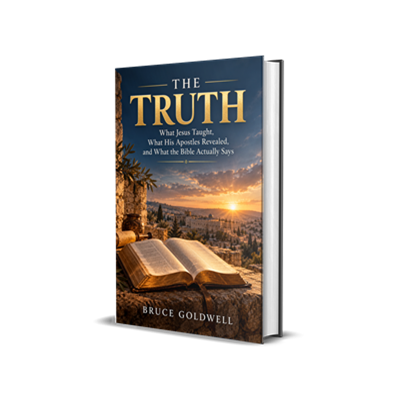
What Did Jesus Actually Establish?
THE TRUTH examines the New Testament evidence concerning the Church Jesus established, its apostles and prophets, authority, ordinances, spiritual gifts, revelation, the afterlife, Resurrection, and the promised restitution of all things.
The investigation does not begin by declaring which modern denomination is correct.
It begins with a simpler challenge:
Open the New Testament. Build the blueprint. Then compare the claims.