The Bible Begins With a God Who Communicates
Open the Bible to its first pages and one characteristic of God appears immediately.
God communicates.
He speaks to Adam.
He speaks to Noah.
He speaks to Abraham.
He speaks to Isaac and Jacob.
He speaks to Moses.
He calls prophets.
He sends warnings.
He gives commandments.
He reveals promises.
He guides His people.
The biblical story would be almost impossible to tell without revelation.
So What Changed?
If God communicated with His children throughout Scripture, why would we assume He can no longer do so?
God Spoke Through Prophets
One of the clearest patterns in the Old Testament is God's use of prophets.
A prophet was not merely someone who predicted distant future events.
Prophets spoke God's message to people in their own time.
They warned.
They taught.
They corrected.
They called people to repentance.
They sometimes revealed future events.
Most importantly, they claimed that God had communicated with them.
Whatever one concludes about how broadly that statement should be applied, it reflects a deeply biblical idea:
God reveals His will.
Revelation Did Not End With the Old Testament
Sometimes the biblical prophets are treated as though they belonged to an earlier religious age that ended when Jesus arrived.
But the New Testament immediately challenges that assumption.
Zechariah receives an angelic message.
Mary receives an angelic message.
Joseph receives guidance through dreams.
Simeon is guided by the Holy Ghost.
John the Baptist is called to prepare the way for Christ.
Revelation continues.
Jesus Himself Received Revelation
Jesus repeatedly speaks of His relationship with the Father.
He prays.
He teaches what He says He received from the Father.
At His baptism, the New Testament describes the Spirit descending and a voice from heaven declaring Him to be the beloved Son.
At the Transfiguration, Peter, James, and John witness another extraordinary revelatory event.
The ministry of Jesus is not presented as the end of communication between heaven and earth.
It is filled with it.
Peter Knew Jesus Through Revelation
One of the most important examples occurs when Jesus asks His disciples who they believe He is.
Peter answers:
Jesus then explains how Peter knew.
Peter's testimony is explicitly connected with revelation.
That matters.
Jesus does not tell Peter that revelation belongs only to ancient prophets.
He identifies revelation as the source of Peter's understanding.
Jesus Promised Continuing Guidance
Before His death, Jesus told His disciples that they would not be left alone.
He promised the Holy Ghost.
John records Jesus saying:
That promise becomes especially important after Jesus' Ascension.
The apostles would no longer have Jesus physically walking beside them every day.
But divine guidance did not end.
Pentecost Was an Explosion of Revelation
After the Ascension, the disciples gathered in Jerusalem.
Acts 2 describes the coming of the Holy Ghost with extraordinary spiritual manifestations.
Peter interprets what is happening by quoting the prophet Joel.
Notice what Peter does not say.
He does not announce the end of prophecy.
He announces its presence.
The Church Begins With Revelation—Not With Its End.
Peter Received a Vision After Jesus Ascended
Acts 10 provides one of the clearest examples of continuing revelation in the apostolic Church.
Peter receives a vision involving animals considered unclean under Jewish dietary law.
The vision prepares him for a much larger change:
the Gospel is to go to Gentiles without requiring them first to become Jews.
This was not a minor administrative adjustment.
It affected the future of Christianity.
And the New Testament presents divine revelation as part of the process.
Paul Received Revelation
Paul's entire Christian ministry begins with what he describes as an encounter with the risen Christ.
Acts later describes additional visions and divine guidance during his ministry.
Paul also speaks directly in his letters about revelation.
He does not behave as though heaven became silent after Jesus ascended.
Quite the opposite.
Paul's ministry assumes that God continues to guide His servants.
The Church Had Prophets After Jesus
Acts explicitly identifies prophets operating within the Christian Church.
Agabus is named among them.
Acts later describes prophets and teachers serving in Antioch.
These events take place after the death, Resurrection, and Ascension of Jesus.
So whatever theory we adopt about when prophecy ended, it cannot simply be:
“Prophets ended when Jesus came.”
The New Testament itself contradicts that idea.
Examine: Apostles and Prophets →
The Holy Ghost Directed Missionary Work
Acts repeatedly describes the early Christian mission as guided by the Spirit.
In Antioch, the Holy Ghost directs the Church to set apart Barnabas and Saul for missionary work.
Elsewhere, Paul and his companions change their travel plans in response to spiritual guidance.
The early Church did not appear to believe that once Jesus had given the Great Commission, human beings were left entirely on their own to determine how to carry it out.
They expected continuing guidance.
The Church Sought Revelation in Doctrinal Questions
Acts 15 describes a major controversy over Gentile converts and the law of Moses.
The apostles and elders gathered.
They discussed the issue.
They heard testimony.
Peter spoke.
James gave judgment.
Then a decision was sent to the churches.
The letter contains these words:
The leaders of the Church believed the Holy Ghost was involved in resolving a major doctrinal question.
John Received Revelation Late in the New Testament Story
One of the final books of the New Testament is literally called Revelation.
John describes visions concerning Christ, the Church, judgment, evil, victory, and the future.
Whatever date one assigns to the book within the first century, the important point is obvious.
The Christian movement continued to preserve claims of divine revelation after the Resurrection and Ascension.
The New Testament ends with revelation still part of Christianity.
So Where Does the Bible Say Revelation Must Stop?
This is where the question becomes more difficult.
Many Christians believe that public or authoritative revelation ended with the apostolic age.
Under this view, God continues to guide individuals through prayer, wisdom, Scripture, and the Holy Spirit, but He no longer gives new authoritative revelation to the universal Church.
This position is often called cessationism in discussions of certain spiritual gifts, although Christians who hold cessationist views do not all define the boundaries in exactly the same way.
The important question for this investigation is:
What Biblical Passage Establishes the Cutoff?
Does the Completion of the Bible End Revelation?
A common explanation is that continuing revelation was necessary while the New Testament Church was being established.
Once the apostles had completed their work and Scripture had been given, further authoritative revelation was no longer necessary.
That view has a logical structure.
But the Bible does not contain a verse saying:
“When the final New Testament document has been written and the books have later been collected into one canon, God will no longer give revelation to His Church.”
The canon itself developed historically as Christian communities recognized and collected writings they regarded as authoritative.
That creates an interesting question.
The Bible Preserves Revelation
But does the Bible itself say that preserved revelation prevents future revelation?
What About “That Which Is Perfect”?
One passage sometimes enters discussions about the end of spiritual gifts.
Paul writes that prophecies will fail or pass away and that certain gifts will cease.
He then says:
Christians disagree about what “that which is perfect” means.
Some have associated it with the completion of Scripture.
Others understand Paul's context as pointing toward the future completion of God's work, when believers see “face to face.”
The passage therefore cannot simply be quoted as though all Christians agree that it announces the closing of revelation with the biblical canon.
What About the Warning Not to Add to Revelation?
Another passage frequently enters this discussion.
Near the end of Revelation, John warns against adding to or taking away from the words of “this prophecy.”
Some readers understand this as a warning against any later scripture or revelation.
Others point out that the warning specifically refers to the prophecy John is writing and that similar warnings about altering God's words appear earlier in Scripture.
The question is therefore whether Revelation 22 is intended as a declaration that God Himself will never speak again, or as a warning against human beings altering the revelation that has been given.
“Do Not Add to God's Words” Is Not Necessarily the Same as “God Cannot Add More Words.”
That distinction deserves careful consideration.
If God Spoke Again, Would That Contradict the Bible?
Not necessarily.
The Bible itself records God speaking repeatedly over long periods of time.
A later prophet did not automatically invalidate an earlier prophet.
Isaiah did not invalidate Moses merely because Isaiah came later.
Jeremiah did not invalidate Isaiah.
Peter did not invalidate Jeremiah.
Paul did not invalidate Peter simply because Paul received additional guidance.
New revelation could clarify, expand, apply, warn, or direct without making earlier revelation meaningless.
But this creates an equally important caution.
Not every claim of revelation is true.
The Bible Warns About False Prophets
Jesus warned about false prophets.
The New Testament warns about false teachers and deceptive spirits.
So an evidence-first approach cannot say:
“Someone claims God spoke to him, therefore God did.”
Claims must be tested.
At the same time, the existence of false prophets does not prove that all prophets must be false.
If Jesus intended His followers to reject every future prophetic claim automatically, the warning could simply have been:
“There will never again be prophets.”
Instead, He warned about false prophets.
The Better Question May Be: How Do We Test the Claim?
How Does the Bible Say to Test Spiritual Claims?
Scripture does not encourage blind acceptance.
It repeatedly encourages discernment.
A prophetic claim can be compared with earlier revelation.
Its fruits can be examined.
Its teaching about God and Christ can be tested.
Predictions, where specific and applicable, can be evaluated.
The character and conduct of the claimant can be considered.
And believers can seek wisdom and spiritual confirmation rather than surrendering judgment to another human being.
Don't believe every claim.
Don't reject every claim automatically.
Test the claim.
Does God Speak to Individuals Today?
Even many Christians who reject modern prophets still believe God guides individuals.
Christians pray for direction.
They seek wisdom.
They speak of feeling prompted by the Holy Spirit.
They ask God to help them make decisions.
They believe Scripture can speak powerfully to a present situation.
That creates an interesting distinction.
Many Christians already believe God still communicates in some sense.
The disagreement concerns the scope and authority of that communication.
Personal Guidance Is Not the Same as Revelation for the Church
A person may believe God guided him to take a particular job, help someone, move to another city, forgive another person, or make a change in his life.
That does not automatically give him authority to declare doctrine for everyone else.
The New Testament itself contains different responsibilities.
Individuals can receive spiritual gifts and guidance while apostles and prophets hold broader responsibilities within the Church.
That distinction becomes important when examining claims of modern prophets.
Could God Call a Prophet Today?
Before asking whether a particular person is a prophet, ask a more basic question.
Could God call one?
If the answer is absolutely no, then every modern prophetic claim can be rejected without examination.
But what establishes that “no”?
If God is the same God who called Moses, Samuel, Isaiah, Jeremiah, Peter, Paul, and others, is He incapable of calling another servant?
The issue is not God's power.
The issue is whether He has declared that He will no longer do so.
Then We Arrive at Joseph Smith
Joseph Smith claimed that God still speaks.
That claim alone proves nothing.
History contains many people who have claimed visions, revelations, divine missions, or supernatural experiences.
Some claims contradict others.
Some have clearly failed.
Some have produced destructive movements.
So Joseph Smith should not be believed merely because he said he received revelation.
But neither should his claim be rejected merely because it involves revelation.
First Ask Whether Continuing Revelation Is Biblically Possible.
Then investigate the person claiming to receive it.
What Did Joseph Smith Claim?
Joseph Smith said his search began with religious confusion.
Different Christian churches taught different doctrines while appealing to the Bible.
He wanted to know which church he should join.
He later claimed that his prayer led to an encounter with God the Father and Jesus Christ.
Additional claims followed.
He said heavenly messengers appeared.
He said priesthood authority was restored.
He said apostles and prophets were again called.
He produced the Book of Mormon, which he said was an ancient record translated by the gift and power of God.
He claimed continuing revelation for the restored Church.
Those are extraordinary claims.
Extraordinary claims deserve examination, not automatic acceptance.
What Would We Expect if God Restored Revelation?
If God truly restored the kind of divine communication seen in the Bible, we might expect several recognizable features.
Prophets.
Apostles.
Revelation concerning the Church.
Divine authority.
Missionary work.
Spiritual gifts.
Ordinances.
Additional divine guidance as new circumstances arise.
The Restoration claim contains all of these elements.
That does not prove it true.
But it gives us a pattern that can be compared with the New Testament.
Would New Revelation Mean the Bible Is Incomplete?
Not necessarily in the sense people sometimes assume.
The Bible can be true, inspired, and foundational without requiring the conclusion that God has permanently finished communicating.
When Jeremiah received revelation, that did not mean Isaiah was false or inadequate.
When the apostles received revelation, that did not mean the Old Testament had failed.
The question is not whether earlier revelation was valuable.
The question is whether God retains the right to speak again.
Who Gets to Tell God He Is Finished Speaking?
A church?
A theologian?
A council?
A tradition?
Or God Himself?
What About Another Book of Scripture?
This is where continuing revelation becomes directly connected with the Book of Mormon.
If God cannot reveal anything after the Bible, then another book of scripture is impossible before its contents are even examined.
But if God can still speak, then the existence of another claimed witness must be judged on different grounds.
What does it say?
Where did it come from?
What does it teach about Jesus Christ?
Does it contradict the biblical witness or reinforce it?
What evidence supports or challenges its claims?
Those questions lead directly to the second volume of THE TRUTH Series.
Continue: The Bible and the Book of Mormon →
Perhaps the Question Is Not Whether God Can Speak
For anyone who believes the Bible, God's ability to speak is already established throughout its pages.
The harder question is whether God has chosen to remain silent.
The Bible records centuries of revelation.
Jesus promised the Holy Ghost.
Peter received revelation.
Paul received revelation.
Prophets operated in the Church.
John received Revelation.
So if revelation later ceased permanently, we should ask:
Who Announced the Silence?
Where is the revelation saying there will be no more revelation?
The Evidence Leaves the Door Open
The Bible clearly establishes that God has spoken.
It clearly establishes prophets.
It clearly establishes apostles.
It clearly establishes visions, dreams, spiritual gifts, and guidance through the Holy Ghost.
It clearly shows revelation continuing after the Resurrection and Ascension of Jesus.
Christians disagree about whether authoritative revelation later ceased.
That disagreement should be acknowledged.
But a claim that God has spoken again cannot fairly be rejected merely because God spoke again.
It must be tested on its own evidence.
Don't Begin With Joseph Smith
Begin with God.
Does God speak?
The Bible says He has.
Did He speak after Jesus?
The New Testament says He did.
Could He speak again?
That is the question.
Only after answering it should we ask whether Joseph Smith, or anyone else claiming revelation, actually spoke for God.
Don't Believe the Claim Because It Is Religious.
Don't reject it because it is extraordinary.
Examine it.
And If God Still Speaks...
Then several possibilities reopen.
God could call prophets.
Christ could call apostles.
Authority could be restored.
New revelation could be given.
Another witness of Jesus Christ could exist.
And the story of God's dealings with humanity might not have ended on the final printed page of the Bible.
Perhaps heaven was never meant to be silent.
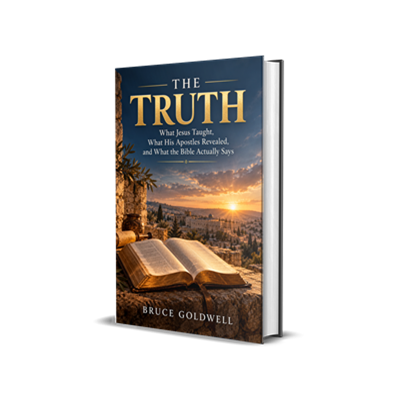
What Does the Bible Actually Say?
THE TRUTH examines Jesus Christ, His apostles, prophets, authority, revelation, ordinances, the afterlife, Resurrection, apostasy, and the promised restitution of all things.
The purpose is not to begin with a denomination and make Scripture fit it.
Begin with Scripture.
Put the evidence on the table. Ask the questions. Decide what you believe.