What Was CEO Space?
CEO Space brought entrepreneurs, business owners, investors, educators, mentors, speakers and people pursuing dreams into an environment designed around learning, relationships, collaboration and business development.
There were presentations.
There was education.
There were conversations about capital, business strategy, marketing, leadership and growth.
There were experts with knowledge to share and entrepreneurs with problems to solve.
But describing the curriculum alone misses what made CEO Space memorable.
Because much of what mattered happened between the scheduled events.
It happened when someone said:
It happened in conversations.
Over meals.
Between presentations.
When someone stayed behind to answer another question.
When an entrepreneur explained a problem and discovered that someone else in the room had already solved it.
That was The Space.
What The Space Meant to Thousands
Over the years, thousands of entrepreneurs and participants passed through the CEO Space experience. They did not all arrive for the same reason, and they did not all leave with the same result.
Some came looking for capital.
Some came looking for business knowledge.
Some needed a marketing strategy.
Some were searching for partners, customers, investors, mentors or expertise.
Some had businesses already operating and wanted to take them farther.
Others arrived with little more than an idea and the belief that somehow it could become something real.
And some may not have fully understood what they were looking for until they entered The Space.
For many, one of the most important discoveries was that entrepreneurship did not have to be a solitary journey.
You could enter a room containing people whose experience was different from yours.
Someone might know something you did not know.
Someone might see a weakness in your plan before it became an expensive mistake.
Someone might know the person you needed to meet.
Someone might simply tell you:
Not every connection became a company.
Not every conversation produced an investment.
Not every idea became a success.
But the larger lesson could remain long after the event itself ended:
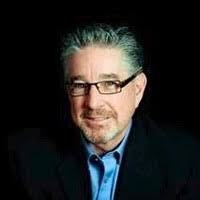
Berny Dohrmann
At the center of CEO Space was Berny Dohrmann and a conviction that business could operate differently.
Berny challenged the assumption that entrepreneurs always had to view one another primarily as competitors.
He believed business people could learn together, cooperate, share resources, exchange knowledge and help one another grow.
The philosophy was not simply about being nice.
It was about creating more possibilities.
If one entrepreneur knows a manufacturer and another needs manufacturing, a connection can create value.
If one person understands finance and another has a promising idea but lacks financial knowledge, sharing expertise can create value.
If someone knows the investor, publisher, mentor, customer or strategic partner another person needs, an introduction can create value.
The more effectively those relationships conduct knowledge and opportunity, the more valuable the community becomes.
From Competition to Cooperation
Traditional business culture can teach people to guard what they know.
Guard the contacts.
Guard the opportunity.
Guard the customer.
Guard the strategy.
The underlying assumption is scarcity:
CEO Space encouraged another way of looking at entrepreneurial relationships.
What if helping the right person succeed actually increased the opportunities available to everyone involved?
What if your contact could help another entrepreneur today, and someone else's contact could transform your company tomorrow?
What if knowledge moved instead of being hoarded?
What if contribution came before calculation?
No One Had to Enter The Space Empty-Handed
One of the most powerful ideas behind The Space was that contribution was not reserved for the wealthiest or most successful person in the room.
The experienced CEO could contribute.
So could the first-time entrepreneur.
The investor could contribute capital.
The educator could contribute knowledge.
The speaker could contribute inspiration.
The marketer could contribute strategy.
The connector could contribute relationships.
And someone who possessed none of those things could still listen, encourage and introduce two people who should know one another.
That distinction matters.
A room full of people waiting to receive is simply a crowd.
A room full of people looking for ways to contribute becomes something very different.
It becomes a Space.
Proximity to Possibility
One of the deepest lessons from CEO Space is easy to overlook.
Environment matters.
We spend enormous amounts of time thinking about goals, discipline, motivation, knowledge and strategy.
But we sometimes forget to ask:
What rooms am I entering?
Who is around me?
What do they talk about?
What do they believe is possible?
Do they protect information or share it?
Do they resent another person's success or celebrate it?
Do they discourage ambitious ideas or ask how they can help make them happen?
The right environment does not guarantee success.
But it can dramatically change what a person sees, learns and believes is possible.
The Connections Continued After Everyone Went Home
An event ends.
Chairs are moved.
People pack their bags.
Flights leave.
Everyone goes home.
But a meaningful connection does not necessarily end when the room empties.
A conversation can become a friendship.
An introduction can become a partnership.
Advice can influence a business decision years later.
A lesson can become part of the way someone leads.
A person who was helped can eventually help someone else.
This is one reason the true influence of a community cannot be measured simply by attendance.
The more important question is:
Knowledge.
Relationships.
Confidence.
Opportunity.
Friendship.
And sometimes an entirely new direction in someone's life.
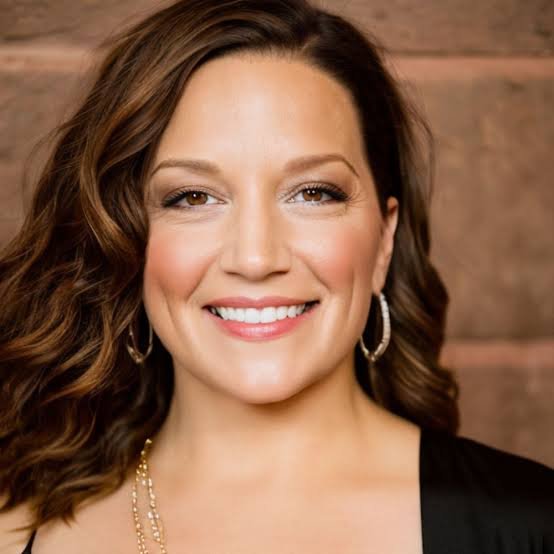
September Dohrmann
September Dohrmann became an important part of the continuing story of CEO Space and the Dohrmann legacy.
She experienced The Space from a perspective few people could have had.
She could see not merely individual events, but the relationships and transformations that developed through the community.
Entrepreneurs came and went.
Speakers entered the room.
New participants became experienced participants.
Relationships formed across industries and geography.
And the principles Berny championed were carried forward by people who had experienced them personally.
What The Space Meant to Me
When I first met Berny, I was mesmerized.
I had never met anyone quite like him before.
What makes that period even more meaningful to me today is where I was in my own life.
I was homeless.
Yet when I entered The Space, I wasn't treated as "the homeless guy."
People did not define me by what I lacked.
I was a person with a dream.
And I could contribute.
I listened to people.
I learned what they were trying to accomplish.
When I met someone whose interests or abilities connected with another person's dream, I tried to bring them together.
I discovered that even when I had very little materially, I still had something I could give.
That lesson never left me.
Berny is gone now. CEO Space as I knew it belongs to another chapter of my life. But the mentoring, the friendships, the lessons and the philosophy did not disappear.
Today I write books as one of my ways of giving to others.
And whenever I have the opportunity, I still try to help someone move a little closer to making their dream a reality.
The Superconductors
The Space worked because people brought something into it and allowed that value to move through the community.
Some conducted knowledge.
Some conducted encouragement.
Some conducted financial understanding.
Some conducted leadership.
Some conducted visibility.
Some conducted relationships.
Some conducted resilience.
Some conducted opportunity.
And some had an extraordinary ability to simply bring the right people together.
These are the people Bruce Goldwell calls Superconductors.
Build Your Own Space
CEO Space belonged to a particular time and community.
But The Space is an idea that can travel.
It can be a mastermind.
A monthly dinner.
An online community.
A mentoring circle.
A professional group.
Or five entrepreneurs who agree to actively help one another move forward.
The building isn't what creates The Space.
The logo isn't what creates The Space.
The name isn't what creates The Space.
The people do.
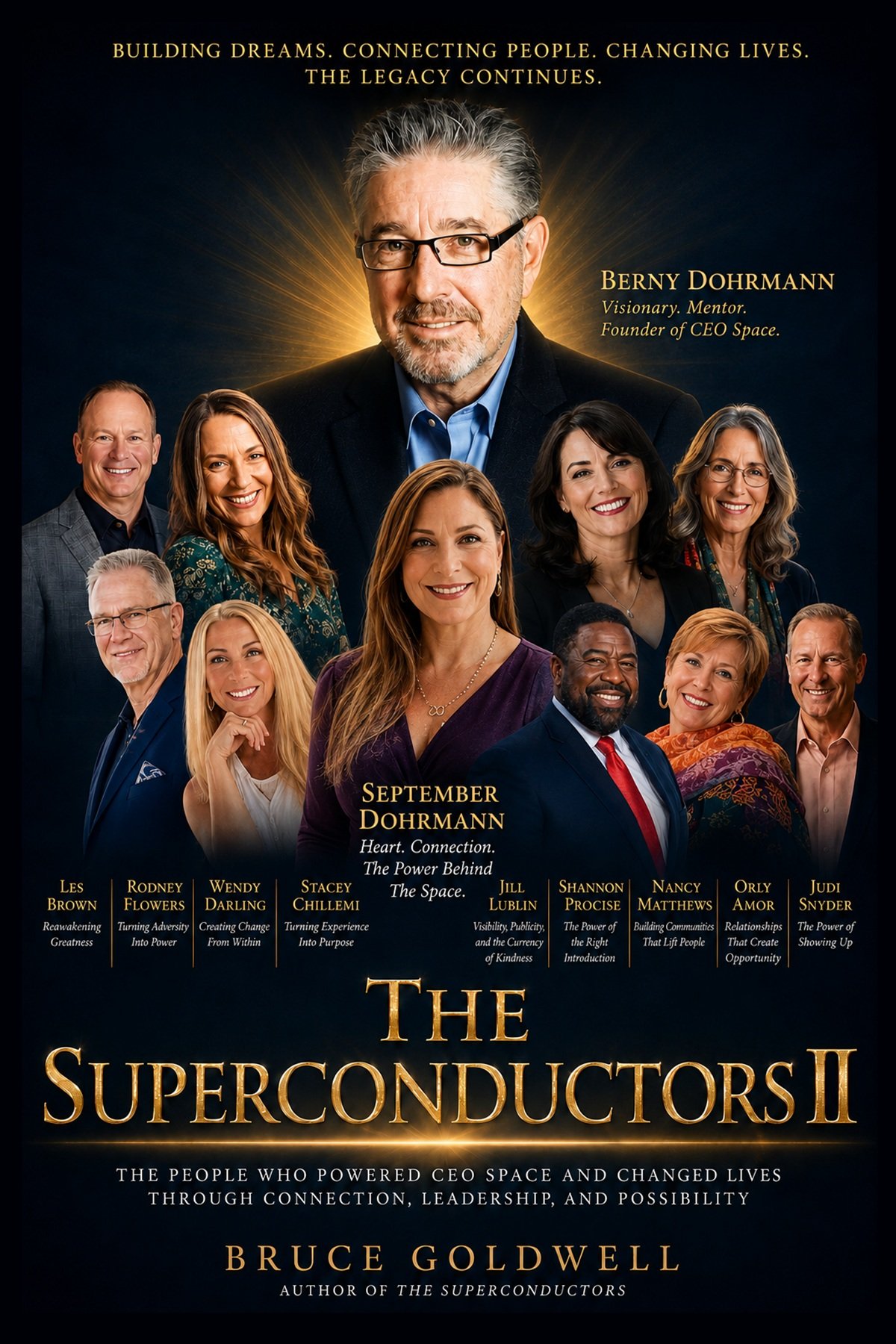
The Superconductors II
The People Who Powered CEO Space and Changed Lives Through Connection, Leadership, and Possibility
The Superconductors II is Bruce Goldwell's tribute to Berny Dohrmann, September Dohrmann and some of the remarkable people whose contributions helped make The Space what it was.
But it is also about something larger.
It asks what happens when people stop measuring a network by how many contacts they possess and begin measuring it by how much possibility moves through it.
And ultimately it asks every reader:
What is your Superconductor power?
Explore Book II View Book II on Amazon