Business Could Be Different
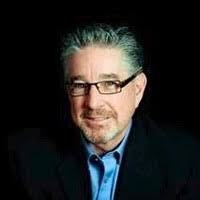
Berny Dohrmann believed entrepreneurs could accomplish more when they stopped seeing every other entrepreneur as a competitor.
Business did not have to be built entirely around isolation, secrecy and scarcity.
People could cooperate.
They could share knowledge.
They could make introductions.
They could mentor one another.
They could connect people with resources, expertise and opportunity.
Most importantly, they could create an environment where helping another person succeed might ultimately create more possibilities for everyone.
Why So Many People Build Alone
Entrepreneurship celebrates independence.
That independence can be a strength.
But it can also become isolation.
An entrepreneur has an idea and begins trying to solve every problem personally.
Financing.
Marketing.
Sales.
Legal questions.
Leadership.
Technology.
Operations.
Capital.
Relationships.
Growth.
No individual can be an expert in everything.
Yet traditional competitive thinking can make people reluctant to reveal what they do not know.
They may guard information.
Protect contacts.
Hide weaknesses.
Avoid asking for help.
Berny's philosophy challenged that isolation.
Entrepreneurs Needed an Environment
Entrepreneurs have never lacked information.
There are books.
Seminars.
Courses.
Consultants.
Experts.
Today there is more business information available than at any previous time in history.
But information alone does not create a business.
An entrepreneur may understand what needs to happen while still lacking the person, relationship, confidence, capital or experience needed to make it happen.
Berny's insight was that entrepreneurs needed more than another lecture.
They needed an environment.
An environment where education and relationships could operate together.
Where a question could lead to a conversation.
A conversation could lead to an introduction.
An introduction could lead to another relationship.
And that relationship could create an opportunity no one could have predicted when the day began.
And Then There Was The Space
CEO Space became the environment where Berny's ideas could be experienced rather than merely explained.
People came to learn.
But they also came into proximity with one another.
Entrepreneurs.
Business leaders.
Educators.
Speakers.
Mentors.
Investors.
Authors.
Experts.
People with established companies and people carrying little more than an idea.
The scheduled education mattered.
But sometimes the most important moment happened outside the scheduled program.
Someone listened to another person's problem.
Then came the words that could change everything:
That was when The Space became more than a room.
What The Space MeantCooperation Instead of Destructive Competition
Competition has a legitimate place in business.
But competition becomes destructive when it convinces people that another person's progress automatically threatens their own.
Berny's philosophy encouraged entrepreneurs to explore another possibility.
Two businesses may compete in one area and collaborate in another.
One entrepreneur may possess knowledge another needs.
One company may have access to a resource another company lacks.
One person's customer may need another person's service.
One person's relationship may open a door for someone else.
Cooperation does not require pretending competition does not exist.
It means recognizing that human and economic relationships are often larger than a simple winner-versus-loser equation.
What Can You Contribute?
Most people naturally enter a business event thinking about what they hope to receive.
A customer.
An investor.
An answer.
A partner.
A useful contact.
But The Space encouraged another question:
That question changes the room.
Imagine one hundred people entering a room asking only what they can get.
Now imagine those same one hundred people also looking for ways to help.
One hundred networks enter the room.
One hundred collections of experience enter the room.
One hundred sets of skills enter the room.
One hundred different ways of seeing problems enter the room.
The potential value of the room multiplies when those resources begin moving between people.
When I Met Berny
When I first met Berny, I was mesmerized.
I had never met anyone like him before.
At that point in my life, I was homeless.
I did not have wealth.
I did not have a successful company to talk about.
I certainly wasn't walking into the room as someone others would have considered a powerful business leader.
But something happened inside The Space that I have never forgotten.
No one judged me by where I was.
I was accepted as a person who had a dream.
And I discovered that even though I had very little materially, I could still contribute.
I could listen.
I could learn what someone was trying to accomplish.
I could notice when another person was traveling on a path that might connect with that dream.
And I could introduce them.
Berny and the people of The Space helped me understand something that has remained with me ever since:
Berny Helped Keep My Dream Alive
Many years have passed since those experiences.
My life changed.
I became an author.
I wrote books across many different subjects.
I built projects I could not have imagined during the years when I was homeless.
But the lesson from Berny never disappeared.
Keep the dream alive.
And when possible, help someone else keep theirs alive.
Today, books are one of the ways I try to do that.
A reader may be thousands of miles away.
We may never meet.
But if something I write gives that person an idea, encouragement, information or another way of seeing what is possible, then something has been conducted.
Thousands Carried Something Home
Bruce's experience was only one story among the many people who passed through CEO Space over the years.
Thousands of participants and graduates entered The Space carrying different dreams and different challenges.
Their outcomes were different too.
Some found business knowledge.
Some found mentors.
Some made connections.
Some found encouragement.
Some discovered that a problem they thought they had to solve alone had already been solved by someone else.
And some carried the philosophy of contribution into communities and businesses far removed from CEO Space itself.
That may be one of the most important ways to think about Berny's legacy.
Not simply:
But:
September Dohrmann
A founder begins something.
A legacy depends upon other people understanding what was worth carrying forward.
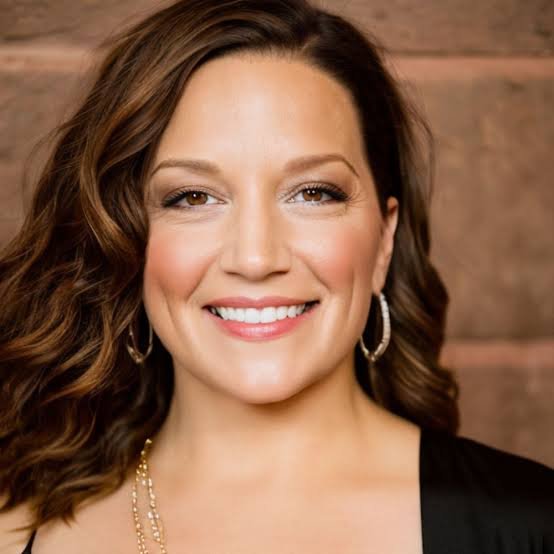
September Dohrmann became an important part of the continuing CEO Space story and the preservation of the principles associated with Berny's work.
Her perspective also matters because she witnessed The Space from inside its leadership.
She saw entrepreneurs arrive.
She saw relationships form.
She saw people return.
She saw contributors become part of the culture itself.
And she knew Berny not merely as a public figure but from a perspective unavailable to most people who encountered him through CEO Space.
Berny as a Superconductor
Bruce Goldwell's definition of a human Superconductor is someone who helps valuable things move.
Ideas.
Knowledge.
Relationships.
Resources.
Leadership.
Encouragement.
Opportunity.
Possibility.
By that definition, Berny's greatest act of Superconductivity may have been larger than any individual introduction he made.
He created a place where introductions could happen by the thousands.
He created an environment designed to conduct.
The Room May Be Gone. The Idea Is Not.
Berny Dohrmann passed away in 2020.
CEO Space as many graduates experienced it belongs to another period.
But an organization is only one container for an idea.
The deeper philosophy can continue anywhere people choose to practice it.
In a mastermind.
In a company.
At a business dinner.
In an online community.
Between two entrepreneurs.
Or in the simple act of telling someone:
The physical Space was important.
But ultimately, the principles of The Space belong wherever people choose contribution over isolation and possibility over scarcity.
Thank You, Berny
To Berny Dohrmann, whose vision created more than an organization. It created a Space.
A Space where entrepreneurs could learn, connect, contribute, dream bigger and discover that they did not have to build alone.
You taught people to look across a room and see not competitors, but possibilities.
You taught us that sometimes the greatest thing we can give another person is an introduction, an idea, encouragement, or access to someone who can help carry their dream forward.
The meetings ended. The rooms emptied. The years passed.
But the current kept moving.
Thank you for helping keep my dream alive.
— Bruce Goldwell
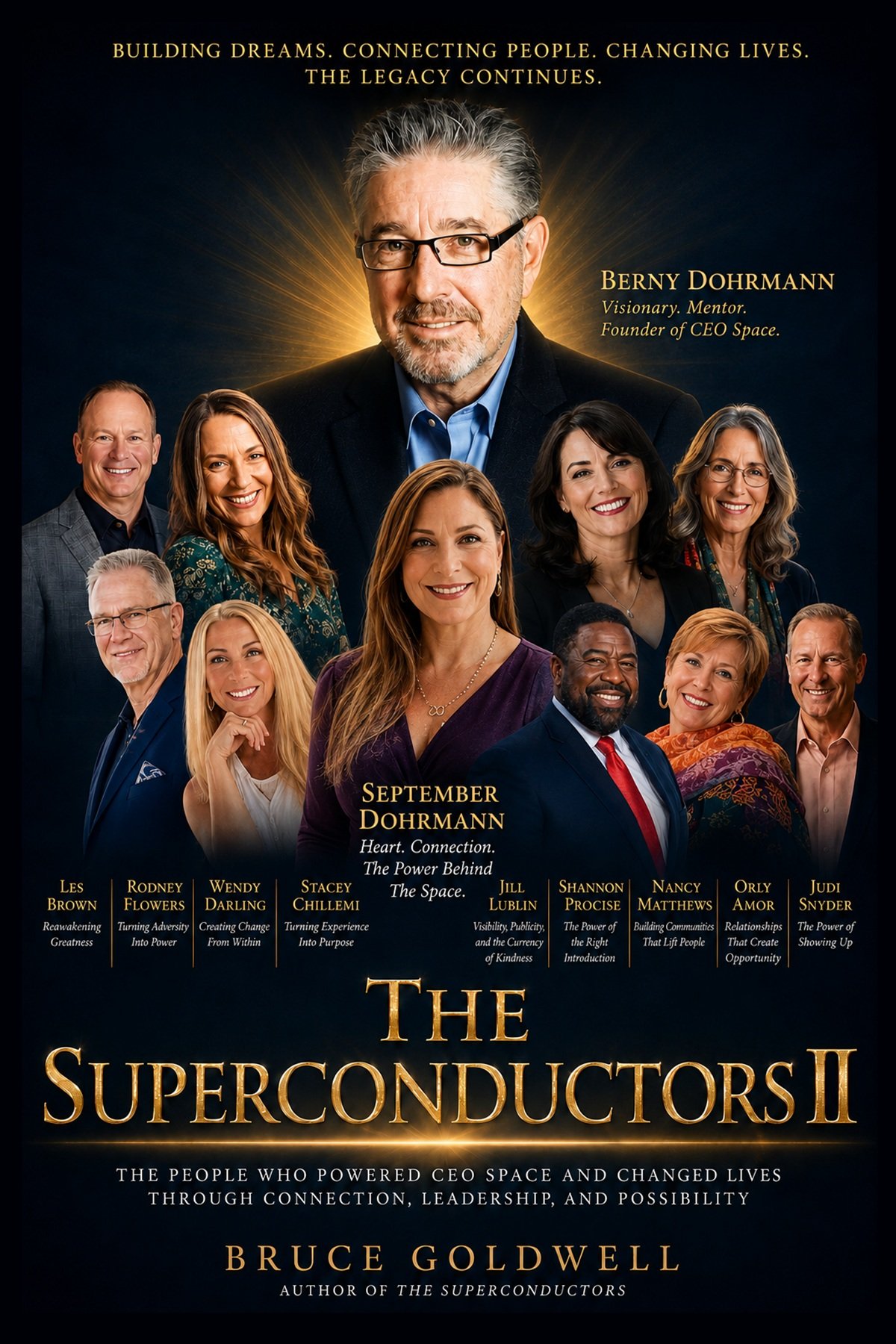
The Superconductors II
The People Who Powered CEO Space and Changed Lives Through Connection, Leadership, and Possibility
Berny Dohrmann is the central figure in The Superconductors II, but the book is also about what happened because people entered the environment he created.
September Dohrmann, Les Brown, Sharon Lechter, Dr. David Gruder, Jill Lublin and many other leaders, educators, connectors and entrepreneurs form part of the larger story of The Space.
Ultimately, the book asks readers to carry the principle beyond CEO Space:
What could happen if you became a Superconductor for the people around you?
Explore Book II View Book II on Amazon