Toxic Isn't the Same as Difficult

Every difficult relationship is not toxic. The important question is whether you are facing a hard season together—or living inside a destructive pattern.

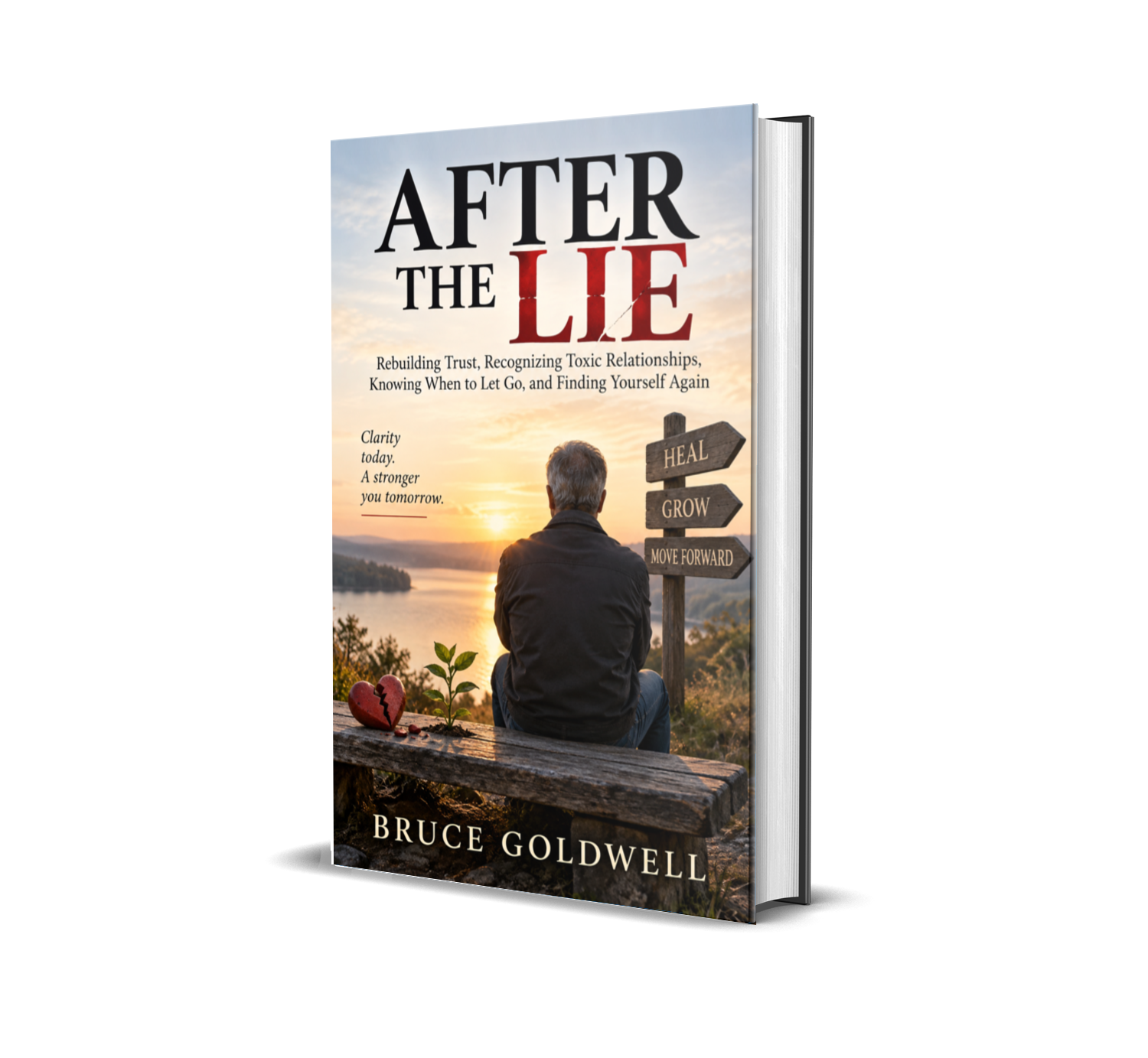
After the Lie by Bruce Goldwell

The Word Toxic Gets Used Too Easily

Relationships can be difficult without being destructive.

Two people can argue.

They can misunderstand each other.

They can go through grief, illness, unemployment, financial stress, parenting pressure, exhaustion, or seasons when communication simply becomes harder.

None of those things automatically make a relationship toxic.

What matters is the pattern underneath the difficulty.

Does the relationship still contain honesty, respect, accountability, freedom, and mutual effort?

“A difficult relationship asks both people to grow. A destructive one keeps asking one person to shrink.”

What a Difficult Relationship Can Look Like

Healthy relationships are not conflict-free.

Arguments Happen

Disagreement may be intense, but both people can eventually return to respect and communication.

Mistakes Happen

Someone may say or do the wrong thing, recognize it, apologize, and make an effort not to repeat it.

Hard Seasons Happen

Stress, illness, grief, work, money, or family problems may temporarily change the balance of the relationship.

Both People Can Speak

Each person can express concerns without being routinely punished, mocked, threatened, or silenced.

Accountability Exists

Both people can recognize their own contribution to problems instead of making one person responsible for everything.

Growth Is Possible

Problems may be difficult, but there is evidence that both people are trying to improve the relationship.

Patterns That Deserve Serious Attention

One bad day does not define a relationship. Repeated patterns can.

Repeated Dishonesty

Lies, concealed information, changing stories, secret accounts, hidden communication, or continued deception after promises of honesty.

Manipulation

Pressure, guilt, emotional games, or distorted conversations designed to make you doubt what you clearly experienced.

Contempt

Mockery, humiliation, insults, eye-rolling, cruelty, or treating your feelings as foolish or beneath consideration.

Control

Attempts to control where you go, who you speak with, what you wear, how you spend money, what you believe, or how you live.

Chronic Blame

Every problem somehow becomes your fault, including choices made by the other person.

Isolation

Friends, family, interests, and outside support gradually disappear because maintaining them creates conflict at home.

Walking on Eggshells

You constantly monitor your words, tone, plans, or behavior because you are trying to avoid the next explosion, punishment, or withdrawal.

Broken Promises Without Change

The same promises are made after every crisis, but the same behavior repeatedly returns.

Boundary Violations

Clearly expressed boundaries are ignored, mocked, tested, or treated as evidence that you are the problem.

One-Sided Emotional Labor

One person continually manages the peace, starts the conversations, forgives, explains, repairs, comforts, and keeps the relationship alive.

Identity Erosion

Over time you stop doing things you enjoy, seeing people you value, expressing your opinions, or recognizing the person you used to be.

Fear Replaces Freedom

Your decisions are increasingly based on avoiding a reaction rather than freely choosing how you want to live.

The Identity Test

One of the strongest clues may be what the relationship is doing to you.

Think about who you were before the relationship became difficult.

Were you more confident?

More social?

More creative?

More hopeful?

More willing to speak?

More connected to your own goals?

Relationships naturally change people. Growth is part of partnership.

But growth should not require your personality, voice, independence, friendships, or dreams to disappear.

“The right relationship should help you become more of yourself, not require you to become less of yourself to keep it.”

“Don't give until you disappear.”

When Giving Becomes Disappearing

Some unhealthy relationships survive because one person becomes exceptionally good at carrying them.

You may be the one who apologizes first.

The one who keeps peace.

The one who remembers important dates.

The one who solves money problems.

The one who adjusts.

The one who forgives.

The one who keeps trying.

Giving is a beautiful part of love.

But a relationship built around one permanent giver and one permanent receiver eventually becomes something very different from partnership.

Give and Receive

What Happens When You Raise a Concern?

The response to a problem can tell you almost as much as the problem itself.

Can they listen without immediately attacking you?

Can they acknowledge something they did without changing the subject?

Can they apologize without attaching blame to the apology?

Can you disagree without fearing punishment, rage, or withdrawal?

Do they respect boundaries after you explain them?

Does behavior change after the conversation?

Focus on the Pattern, Not the Label

You do not have to win an argument over whether someone is officially “toxic.”

Labels can sometimes become another distraction.

What matters is what is actually happening.

Are you repeatedly lied to?

Are you controlled?

Are you isolated?

Are you mocked or humiliated?

Are promises repeatedly broken without meaningful change?

Are you gradually becoming someone smaller just to keep the peace?

“You don't need the perfect label for a relationship before you're allowed to take its pattern seriously.”

Don't Let Potential Hide the Pattern

Destructive relationships often survive on future promises.

“I'll change.”

“I'll stop.”

“Things will be different.”

“Give me one more chance.”

Any of those promises may be sincere in the moment.

But sincerity and lasting change are not the same thing.

Eventually you have to compare the promise with the pattern.

Potential vs. Pattern

“Potential is who someone could become. Pattern is who they keep choosing to be.”

What Is the Relationship Costing You?

Sometimes the clearest evidence is found in the price you are paying.

“Don't ask only, ‘How do I keep this person?’ Ask, ‘What is keeping this person costing me?’”

Peace

Are you living with constant tension, suspicion, dread, or uncertainty?

Sleep

Are worry, arguments, checking, or fear repeatedly following you into the night?

Confidence

Have you begun doubting your judgment, attractiveness, intelligence, or worth?

Relationships

Have friendships and family connections weakened because of ongoing conflict?

Opportunity

Have jobs, goals, education, travel, creativity, or dreams been repeatedly sacrificed?

Yourself

Do you recognize the person you have become inside this relationship?

When the Issue Is Safety

Some situations go beyond ordinary relationship difficulty.

Violence, threats, stalking, intimidation, coercive control, forced sexual activity, severe financial control, or behavior that makes you fear what could happen if you leave should be treated seriously.

In situations like these, confrontation or announcing plans to leave may increase danger.

Consider seeking appropriate domestic violence support, legal advice, emergency assistance, or other professional help and developing a safety plan suited to your circumstances.

Your safety comes before preserving the appearance of the relationship.

Can a Destructive Pattern Change?

People can change.

But change cannot exist only as a possibility.

It eventually has to become behavior.

Words matter.

Intentions matter.

Apologies matter.

But when trust has been broken, change must survive the test of time.

“Hope without evidence can become a prison.”

How Trust Is Rebuilt

Love Does Not Require You to Stay

You can care about someone and still decide that the relationship is no longer healthy enough for you to remain in it.

Leaving does not require hatred.

It does not require proving that the other person is completely bad.

It does not require denying every good memory.

Sometimes it simply means accepting that what exists today is no longer something you are willing to build your future around.

“You can love someone with all your heart and still love yourself enough to stop living with what is breaking it.”

See the Pattern Clearly.

After the Lie helps you look beyond apologies, fear, history, and hope to the relationship you are actually living.

Because sometimes the most important question is not whether you can keep a relationship.

It is whether keeping it requires losing yourself.