
Should I Stay or Leave?

Sometimes the hardest decision is not whether you still love someone. It is whether the relationship you have is still worthy of the life you want to build.

Choosing between broken trust and a clearer, healthier future

The Question That Changes Everything

After betrayal, many people assume the biggest question is:

Do I still love them?

But love and trust are not the same thing.

You can love someone and still question whether the relationship is healthy enough, honest enough, safe enough, or mutual enough to continue.

You can also be deeply hurt and still discover that the relationship is capable of being rebuilt.

That is why the question is not simply whether love remains.

The deeper question is whether trust is actually being rebuilt—or whether you are simply being asked to forget what happened.
You Do Not Have to Decide Everything Today

Betrayal creates pressure.

You may feel pressure to forgive immediately.

You may feel pressure to leave immediately.

Friends and family may have strong opinions.

The person who hurt you may demand an answer.

Your own fear may push you toward a decision before you are ready.

But one of the most useful answers you can sometimes give is:

“I don't know yet. Show me.”

Time can reveal what promises cannot.

Before You Decide, Watch What Happens Next

A relationship deserves another chance only if the behavior following the betrayal begins to support that chance.

TRUTH Are you receiving the truth, or are new pieces still appearing?
ACCOUNTABILITY Are they taking responsibility, or explaining why someone else caused their choices?
CONSISTENCY Does changed behavior continue once the immediate crisis fades?
TIME Does the improvement survive weeks and months—not just a few days?

TRUTH → ACCOUNTABILITY → CONSISTENCY → TIME

Are You Seeing Repair—or Another Cycle?

Real repair and repeating patterns can look similar at first.

Repair Looks Like

Honest answers, responsibility, patience with your questions, respect for boundaries, consistent behavior, and willingness to rebuild trust over time.

A Cycle Looks Like

Apology, promises, temporary improvement, pressure to move on, return of the same behavior, another discovery, and another apology.

The Difference

A second chance creates the opportunity for change. Endless chances without change simply teach someone that another apology may be enough.

Love Is Important. Evidence Is Necessary.

Love can explain why leaving feels unbearable.

It can explain why you remember the good years.

It can explain why you want to believe a promise.

It can explain why you keep imagining the future you thought the two of you would have.

But love by itself cannot prove that dishonesty has ended.

Love cannot prove that control has stopped.

Love cannot prove that accountability exists.

Love cannot prove that the future will be different from the past.

That requires evidence.

“Love can tell you why you want the relationship. Trust helps tell you whether the relationship can safely hold that love.”

Don't Make the Decision Based on Potential

Many people stay because they can still see who their partner could become.

“Potential is who someone could become. Pattern is who they keep choosing to be.”

Ask yourself what the relationship would look like if nothing substantially changed.

Not next week.

Not after another apology.

Not after another promise.

Imagine the current pattern continuing for another year.

Or five years.

Would you still choose the relationship?

Potential vs. Pattern

History Is Not Automatically a Future

The longer a relationship has lasted, the harder it can be to imagine walking away.

You may have invested five years.

Ten years.

Twenty years.

You may share a home, finances, friendships, children, traditions, memories, routines, and plans.

Those years matter.

But the years already spent cannot be recovered by spending additional years in a relationship that no longer supports the life you want.

“Honor the years you've given to the past, but don't give it the power to spend the years you still have left.”

Are You Staying Because You Want the Relationship—or Because You Fear Losing It?

Fear can sound surprisingly similar to love.

Fear of Being Alone

The unknown future can make familiar unhappiness feel safer than starting over.

Financial Fear

Housing, bills, retirement, debt, and shared finances can make leaving feel impossible even when the relationship is deeply unhealthy.

Fear of Judgment

Some people stay because they do not want others to know the relationship failed.

Fear of Starting Over

Beginning again can feel overwhelming, especially after many years together.

Fear No One Else Will Come

Believing this is your last chance at love can cause you to accept conditions you would otherwise reject.

Fear of Regret

You may worry that leaving means abandoning something that could still have been repaired.

What Is Keeping This Person Costing You?

This may be one of the most important questions in the entire book.

“Don't ask only, ‘How do I keep this person?’ Ask, ‘What is keeping this person costing me?’”

Consider the price.

Your Peace

Are you constantly anxious, checking, wondering, or waiting?

Your Confidence

Have you begun doubting your own judgment or worth?

Your Friendships

Have you become isolated from people who once mattered to you?

Your Dreams

Have important goals repeatedly been postponed or abandoned?

Your Self-Respect

Are you accepting treatment you once promised yourself you never would?

Your Identity

Have you gradually become smaller in order to keep the relationship?

Difficult Is Not the Same as Destructive

Every struggling relationship is not toxic.

Healthy people can go through illness, grief, unemployment, parenting stress, financial strain, exhaustion, and periods of poor communication.

Difficult seasons can still contain respect, honesty, accountability, and mutual effort.

Destructive patterns are different.

Repeated dishonesty, manipulation, contempt, control, chronic blame, isolation, intimidation, and continual boundary violations deserve to be taken seriously.

Toxic or Difficult?

“A difficult relationship asks both people to grow. A destructive one keeps asking one person to shrink.”

Questions Worth Asking Before You Decide

You do not need perfect certainty. You do need enough clarity to make an informed choice.

Am I seeing changed behavior—or better promises?

Does accountability exist without excuses?

Do I feel free to be myself in this relationship?

Am I receiving as well as giving?

Am I staying because I want this relationship—or because I fear leaving?

If nothing changed, would I still choose this relationship five years from now?

Does the relationship help me grow—or require me to shrink?

Is my hope supported by evidence?

You Don't Need to Turn Someone Into a Monster Before You Leave

Sometimes two people can care about each other and still no longer belong in the same relationship.

A person does not have to be completely bad for the relationship to be wrong for you.

You do not need a courtroom case.

You do not need unanimous approval from friends and family.

You do not need the other person to agree that the relationship should end.

“You don't need someone to become a monster before you're allowed to walk away.”

Sometimes knowing that the relationship is no longer right for your life is enough.

When Safety Changes the Question

If a relationship includes violence, threats, stalking, intimidation, coercive control, or circumstances where leaving could place you or someone else in danger, the decision should not be treated as an ordinary relationship disagreement.

Seek appropriate professional, legal, emergency, or domestic violence assistance and consider creating a safety plan before taking actions that could increase risk.

Your safety matters more than preserving the appearance of a relationship.

Sometimes Love Means Rebuilding.

Sometimes love means letting go.

Wisdom is knowing the difference.

Whatever you decide, the goal is not to make the decision everyone else would make.

The goal is to make a decision you can live with without abandoning yourself in the process.

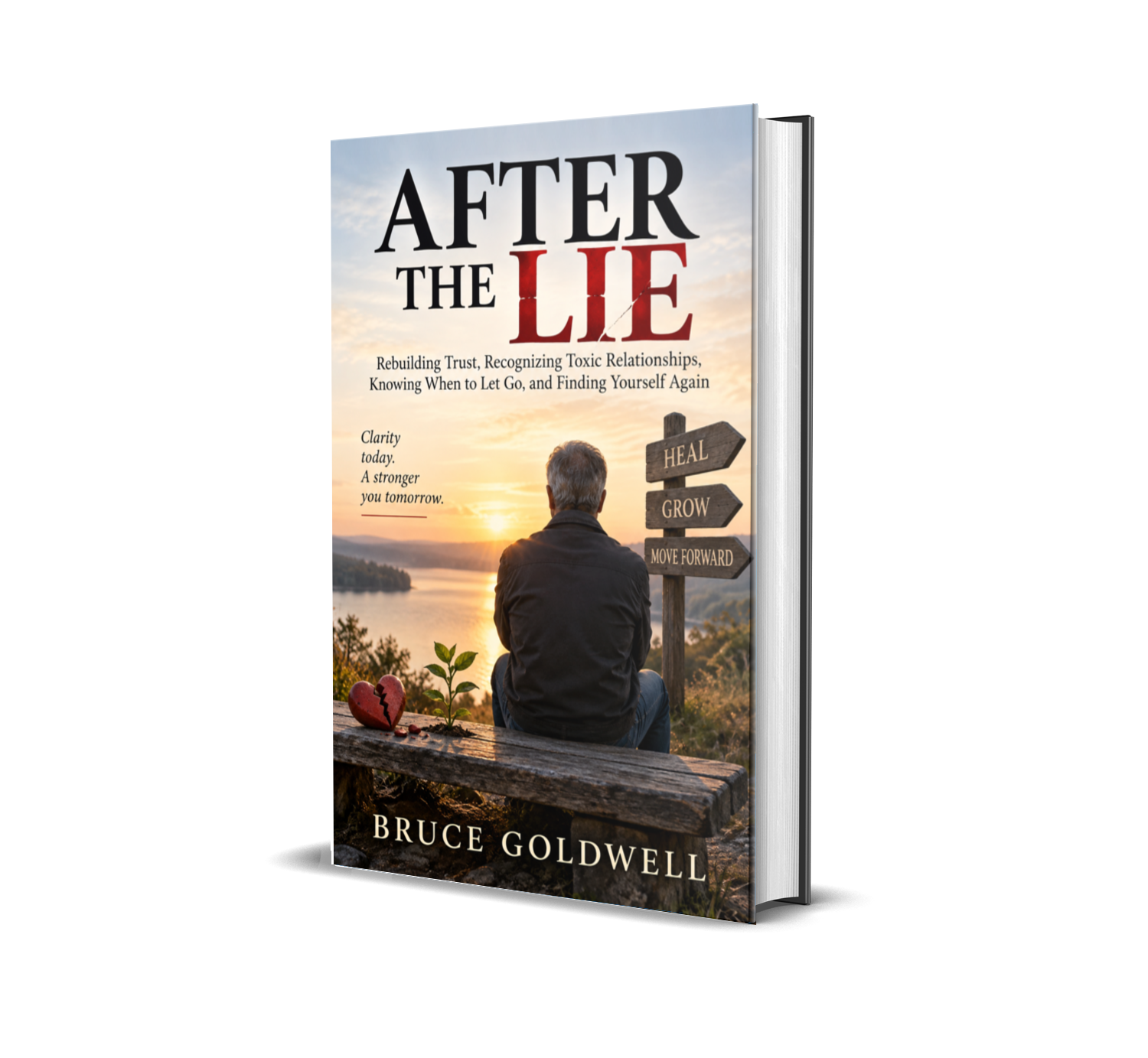
After the Lie by Bruce Goldwell

Continue the Journey in After the Lie

This decision is only one part of the journey.

After the Lie explores rebuilding trust, apologies, privacy and secrecy, toxic patterns, giving and receiving, fear of being alone, letting go, starting over, and learning how to trust yourself again.