People often say that relationships require “give and take.”
But think about those words.
One person gives.
Someone else takes.
That may describe a transaction.
It should not describe the emotional foundation of a healthy relationship.
A healthier way to think about partnership is give and receive.
“A healthy relationship isn't give and take. It is give and receive.”
Both people should have the opportunity to contribute to the relationship and to be nourished by it.
Encourage the person you love when life becomes difficult.
Allow yourself to be helped without believing that needing someone makes you weak.
Listen, notice, remember, and make space for the other person's world.
Your feelings, interests, concerns, and dreams should matter too.
Express love in ways the other person can actually feel.
A relationship should not leave you permanently wondering whether you matter.
Real life is rarely that neat.
Someone may become sick.
Someone may lose a job.
Someone may be grieving.
One person may temporarily need more emotional support.
One partner may carry more of the financial burden for a season.
One person may need the other to carry more of the household responsibilities.
That does not make the relationship unhealthy.
Healthy relationships can become uneven for a while.
The important question is whether the relationship eventually returns to mutual care rather than becoming permanently one-sided.
“Balance is not always equal effort on every day. It is knowing that both people matter over time.”
A relationship can continue for years because one person becomes exceptionally good at keeping it alive.
Problems are addressed only because you keep bringing them up.
You apologize first, reach out first, and restore peace first.
You monitor moods, manage tension, and continually adjust yourself.
There is always another reason why your needs must wait.
Every problem seems to require greater patience, greater sacrifice, and greater understanding from you.
Eventually even ordinary needs can begin to feel like unreasonable demands.
“Don't give until you disappear.”
A person can be loving, generous, patient, loyal, and supportive for a very long time.
But giving without receiving has a cost.
At first you may simply feel tired.
Then resentful.
Then invisible.
Then emotionally detached.
Eventually you may reach a place where there is simply nothing left to give.
That moment can surprise both people.
But the exhaustion may have been building quietly for years.
Mutuality does not mean keeping score.
It means both people understand that the relationship belongs to both of them.
Do both people initiate affection?
Do both people make sacrifices?
Do both people's feelings matter?
Do both people contribute to solving problems?
Do both people support each other's goals?
Do both people feel valued?
Compromise is part of partnership.
But there is a difference between compromise and disappearing.
Compromise says:
“Your needs matter, and mine matter too.”
Self-erasure says:
“Your needs matter, and mine can keep waiting.”
Healthy love should leave room for both people to remain individuals.
Your friendships should matter.
Your interests should matter.
Your dreams should matter.
Your voice should matter.
“A relationship should add to who you are. It should not require you to lose who you are in order to keep it.”
Sometimes people say they love someone while continually trying to redesign them.
Growth is healthy.
Encouragement is healthy.
Challenging each other to become better can be healthy.
But loving someone should not become an endless renovation project.
“Love should not begin with ‘I accept you’ and gradually become ‘Now let me turn you into someone else.’”
Give your partner room to grow.
Receive who they actually are.
And expect the same freedom in return.
Boundaries do not make you selfish.
They help prevent love from turning into resentment.
You may need to say:
“I can help with this, but I cannot carry all of it.”
“I want to support you, but I also need time for myself.”
“I am willing to discuss this, but not while being insulted.”
“I love you, but this behavior cannot continue.”
Boundaries tell another person where your willingness ends.
“Giving without boundaries can slowly become permission for someone else to keep taking.”
Rebuilding trust cannot become another job for the person who was hurt.
The injured person should not have to carry the entire repair process.
They should not be responsible for discovering the truth, creating the plan, setting every boundary, initiating every conversation, calming the other person, and then somehow restoring trust alone.
“One person cannot rebuild a two-person relationship.”
Repair requires participation from both people.
Many caring people are very aware of what they contribute. They rarely stop to examine what comes back.
Do I receive respect?
Do I receive honesty?
Do I receive affection?
Do I receive encouragement?
Do I receive emotional support?
Do I receive consideration?
Do I receive freedom to be myself?
Do I receive the same willingness to work on problems that I give?
Generosity is not supposed to destroy the giver.
“Don't ask only, ‘How do I keep this person?’ Ask, ‘What is keeping this person costing me?’”
Are you always managing the next problem?
Are you emotionally exhausted from carrying too much?
Are you accepting less than you once believed you deserved?
Have your own interests and goals gradually disappeared?
How many years have been spent waiting for balance to arrive?
If nothing changes, is this how you want to keep living?
Healthy relationships are not spreadsheets.
You do not need to count every favor.
Every meal.
Every dollar.
Every apology.
Every affectionate gesture.
The goal is not mathematical equality.
The goal is a relationship in which both people genuinely experience themselves as contributors and recipients of love.
“You should not need a calculator to know whether a relationship is mutual. Over time, you can feel whether both people are carrying it.”
Being generous is a strength.
Being patient is a strength.
Being forgiving is a strength.
Being loyal is a strength.
But none of those qualities require you to build a life around someone who only knows how to receive them.
“Healthy love does not ask one person to keep pouring while the other never learns how to refill the cup.”
Give love. Receive love. Let both matter.
Learn the difference between a hard season and a destructive pattern.
Explore Toxic Relationships →Stop building a future around who someone might become.
Explore Potential vs. Pattern →Look at evidence, patterns, cost, trust, and the future you want.
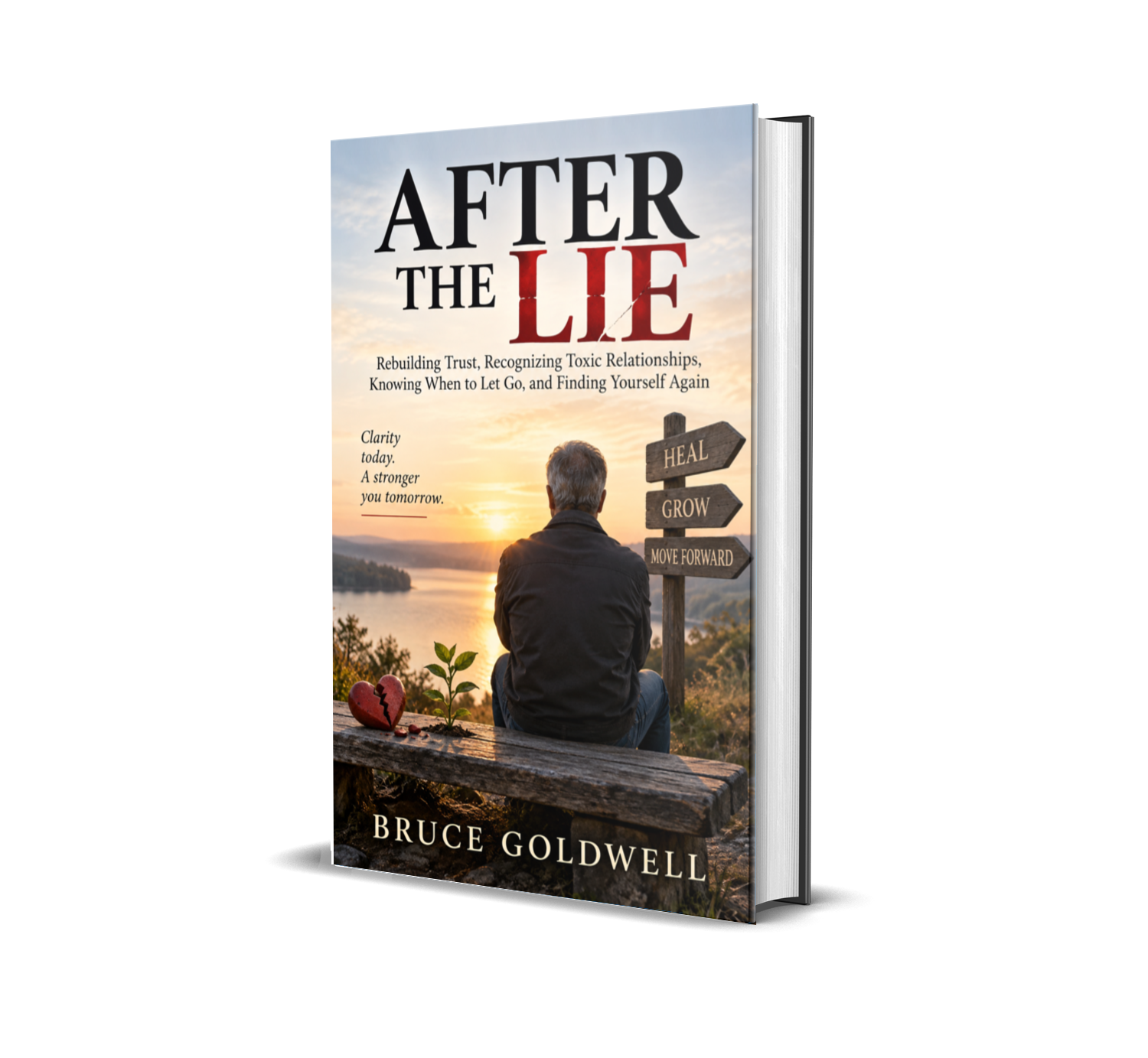
Explore the Decision →After the Lie explores what healthy partnership requires, what happens when one person carries too much, and how to recognize when love is helping you grow—or slowly causing you to disappear.