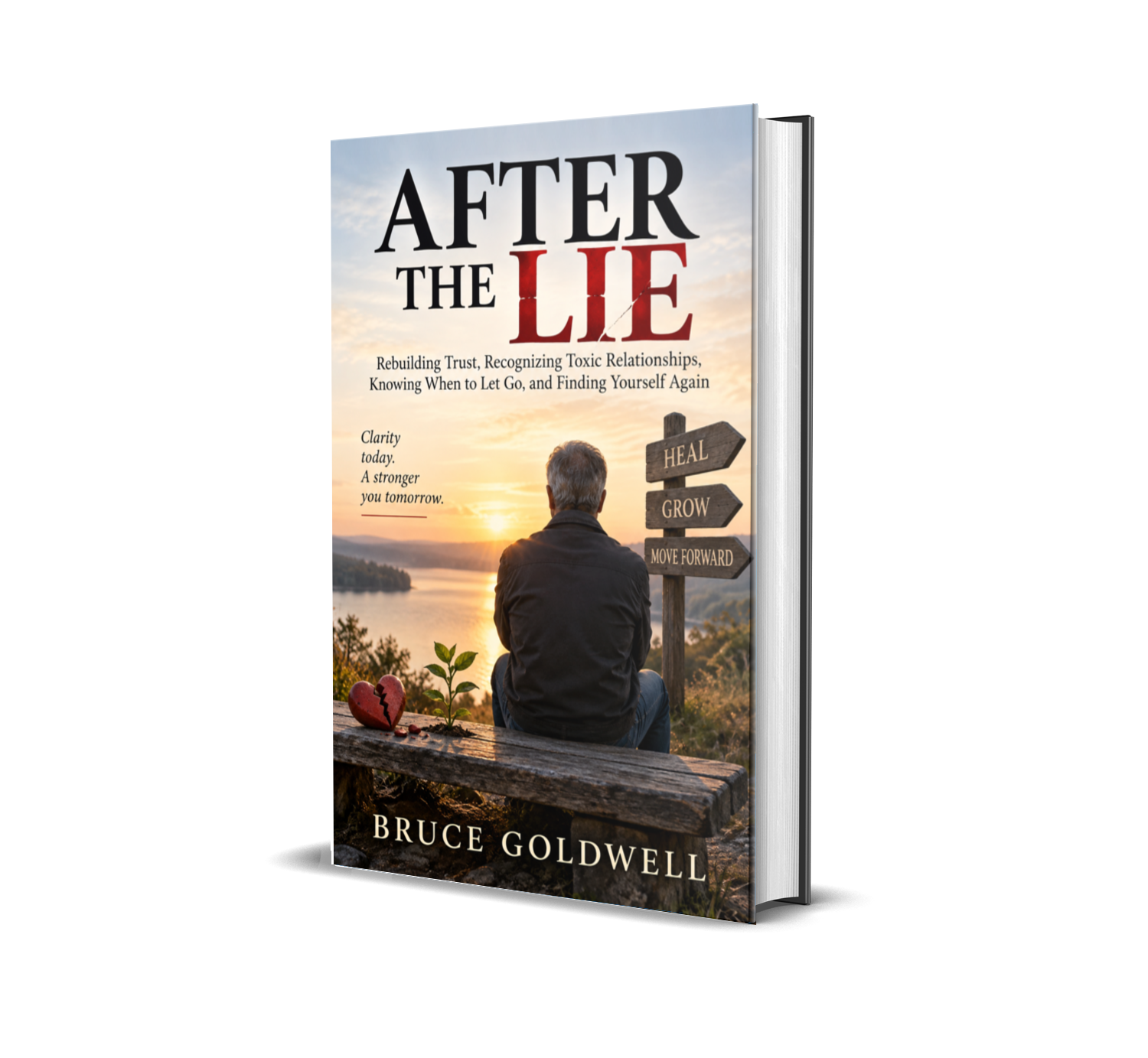
Betrayal rarely leaves you with only one question.
It can make you question the person you trusted, the relationship you believed in, the memories you once felt secure about, and even your own judgment.
After the Lie follows that journey one question at a time.
The early chapters focus on what happens immediately after trust breaks. The middle of the book examines patterns, boundaries, giving, fear, and the decision to stay or leave. The final chapters focus on letting go, rebuilding yourself, approaching future love without desperation, and learning to trust yourself again.
“Know when to repair. Know when to release. And never lose yourself trying to keep someone else.”
The first questions usually begin with the lie itself.
The moment everything you thought you knew changes—and why you should not decide your entire future in the instant you discover the past.
The real question is not only whether you still love them, but whether trust can safely return.
Words may begin repair, but behavior is what demonstrates whether something has actually changed.
The four-part test for determining whether trust is truly being rebuilt.
Where healthy independence ends and deception begins.
Understanding why the mind keeps replaying betrayal and how to stop the past from stealing the future.
Texts, social media, locations, likes, follows, exes, and the danger of becoming a permanent investigator.
Getting enough truth to make a decision without turning your life into an endless search for more evidence.
“An apology tells you they regret what happened. Changed behavior tells you they learned from it.”
Once the immediate shock settles, the deeper patterns become easier to see.
Why healthy love should not be “give and take” and what mutuality actually looks like.
Recognizing the exhaustion that comes when one person continually carries a relationship meant for two.
Every struggling relationship is not toxic. Learn to recognize destructive patterns without labeling every disagreement as abuse.
Caring about someone and deciding not to continue living with their behavior can both be true.
Judge the relationship you are actually living rather than the person you hope someone may eventually become.
Years invested in a relationship matter, but they do not automatically justify investing the years still ahead.
When loneliness, money, embarrassment, habit, or desperation becomes the real reason you remain.
Recognizing when repair has become repetition and hope has stopped being supported by evidence.
Why someone does not have to become a monster before you are allowed to decide the relationship is no longer right for your life.
Healthy love should allow both people to give, receive, support, listen, contribute, and feel cared for.
Explore Give and Receive →Potential is what someone could become. Pattern is what they keep choosing to be.
Explore the Pattern →Sometimes the decision becomes clearer when you stop asking only how much you love someone and begin looking at the evidence.
Explore the Decision →Whether you stay or leave, healing eventually becomes about more than the other person.
Separating emotionally and practically without repeatedly reopening a relationship that has already ended.
Why rushing to fill the empty space can carry old wounds directly into the next relationship.
Rebuild identity, confidence, interests, friendships, purpose, independence, and the life you want to share.
Build a life aligned with who you truly are and become open to people who naturally fit that life rather than chasing someone to complete it.
The final relationship to repair may be the relationship you have with your own judgment, voice, boundaries, and instincts.
A relationship built on honesty, respect, affection, freedom, mutual support, giving, receiving, and the ability for both people to grow.
Truth → Accountability → Consistency → Time
Promises can begin repair. Patterns determine whether repair is real.
Healthy relationships should nourish both people rather than continually emptying one of them.
Do not build your future around what someone could become when their repeated behavior is showing you something else.
The years already invested should not automatically determine how you spend the years still ahead.
Loving someone does not require accepting every behavior or remaining in every relationship.
Whatever happens next, healing eventually requires trusting yourself enough to protect your own future.
“Potential is who someone could become. Pattern is who they keep choosing to be. Build your future with the pattern, not the promise.”
“Don't ask only, ‘How do I keep this person?’ Ask, ‘What is keeping this person costing me?’”
“Trusting yourself doesn't mean knowing that no one will ever hurt you again. It means knowing that if they do, you will never again abandon yourself trying to keep them.”
After the Lie will not tell you whether to stay or leave.
It will help you look more clearly at what happened, what is happening now, and whether the future you want is still being built inside the relationship you have.