Begin With Jesus
Christianity today includes thousands of churches, denominations, movements, traditions, and theological perspectives.
They do not agree about everything.
But Christianity did not begin with denominations.
It began with Jesus Christ.
So for a moment, set aside the labels.
Catholic. Orthodox. Protestant. Baptist. Methodist. Lutheran. Pentecostal. Latter-day Saint. Evangelical. Non-denominational.
Instead, open the Bible and ask a simpler question:
What Does the Bible Actually Say About Jesus?
The Bible Presents Jesus as a Real Person
The New Testament does not present Jesus as an abstract idea, symbol, or mythical character.
It places Him within history.
Jesus is associated with identifiable people and places: Mary, Joseph, John the Baptist, Herod, Pontius Pilate, Jerusalem, Bethlehem, Nazareth, Galilee, and the Roman world.
The four Gospels tell the story of His ministry, while the letters of Paul and other New Testament writings reveal what His earliest followers believed about Him.
The Bible's starting claim is straightforward:
Jesus of Nazareth lived.
Whether every claim made about Him should be accepted is another question. But the New Testament writers clearly believed they were writing about a person who had lived in their world.
Explore: Did Jesus Really Exist? →
The Bible Says Jesus Was Born in Bethlehem
Matthew and Luke both connect Jesus with Bethlehem.
They also identify Mary as His mother and describe circumstances surrounding His birth that Christians have understood as the fulfillment of prophecy.
The Gospel accounts then associate Jesus with Nazareth, which explains why He becomes known as Jesus of Nazareth.
The birth narratives make an even greater claim.
Jesus' birth was not ordinary.
Matthew and Luke describe Mary becoming pregnant before living with Joseph as husband and wife, and they attribute the conception to the action of the Holy Spirit.
The Biblical Claim
Jesus enters the story as more than another religious teacher. From the beginning, the Gospel writers connect His birth with divine purpose.
The Bible Calls Jesus the Christ
“Christ” is a title.
The Greek word Christos corresponds to the idea of the Anointed One — the Messiah.
The New Testament repeatedly identifies Jesus as the Christ.
When Jesus asked His disciples who they believed He was, Peter answered:
That statement contains two enormous claims.
Jesus is identified as the Messiah.
And He is identified as the Son of God.
The Bible Calls Jesus the Son of God
The title “Son of God” appears repeatedly in the New Testament.
It is used in connection with Jesus' birth, baptism, ministry, identity, death, and Resurrection.
At the baptism of Jesus, the Gospel accounts describe a voice from heaven identifying Jesus as the beloved Son.
The relationship between the Father and the Son becomes one of the central themes of Jesus' teaching.
Jesus prays to the Father.
He speaks of being sent by the Father.
He speaks of doing the Father's will.
He also makes extraordinary statements about His relationship with the Father.
What Did “Son of God” Mean?
Was this merely an honorary religious title? Or were the New Testament writers making a much greater claim about the identity of Jesus?
Does the Bible Say Jesus Is Divine?
This question has produced centuries of theological discussion.
The New Testament repeatedly distinguishes Jesus from the Father, yet it also uses extraordinary language about Jesus.
The Gospel of John opens by describing the Word as existing “in the beginning,” being with God, and being God. It then declares that the Word became flesh.
Jesus is portrayed as forgiving sins, exercising authority over nature, receiving worship, raising the dead, and speaking about a relationship with the Father that goes far beyond that of an ordinary prophet.
After the Resurrection, Thomas addresses Jesus as:
How these passages should be understood together is one of the great theological questions of Christianity.
But the biblical evidence should be examined before a conclusion is imposed upon it.
What Did Jesus Teach?
Jesus taught about far more than His own identity.
He taught people how to live.
He taught faith, repentance, forgiveness, mercy, prayer, humility, love, service, righteousness, judgment, eternal life, and the Kingdom of God.
He taught people to love God.
He taught them to love their neighbors.
He even taught them to love their enemies.
Jesus repeatedly challenged outward religion without inward righteousness.
He condemned hypocrisy.
He taught that what occurs inside the human heart matters.
His teachings demanded more than admiration.
Jesus called people to follow Him.
Jesus Claimed Extraordinary Authority
One of the striking features of the Gospel accounts is the authority with which Jesus acts.
He does not merely interpret Scripture.
He repeatedly speaks in His own authority.
He forgives sins.
He commands storms.
He casts out evil spirits.
He heals the sick.
He raises the dead.
And He claims authority that reaches beyond mortal life.
The Question
If the Gospel accounts accurately preserve the claims of Jesus, can He adequately be described as merely a moral teacher?
The Bible Says Jesus Performed Miracles
Miracles are woven throughout the Gospel accounts.
Jesus heals blindness, paralysis, leprosy, and other illnesses.
He feeds large crowds.
He walks on water.
He calms storms.
He casts out evil spirits.
He raises people from the dead.
A historian can identify that ancient sources report these events. Determining whether a supernatural event actually occurred involves a larger question about whether miracles are possible.
But removing the miracles from Jesus changes the portrait presented by the Gospels.
The biblical writers clearly intended readers to understand the miracles as part of the evidence concerning His identity.
The Bible Presents Jesus as Sinless
The New Testament does not merely describe Jesus as a person who tried to live a good life.
It makes the much stronger claim that He was without sin.
That claim becomes important because the New Testament connects Jesus' sinlessness with His role in salvation.
Jesus is presented not merely as another person who needs redemption, but as the One through whom redemption comes.
The Bible Calls Jesus Savior
The New Testament presents the mission of Jesus as fundamentally connected with saving humanity.
His death is not portrayed simply as the tragic execution of an innocent man.
The earliest Christians interpreted His death as having meaning for sin, reconciliation, forgiveness, and salvation.
John's Gospel summarizes the Christian message with one of the best-known statements in the Bible:
Whatever conclusion a reader ultimately reaches about Christianity, the New Testament's claim is clear:
Jesus came to save.
The Bible Says Jesus Was Crucified
All four Gospels describe the Crucifixion.
Jesus is arrested, questioned, condemned, and executed by Roman crucifixion during the administration of Pontius Pilate.
His followers see what appears to be the destruction of everything they had hoped for.
If the biblical story ended at the tomb, Christianity as we know it would not exist.
But the story does not end there.
The Bible Says Jesus Rose From the Dead
This is the central claim.
The Gospels describe an empty tomb and appearances of the risen Jesus.
Paul's letters show that belief in the Resurrection was already central to Christianity within its earliest generations.
Paul understood the issue so strongly that he argued that if Christ had not been raised, Christian faith itself would collapse.
Did the Resurrection Really Happen?
Christianity ultimately stands or falls on something much larger than whether Jesus gave good advice.
It claims that a man who was dead became alive again.
Examine the Resurrection evidence →
The Bible Does Not Present Jesus Merely as Someone Who Lived
This distinction is easy to miss.
Christianity does not simply ask people to remember a teacher who died two thousand years ago.
The New Testament declares that Jesus lives.
His Resurrection is presented as physical and real. His disciples encounter Him after His death. They speak with Him. They see Him. The Gospel accounts even describe physical contact with the risen Christ.
The Jesus of the New Testament is therefore not merely a historical figure.
He is the risen Lord.
The Bible Says Jesus Ascended to Heaven
After His Resurrection, the New Testament describes Jesus appearing to His followers and continuing to teach them.
Acts then describes His Ascension.
But even that is not presented as the end of the story.
The New Testament looks forward.
Jesus will return.
The Bible Says Jesus Will Come Again
The Second Coming is part of the New Testament message.
Jesus speaks of His return.
The apostles teach about it.
The final books of the New Testament look toward the ultimate triumph of Christ.
The Bible therefore presents the story of Jesus across a much larger timeline:
He came.
He taught.
He was crucified.
He rose.
He ascended.
He will return.
The Bible Says Jesus Called Apostles
Jesus did not leave only teachings.
He called disciples and selected Twelve Apostles.
He gave them authority and sent them to preach.
After the Resurrection, the apostles continued the work.
When Judas was no longer among them, Matthias was selected to join the Twelve.
The New Testament later describes apostles, prophets, evangelists, pastors, teachers, bishops, elders, and deacons.
That raises another important question:
What Church Did Jesus Establish?
If we had only the New Testament, what would we expect the Church of Jesus Christ to look like?
Explore the Church Jesus established →
So What Does the Bible Say About Jesus?
When the biblical evidence is placed together, the picture is far larger than “Jesus was a good teacher.”
The Bible presents Jesus as a real person.
It calls Him the Christ — the Messiah.
It calls Him the Son of God.
It attributes miracles to Him.
It presents Him as sinless.
It gives Him extraordinary divine authority.
It calls Him Savior.
It says He was crucified.
It says He rose from the dead.
It says He ascended to heaven.
It says He will return.
A person may accept those claims.
A person may reject them.
A person may investigate them and remain uncertain.
But before deciding, it is worth understanding what the biblical writers actually claimed.
Then Comes the Question Jesus Asked
“But whom say ye that I am?”
Matthew 16:15
That question moves the investigation from history to the reader.
Who do you believe Jesus Christ is?
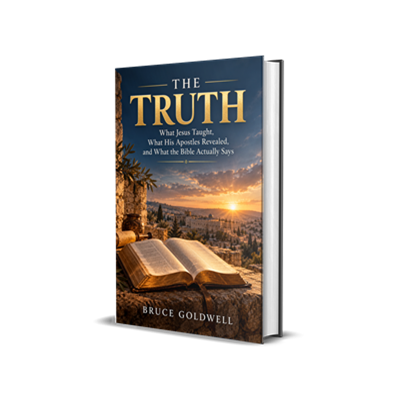
Continue the Investigation in THE TRUTH
THE TRUTH is Book I of THE TRUTH Series by Bruce Goldwell.
The book goes beyond the question of Jesus' identity to investigate what He taught, what His apostles revealed, what happened after His death and Resurrection, the organization of the original Church, authority, baptism, Paradise, preaching to the dead, resurrection, and the biblical idea of restoration.
The goal is simple:
Put the evidence on the table. Ask the questions. Decide what you believe.