Begin With the Question
Few questions about Jesus are more important—or more debated—than this one:
Is Jesus God?
For most Christians, the answer is yes.
But even within Christianity, explaining exactly what that means has occupied theologians for centuries.
Muslims honor Jesus as Messiah and prophet but reject the Christian claim that He is divine.
Judaism rejects the identification of Jesus with God and does not accept Him as the promised Messiah.
Other readers understand Jesus as a teacher, prophet, mystic, reformer, or extraordinary human being.
Instead of beginning with one of those conclusions, we can begin with the biblical texts.
What does the evidence actually say?
The Bible Says There Is One God
Any discussion of the divinity of Jesus has to begin with the biblical insistence that there is one God.
The Hebrew Scriptures repeatedly distinguish the God of Israel from the many gods worshiped by surrounding peoples.
Jesus Himself quotes this commandment in the New Testament.
So whatever Christians mean when they describe Jesus as divine, the New Testament does not begin by simply abandoning the Jewish belief in one God.
That creates the central question.
How Can Jesus Be Divine If There Is One God?
The New Testament's answer is not contained in one isolated verse. It emerges from a collection of statements about the Father, the Son, and the Holy Spirit.
The Bible Calls Jesus the Son of God
One of the clearest New Testament descriptions of Jesus is “Son of God.”
At His baptism, the Gospel accounts describe a voice from heaven identifying Jesus as the beloved Son.
Peter confesses:
Jesus does not reject Peter's statement.
Instead, He says that this knowledge was revealed by His Father in heaven.
But the title itself raises another question.
Does “Son of God” mean that Jesus is God?
Or does it distinguish Jesus from God?
Different religious traditions answer that question differently.
The evidence-first approach is to keep reading.
Jesus and the Father Are Distinguished
The New Testament repeatedly distinguishes Jesus from the Father.
Jesus prays to the Father.
He speaks of being sent by the Father.
He speaks of returning to the Father.
At Jesus' baptism, Jesus is in the water, the Spirit descends, and a voice from heaven speaks.
In the Garden of Gethsemane, Jesus prays:
After His Resurrection, Jesus tells Mary:
These passages make it difficult simply to collapse Jesus and the Father into one person.
One Important Biblical Fact
The Father and the Son are repeatedly presented as distinguishable from one another.
Yet the Bible Uses Extraordinary Language About Jesus
If the evidence ended there, the question might appear simple.
But it does not.
The New Testament also says remarkable things about Jesus that go far beyond the description of an ordinary prophet.
Perhaps the clearest example comes at the beginning of the Gospel of John.
A few verses later, John says:
John's language contains both ideas at once.
The Word was with God.
And the Word was God.
Then the Word became flesh.
For Christians, that Word is Jesus Christ.
Jesus Is Connected With Creation
The New Testament does not merely describe Jesus as someone who appeared for the first time at Bethlehem.
Several passages associate Christ with existence before His mortal birth and with creation itself.
John says that all things were made through the Word.
Paul likewise speaks of creation in connection with Christ.
This places Jesus in a category far beyond that of an ordinary human teacher who simply appeared in first-century Galilee.
Who Was Jesus Before Bethlehem?
If Christ existed before His mortal birth and participated in creation, what does that tell us about His identity?
Jesus Spoke of Existing Before Abraham
One of the most debated statements in John's Gospel occurs during a dispute concerning Abraham.
Jesus says:
The statement is striking because Jesus does not simply say, “Before Abraham was, I was.”
Christians have long connected the language “I am” with divine language found in the Hebrew Scriptures.
The reaction of Jesus' opponents in the narrative also shows that they did not regard the statement as harmless.
How much theological meaning should be placed on the exact wording is debated.
But the passage clearly contributes to John's portrait of Jesus as someone whose existence extends beyond His earthly life.
Jesus Forgave Sins
The Gospels portray Jesus forgiving sins.
That produces immediate controversy.
In Mark's Gospel, religious teachers respond by asking:
Jesus then heals the man in the account and connects the miracle with His authority to forgive sins.
A prophet could announce that God had forgiven someone.
But Jesus' manner of exercising authority raises a larger question about who He understood Himself to be.
Jesus Exercised Authority Over Nature
The Gospel accounts attribute extraordinary works to Jesus.
He heals disease.
He commands storms.
He walks on water.
He casts out evil spirits.
He raises the dead.
Miracle stories by themselves do not settle the theological question of Jesus' divinity.
The Bible contains miracles associated with prophets as well.
But within the Gospel narratives, the miracles contribute to a larger portrait of Jesus exercising extraordinary authority.
Jesus Received Worship
The New Testament contains scenes in which people worship Jesus.
This matters because biblical monotheism reserves worship for God.
In Revelation, for example, an angel refuses worship and directs it toward God.
Yet the Gospel accounts portray Jesus receiving worship without the same correction.
After the Resurrection, Matthew describes the disciples seeing Jesus:
That raises an obvious question.
Why Would Jewish Followers of Jesus Worship Him?
What had they come to believe about His identity?
Thomas Called Jesus “My Lord and My God”
One of the strongest passages appears after the Resurrection.
Thomas had doubted reports that Jesus was alive.
When he encounters the risen Christ, Thomas responds:
The Gospel does not portray Jesus correcting Thomas for using this language.
Instead, Jesus responds to Thomas' belief.
Whatever theological system a reader eventually adopts, this passage has to be included in the evidence.
Jesus Said, “I and My Father Are One”
Another famous statement appears in John:
But what does “one” mean?
One person?
One being?
One in divine nature?
One in purpose, authority, and unity?
Christians have interpreted this language through different theological frameworks.
Other passages clearly distinguish the Father and Son, so this verse should be read alongside those passages rather than isolated from them.
Both Sets of Evidence Matter
Jesus speaks of profound unity with the Father.
Jesus also speaks to the Father and distinguishes Himself from the Father.
Any explanation should account for both.
What Did the Earliest Christians Believe?
An important historical question is whether belief in the exalted or divine status of Jesus appeared only centuries after His death.
The surviving evidence points much earlier.
Paul's letters were written within the first generations of Christianity.
In them, Jesus is already called Lord and Christ.
Paul describes believers calling upon Jesus, organizing their lives around Him, and connecting salvation with Him.
An early Christian hymn or confession preserved in Philippians describes Christ humbling Himself, dying, being exalted, and receiving extraordinary honor.
Whatever later theological terminology developed, an exalted view of Jesus did not first appear at a church council hundreds of years later.
The Historical Question
How early did followers of Jesus begin treating Him as far more than an ordinary prophet?
The evidence takes us remarkably close to Christianity's beginning.
Did the Council of Nicaea Invent the Divinity of Jesus?
A popular modern claim says that Jesus was considered merely human until church leaders declared Him divine at the Council of Nicaea in A.D. 325.
That description is too simple.
Nicaea was enormously important in the development and definition of Christian doctrine.
But Christians were using exalted and divine language about Jesus long before the fourth century.
The New Testament itself is evidence of that.
The debate at Nicaea was not simply whether Jesus mattered or whether Christians should suddenly begin treating Him as divine.
The controversy concerned how Christians should understand and describe the relationship between the Father and the Son.
Later creeds would develop increasingly precise theological language to express those conclusions.
Whether those formulations perfectly reproduce the understanding of the earliest apostles is a separate question worth examining.
What About the Trinity?
Most historic Christian traditions explain the biblical evidence through the doctrine of the Trinity.
In classical Trinitarian Christianity, there is one God existing eternally as Father, Son, and Holy Spirit—distinct persons sharing the one divine being.
The word “Trinity” itself does not appear in the Bible.
That does not automatically make the doctrine unbiblical. Many theological terms summarize ideas drawn from multiple biblical passages.
The more important question is whether the doctrine accurately accounts for the biblical evidence.
Catholic, Orthodox, and most Protestant traditions affirm Trinitarian Christianity.
Other Christian traditions understand the relationship between the Father, Son, and Holy Spirit differently.
The Church of Jesus Christ of Latter-day Saints teaches that the Father, Son, and Holy Ghost are distinct and perfectly united in purpose rather than one immaterial substance.
The Evidence-First Question
Before choosing a theological label, read the passages.
What relationship between the Father and Son best accounts for everything the New Testament says?
Jesus Prayed That His Followers Would Be One
John 17 adds another important piece to the discussion.
Jesus prays to His Father concerning His disciples and asks that they may be one.
The disciples obviously do not become one individual person.
The passage therefore demonstrates that biblical language about being “one” can describe profound unity without necessarily meaning identity as one person.
How far that observation should be applied to other passages remains a matter of theological interpretation.
But it belongs on the table.
What Does Islam Say About Jesus?
Islam presents Jesus as an extraordinary messenger of God.
The Qur'an calls Jesus the Messiah and speaks highly of Mary. It also associates Jesus with miraculous works.
But Islam rejects the Christian doctrine that Jesus is the divine Son of God.
For Muslims, worship belongs to God alone, and Jesus is God's servant and messenger.
This creates an important historical question because the Qur'an appears centuries after the earliest Christian sources.
That fact does not by itself determine which religious claim is true.
But chronology matters when comparing competing accounts of Jesus' identity.
What Does Judaism Say?
Judaism does not accept Jesus as God or as the promised Messiah.
Jewish theology strongly emphasizes the oneness of God, and Christian claims about Jesus have historically been understood as incompatible with that belief.
There is also disagreement about whether Jesus fulfilled the messianic expectations found in the Hebrew Scriptures.
A fair investigation should not dismiss those objections.
They deserve to be understood and compared with the Christian interpretation of the same Scriptures.
Is Jesus the Father?
This is not quite the same question as asking whether Jesus is divine.
The New Testament repeatedly distinguishes Jesus from His Father.
Jesus speaks to the Father.
The Father sends the Son.
The Son returns to the Father.
Jesus says He came not to do His own will but the will of the One who sent Him.
At the same time, the New Testament attributes divine status, authority, glory, and titles to Christ.
So the biblical evidence presents us with two truths that must somehow be held together:
The Father and the Son are distinguishable.
Jesus is described in extraordinary divine terms.
The theological debate concerns how those truths should be understood.
Could Jesus Be Merely a Prophet?
Jesus certainly functions as a prophet in the New Testament.
He teaches God's word.
He warns.
He prophesies.
He calls people to repentance.
But the New Testament does not stop there.
Jesus forgives sins.
He claims authority over the Sabbath.
He speaks of judging humanity.
He accepts worship.
He speaks of existence before Abraham.
His followers call Him Lord and God.
And they proclaim that He conquered death.
Prophet—or Something More?
Calling Jesus a prophet may be true.
But does it account for everything the earliest Christian sources claim about Him?
The Resurrection Changes the Question
The question of Jesus' divinity cannot be completely separated from the Resurrection.
If Jesus died and remained dead, Christian claims about His identity face an enormous problem.
The Apostle Paul understood this.
He argued that if Christ had not been raised, Christian faith would be empty.
But if Jesus really rose from the dead, His claims demand a very different level of attention.
The Resurrection does not merely ask us to admire Jesus.
It asks us to reconsider who He is.
Continue: Did Jesus Rise From the Dead? →
What Can We Say From the Biblical Evidence?
The Bible presents a complex but powerful picture.
The Bible says there is one God.
It identifies Jesus as the Son of God.
It distinguishes Jesus from the Father.
It describes Christ as existing before His mortal birth.
It connects Him with creation.
It gives Him authority to forgive sins.
It portrays Him receiving worship.
Thomas addresses Him as “My Lord and my God.”
His earliest followers call Him Lord and organize their faith around Him.
And they proclaim that He rose from the dead.
That evidence is why simply describing Jesus as a good moral teacher does not adequately capture the New Testament portrait.
So, Is Jesus God?
If the question means, “Does the New Testament present Jesus as an ordinary human being and nothing more?” the evidence points strongly in the opposite direction.
The New Testament attributes divine identity, authority, glory, preexistence, and honor to Jesus Christ.
If the question means, “Is Jesus the same person as God the Father?” the New Testament repeatedly distinguishes the Son from the Father.
How those truths fit together is where Christian theological traditions differ.
But the larger conclusion is difficult to avoid:
The Jesus presented in the New Testament is far more than an ordinary prophet or teacher.
And that brings us to the event that transformed frightened disciples into people willing to proclaim Him to the world.
Did Jesus Rise From the Dead?
If the Resurrection happened, the question “Who is Jesus?” becomes much harder to avoid.
Examine the Resurrection evidence →
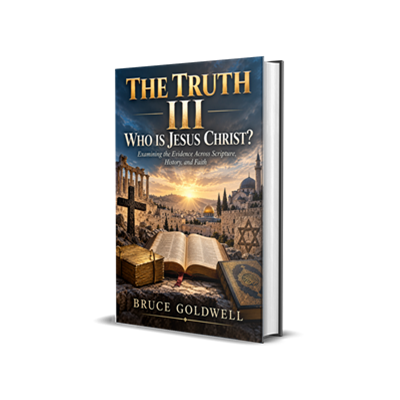
Who Is Jesus Christ?
THE TRUTH III: WHO IS JESUS CHRIST? examines the evidence across Scripture, history, and faith.
The book examines the historical Jesus, the Messiah, the Crucifixion, the Resurrection, the divinity of Christ, Jesus in Judaism and Islam, the original Church, Reformation, Restoration, Joseph Smith, the Book of Mormon, and the question of whether God still speaks.
No question about Jesus should be avoided simply because the answer might challenge what we already believe.
Put the evidence on the table. Ask the questions. Decide what you believe.