Was Jesus a Prophet?
Yes—at least in the sense that the New Testament portrays Him performing the work associated with prophets.
Jesus spoke the word of God.
He called people to repentance.
He warned of judgment.
He spoke about future events.
He confronted religious hypocrisy.
He taught about God's kingdom.
People around Him sometimes called Him a prophet.
So describing Jesus as a prophet is not necessarily wrong.
The larger question is whether the word prophet tells us everything we need to know about Him.
Was Jesus a Prophet—or Was He More Than a Prophet?
People During His Lifetime Called Him a Prophet
The Gospels preserve several examples.
After Jesus raised the widow's son at Nain, people responded:
When Jesus entered Jerusalem, crowds identified Him as Jesus the prophet from Nazareth.
The Samaritan woman told Him:
So prophet was clearly one category people used to understand Him.
Jesus Also Compared Himself With Prophets
When Jesus encountered rejection in His hometown, He said:
Jesus did not reject the prophetic category.
But other statements attributed to Him appear to go beyond it.
Jesus Asked His Disciples Who People Thought He Was
One of the clearest identity discussions occurs near Caesarea Philippi.
Jesus asked:
The disciples gave several answers.
John the Baptist.
Elijah.
Jeremiah.
Or one of the prophets.
Those were honorable answers.
Jesus did not stop there.
Then Jesus Made the Question Personal
Peter answered:
Within Matthew's account, the answer is not simply:
“You are another prophet.”
Peter identifies Jesus as the Christ and the Son of the living God.
Jesus Did Not Correct Peter
That detail matters.
Jesus did not respond:
“No. I am only a prophet.”
Instead, Matthew records Jesus saying that Peter had not reached that conclusion merely through human reasoning.
Within this Gospel, identifying Jesus as the Christ and Son of God is presented as revelation from the Father.
But What Does “Son of God” Mean?
This question is essential.
The phrase can be misunderstood.
Christianity does not require the crude idea that God physically fathered Jesus through a sexual relationship with Mary.
That is not what historic Christian theology means when it calls Jesus the Son of God.
Biblical “son” language can express relationship, status, representation, kingship, or identity.
Israel could be called God's son.
Kings could be described using son language.
Believers can be called children of God.
Therefore, the phrase alone must be examined in context.
Is Jesus the Son of God in the Same Way Everyone Else Is?
The New Testament appears to make a distinction.
Jesus speaks about God as His Father in an unusually personal way.
The Gospel writers repeatedly distinguish Jesus' sonship from the relationship believers have with God.
John even uses language traditionally translated as God's “only begotten Son” or, in many modern translations, His unique or one-of-a-kind Son.
Whatever translation one prefers, the intention is clearly to give Jesus a distinctive status.
The Earliest Gospel Calls Jesus the Son of God
Mark is commonly regarded by scholars as the earliest surviving canonical Gospel.
Within Mark, Jesus is associated with divine sonship from the opening of the narrative and at crucial moments throughout it.
At Jesus' baptism, a voice from heaven declares:
At the Transfiguration, the heavenly voice again identifies Jesus as the beloved Son.
Sonship is therefore not merely a doctrine that suddenly appears centuries later at a church council.
Paul Is Earlier Than the Written Gospels
Paul's surviving letters predate the canonical Gospels.
That makes them especially important when asking what early Christians believed.
Paul repeatedly refers to Jesus as God's Son.
He speaks of God sending His Son.
He speaks of Jesus' death and Resurrection.
He gives Jesus an extraordinary place within God's saving work.
Whatever later Christian theology developed, an exalted view of Jesus did not begin centuries after His death.
Did Paul Invent the Divine Jesus?
This theory has often been proposed.
According to one version, Jesus was simply a Jewish teacher or prophet, and Paul transformed Him into a divine figure.
The problem is that Paul's letters show he inherited important Christian beliefs from people who were followers before him.
Paul knew Peter.
He knew James, the brother of Jesus.
He interacted with other leaders of the earliest movement.
He also preserves traditions and confessional material that scholars commonly regard as older than the letters in which they appear.
If Paul Invented Christianity, Why Do His Letters Preserve Beliefs That Predate Paul?
One Early Christian Statement Is Especially Important
In 1 Corinthians 15, Paul reminds his readers of a message he had previously received and passed on.
Its core is simple:
Christ died.
He was buried.
He was raised.
He appeared to witnesses.
This tradition is important because it shows that the death and Resurrection of Jesus were central to Christianity extremely early.
The risen Christ was not a doctrine invented in the Middle Ages or at the Council of Nicaea.
What Did Jesus Claim for Himself?
This is harder than simply collecting later titles.
The Gospels were written by believers and must be evaluated as ancient sources.
Yet across those sources, Jesus repeatedly acts and speaks with unusual authority.
He does not merely point away from Himself toward a message.
He repeatedly places Himself near the center of the decision people must make.
“But I Say Unto You”
Jesus interpreted the Law with striking personal authority.
In the Sermon on the Mount, He repeatedly uses a pattern:
“But I say unto you...” See Matthew 5
Prophets commonly introduced messages with language such as “Thus saith the Lord.”
Jesus often speaks directly with His own authority.
That does not by itself prove divinity.
But it contributes to a larger pattern.
Jesus Forgave Sins
In Mark 2, a paralyzed man is brought to Jesus.
Jesus tells him his sins are forgiven.
Some scribes respond:
Jesus does not respond by saying they have misunderstood and that He has no authority concerning sin.
Instead, the narrative presents the healing as evidence that the Son of Man has authority on earth to forgive sins.
That raises a serious question.
What Kind of Prophet Claims Authority to Forgive Sin?
Could a Prophet Announce God's Forgiveness?
Yes.
A prophet could certainly declare that God forgives.
So Mark 2 should not be treated as a one-verse mathematical proof that Jesus is God.
The significance comes from the cumulative pattern.
Jesus teaches with unusual authority.
He forgives sins.
He claims authority over the Sabbath.
He speaks of judging humanity.
He accepts extraordinary devotion.
He describes a unique relationship with the Father.
One claim can be interpreted several ways.
Together, the claims become harder to reduce to ordinary prophethood.
Jesus Claimed Authority Over the Sabbath
Jesus said:
The Sabbath was not a minor human custom.
It was embedded in Israel's covenant and connected with God's creative work.
Calling Himself Lord of the Sabbath is therefore a striking claim.
Jesus Placed Himself Above the Temple
Matthew records Jesus saying:
The Temple stood at the center of Jewish religious life.
For Jesus to speak of Himself in relation to something greater than the Temple demands attention.
Jesus Said He Was Greater Than Solomon
Jesus also said:
Solomon represented royal wisdom and Davidic kingship.
Again, Jesus places Himself above one of Israel's greatest figures.
Jesus Said He Was Greater Than Jonah
In the same chapter, Jesus declares:
Jesus is not merely standing among the prophets as one equal member of a long line.
The Gospel tradition repeatedly presents Him as greater.
What About Abraham?
The Gospel of John records one of Jesus' most famous statements:
Christians have long understood this as an extraordinary claim connected with preexistence and divine identity.
Some interpreters emphasize the possible echo of God's divine self-identification in Exodus.
Others debate precisely how the phrase should be understood.
But the statement clearly goes far beyond saying:
“I am a prophet born many centuries after Abraham.”
John Makes the Claim Even More Explicit
John opens his Gospel with words unlike any ordinary biography:
Then John says:
Within John's theology, Jesus is not simply a prophet who begins to exist at Bethlehem.
He is connected with the divine Word existing before His mortal birth.
But John Was Written Later
That observation is important.
John is generally dated later than Mark and later than Paul's letters.
A skeptic may therefore argue that John's high Christology represents a later development.
That possibility has to be examined rather than ignored.
But it does not solve the problem by itself.
Paul's earlier writings already give Jesus an extraordinary status.
The question therefore becomes how early belief in Jesus' preexistence and divine status can actually be traced.
An Early Hymn May Take Us Even Closer
Philippians 2 contains a poetic passage many scholars understand as material Paul was using rather than composing for the first time in the letter.
It describes Christ in an exalted way, speaks of His humiliation, and then describes God highly exalting Him.
Every knee bows and every tongue confesses Jesus Christ as Lord.
The language echoes Isaiah's description of universal allegiance to God.
That makes the passage particularly significant.
An extraordinarily high view of Jesus appears very early.
Thomas Called Jesus “My Lord and My God”
After encountering the risen Jesus, Thomas says:
Jesus does not rebuke Thomas for blasphemy or redirect the statement.
Within John's Gospel, Thomas's confession functions near the climax of the entire narrative.
Did Jesus Accept Worship?
Several Gospel passages describe people bowing before Jesus, sometimes using a Greek term that can refer to worship or to acts of homage depending on context.
This means individual verses need to be handled carefully.
Bowing before a king does not automatically prove that the person is being worshiped as God.
Yet the larger New Testament picture eventually places Jesus within Christian prayer, devotion, confession, baptismal language, and worship in ways that go far beyond ordinary respect for a prophet.
Jesus Is Associated With Final Judgment
The Gospels portray Jesus as having a role in the final judgment.
Matthew describes the Son of Man coming in glory and separating the nations.
John speaks of judgment being entrusted to the Son.
That is another remarkable feature.
Prophets announce judgment.
Jesus is portrayed as participating in carrying it out.
Jesus Is Associated With the Clouds of Heaven
At His hearing before the high priest, Jesus invokes imagery from Daniel 7.
He speaks of the Son of Man at the right hand of power and coming with the clouds of heaven.
The reaction is severe.
Christians understand this as a major claim about Jesus' authority and heavenly identity.
The precise meaning of Daniel's Son of Man remains debated, but the imagery is much larger than ordinary prophetic ministry.
Then Why Does Jesus Pray to God?
This is an important objection to simplistic claims about Jesus' divinity.
Jesus prays.
He speaks to the Father.
He says He was sent by the Father.
He distinguishes His will from the Father's in Gethsemane.
He calls the Father “my God.”
These passages make it difficult to say that Jesus and the Father are simply the same person under two names.
Father and Son Are Distinct
The New Testament repeatedly distinguishes them.
At Jesus' baptism, the Son is present while a voice speaks from heaven.
Jesus prays to the Father.
The Father sends the Son.
The Son returns to the Father.
Jesus speaks of glory He had with the Father.
Whatever Christian theology concludes about divine unity, the biblical evidence preserves real distinction.
Does Distinction Mean Jesus Cannot Be Divine?
Judaism and Islam tend toward that conclusion.
If God is one, then a distinct Jesus cannot also be God.
Historic Christianity reaches a different conclusion.
It distinguishes between saying:
“The Father and Son are the same person”
and saying:
“The Father and Son share in divine identity.”
Later Christian theology developed technical language to explain how God could be one while Father, Son, and Holy Spirit remain distinct.
The Trinity Came Later as a Formulation
The word Trinity is not a word used by Jesus in the New Testament.
The formal creedal definitions familiar from later Christianity developed over time as Christians debated how to describe the Father, Son, and Holy Spirit.
That historical development should be acknowledged.
But acknowledging later terminology does not mean the underlying problem was invented later.
The New Testament itself already contains the pieces that created the theological question.
God is one.
The Father is God.
Jesus is distinct from the Father.
Jesus is described in extraordinary divine terms.
The Holy Spirit is also part of the New Testament picture.
Later Christians attempted to explain how those statements fit together.
Islam Gives a Different Answer
Islam honors Jesus but draws a firm boundary.
Jesus is Messiah.
Jesus is a prophet.
Jesus is a messenger.
Jesus was born miraculously.
Jesus performed miracles by God's permission.
But Jesus is not God.
He is not God's divine Son.
Traditional Islam also rejects the Christian account of His death by crucifixion.
The Islamic answer is therefore clear:
Prophet, yes. Divine Son, no.
Judaism Gives Another Answer
Judaism does not generally accept Jesus as Messiah or divine Son.
Jesus may be viewed historically as a Jewish teacher or religious figure, but Jewish theology does not grant Him the status Christianity does.
Judaism's commitment to the oneness of God also makes Christian claims about Jesus difficult to accept.
Its answer differs from Islam's in important ways, but both reject the Christian conclusion that Jesus shares divine status.
Christianity Gives the Most Radical Answer
Christianity says Jesus is not merely someone who tells humanity about God.
God has acted uniquely through Him.
He is Messiah.
He is Son.
He is Savior.
He existed before His mortal birth.
He died.
He rose.
He reigns.
He will return.
Those are extraordinary claims.
They should not be accepted merely because Christianity became the world's largest religion.
They require evidence.
What About the Book of Mormon?
The Book of Mormon strongly affirms Jesus as the Son of God, Messiah, Savior, and Redeemer.
According to its narrative, prophets centuries before Jesus foretell His coming.
It describes His birth.
It teaches His Atonement.
It teaches His death and Resurrection.
Most dramatically, it claims that the resurrected Jesus personally appeared to another people.
The Book of Mormon therefore does not present a different Savior.
It claims to provide another witness of the Jesus proclaimed in the New Testament.
The Book of Mormon Also Preserves Father-Son Distinction
Jesus prays to the Father in the Book of Mormon.
He teaches people to pray to the Father in His name.
The Father bears witness of the Son.
The Holy Ghost is also present.
Latter-day Saint theology therefore understands the Father, Son, and Holy Ghost as distinct while perfectly united in divine purpose and glory.
That differs from traditional Trinitarian formulations while also differing sharply from the Islamic conclusion that Jesus is merely a human prophet.
Does Calling Jesus a Prophet Explain the Evidence?
This may be the most useful way to frame the question.
Suppose we begin with the hypothesis:
Jesus was a prophet of God.
Does that explain the evidence?
It explains His teaching.
It explains His calls to repentance.
It explains His warnings.
It can explain His miracles if God empowered Him.
But does it explain everything?
Does “Prophet” Explain the Entire Pattern?
Why did Jesus speak with such personal authority?
Why did He claim authority to forgive sins?
Why did He call Himself Lord of the Sabbath?
Why did He place Himself above the Temple, Jonah, and Solomon?
Why is He associated with Daniel's heavenly Son of Man?
Why did His followers identify Him as the Son of God?
Why did belief in His Resurrection appear so early?
Why did early Jewish followers give Him such extraordinary honor?
Why do early Christian texts speak of His preexistence?
Why does Thomas call Him “my Lord and my God”?
Any explanation of Jesus has to account for the entire pattern, not merely the pieces that fit a preferred conclusion.
There Is Another Possibility
Perhaps the choice between prophet and Son of God is too narrow.
What if Jesus was a prophet?
And the Messiah?
And the Son of God?
The categories do not necessarily cancel one another.
Christianity does not have to deny that Jesus spoke prophetically in order to claim that He was more than a prophet.
Maybe the Real Question Is Not “Prophet or Son?”
Maybe it is: Does “prophet” fully explain Jesus?
Then Comes the Resurrection
Everything changes if Jesus rose from the dead.
If He remained dead, claims of divine authority become far easier to dismiss.
If He rose, the question becomes much harder.
The Resurrection would mean that God dramatically vindicated Jesus after His execution.
That does not automatically settle every theological debate about His divine nature.
But it makes His claims impossible to treat casually.
What If Jesus Did Not Rise?
Paul understood the stakes.
He wrote that if Christ had not been raised, Christian faith would be vain.
That is remarkable.
Christianity places a historical claim near the center of its own truth test.
It does not merely say:
“Believe these moral teachings because they are beautiful.”
It says something happened.
Did Jesus Rise From the Dead?
If the answer is no, Christianity must face the consequences.
If the answer is yes, Judaism, Islam, skepticism, and every other view of Jesus must also face the consequences.
The Crucifixion Matters Too
Christianity says Jesus died by crucifixion.
Historical scholarship overwhelmingly treats His execution under Pontius Pilate as a highly secure fact about His life.
Traditional Islam denies that Jesus was killed by crucifixion.
The Book of Mormon agrees with the New Testament that Jesus died and rose again.
These claims cannot all describe the same historical event in the same way.
Evidence matters.
Which Sources Are Closest to Jesus?
This is why chronology matters.
Jesus lived in the first century.
Paul's letters come from the first century.
The canonical Gospels come from the first century.
Other early Christian writings follow.
The Qur'an comes from the seventh century.
The Book of Mormon was published in 1830 while claiming to preserve a much older record.
Earlier does not automatically mean true.
Later does not automatically mean false.
But a later source that contradicts earlier evidence carries the burden of explaining why the earlier sources should be rejected.
The Book of Mormon Creates a Different Historical Question
Because the Book of Mormon claims ancient origin, its publication date alone cannot resolve its historical claim.
Its claimed antiquity has to be investigated separately.
Were there plates?
What did the witnesses claim?
What can be learned about the translation process?
Does the text fit the ancient world it claims to describe?
What problems do critics identify?
What answers do believers offer?
Those questions belong on the table.
No Tradition Gets a Free Pass
A Christian cannot simply say:
“Jesus is God because my church says so.”
A Muslim cannot simply say:
“Jesus is only a prophet because the Qur'an says so.”
A Latter-day Saint cannot simply say:
“The Book of Mormon is true because Joseph Smith said so.”
A skeptic cannot simply say:
“Miracles are impossible, therefore the Resurrection did not happen.”
Each position contains assumptions.
Those assumptions should be examined.
Claim, Evidence, Interpretation, Question
Claim: Jesus was only a prophet.
Evidence: The earliest Christian sources give Him titles, authority, functions, and honor that appear to exceed ordinary prophethood.
Competing interpretation: Those sources may reflect theological development by Jesus' followers rather than Jesus' own identity.
Question: How early can the higher claims about Jesus actually be traced?
That is a question history can help investigate.
Another Claim
Claim: Jesus is the divine Son of God.
Evidence: New Testament sources call Him Son, describe unusual authority, associate Him with divine functions, proclaim His Resurrection, and give Him extraordinary honor.
Competing interpretation: Son language may be royal or metaphorical, and later Christians may have expanded earlier beliefs.
Question: Which explanation best accounts for the entire body of evidence?
And Another
Claim: Jesus rose from the dead.
Evidence: Early Christian testimony proclaims His death, burial, appearances, and Resurrection.
Competing interpretations: visions, grief experiences, legend, mistaken testimony, theological development, or other natural explanations.
Question: Which explanation best accounts for the rise and shape of the Resurrection belief?
Jesus Does Not Fit Easily Into a Small Box
Teacher is true—but may be incomplete.
Prophet may be true—but may be incomplete.
Messiah carries enormous meaning—but Christians claim even that does not say everything.
The historical evidence forces us to confront a figure who became the center of a movement remarkably quickly after His death.
His earliest followers did not merely preserve His sayings.
They proclaimed Him.
The Message Was Jesus Himself
This is one of the striking features of Christianity.
Moses points toward God.
The prophets point toward God.
Muhammad, in Islam, points toward God.
But early Christianity places Jesus Himself at the center of the good news.
His identity matters.
His death matters.
His Resurrection matters.
Faith in Him matters.
That demands explanation.
Perhaps Jesus' Own Question Is Still the Best One
Jesus did not ask Peter:
“What category does your culture place me in?”
He asked:
Peter's answer was not merely prophet.
But Peter's Answer Is Not Automatically Yours
A verse on a page does not force belief.
A church tradition does not force belief.
A family tradition does not force belief.
Neither does skepticism.
You still have to decide what best explains the evidence.
Was Jesus a prophet?
Was He Messiah?
Was He the Son of God?
Did He rise?
Was He more than His contemporaries initially understood?
Start With What We Can Investigate
Begin with His existence.
Examine the earliest sources.
Read what He is reported to have said.
Study what His earliest followers believed.
Investigate His Crucifixion.
Examine the Resurrection claim.
Compare Christianity's claims with Judaism and Islam.
Then ask whether “prophet” explains all of it.
Prophet? Yes.
But is that all?
Messiah?
Son of God?
Savior?
Risen Lord?
The evidence deserves more than a label.
Who Is Jesus Christ?
That is ultimately the question behind this entire investigation.
Not:
“What did my parents tell me?”
Not:
“What does my denomination require me to say?”
Not:
“What does another religion require me to deny?”
And not:
“What conclusion makes me most comfortable?”
The question is:
What Does the Evidence Say?
And after examining it: Whom say ye that He is?
Continue the Investigation
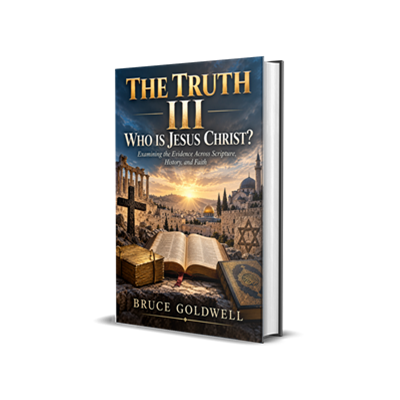
THE TRUTH III: WHO IS JESUS CHRIST? examines the evidence across Scripture, history, and faith.
Explore the historical Jesus, the earliest sources, messianic prophecy, Judaism, Islam, the Crucifixion, the Resurrection, the divinity of Christ, the Church He established, Reformation, Restoration, Joseph Smith, the Book of Mormon, and the question of continuing revelation.
Put the evidence on the table. Ask the questions. Decide what you believe.