Title
United We Stand
Book information, author background, editorial-review highlights, interview topics, discussion resources, promotional images, and materials for journalists, podcasters, reviewers, book clubs, veterans organizations, and civic groups.
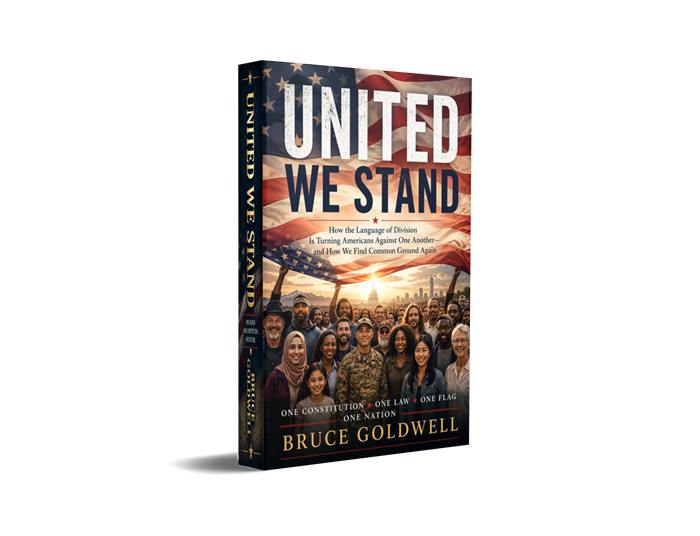
How the Language of Division Is Turning Americans Against One Another—and How We Find Common Ground Again
United We Stand examines how political labels, identity, media, social media, economic rhetoric, cultural conflict, institutional incentives, and political tribalism can turn legitimate disagreement into hostility.
Written by Vietnam veteran and author Bruce Goldwell, the book asks whether Americans can continue disagreeing passionately while recognizing one another as fellow citizens.
Rather than asking readers to choose another political camp, Goldwell returns repeatedly to a larger principle:
“Choose America over division.”
United We StandThe book examines identity politics, equality and equity, capitalism and socialism, education, media, social media, immigration, sex and gender, free speech, scientific debate, political incentives, divide-and-conquer strategies, tribalism, constitutional government, patriotism, and national unity.
United We Stand
Bruce Goldwell
Veteran, author, citizen, independent thinker, and supporter of constitutional freedom.
American political and cultural division and the search for constitutional common ground.
Americans do not need to agree on everything in order to remain one nation.
Choose America over division.
Bruce Goldwell is an American author, songwriter, entrepreneur, independent publisher, and Vietnam veteran.
He served in the United States Army, including service in Vietnam in 1970.
His life has included military service, entrepreneurship, creative work, poverty, homelessness, reinvention, writing, publishing, and the continuing pursuit of new opportunities.
Goldwell writes from the perspective of a citizen who believes America remains worth defending while also believing that patriotism includes the responsibility to question government, challenge institutions, examine evidence, defend constitutional freedom, and confront failures honestly.
In United We Stand, he argues that political disagreement need not become personal hatred.
“Patriotism does not require silence.”
Bruce Goldwell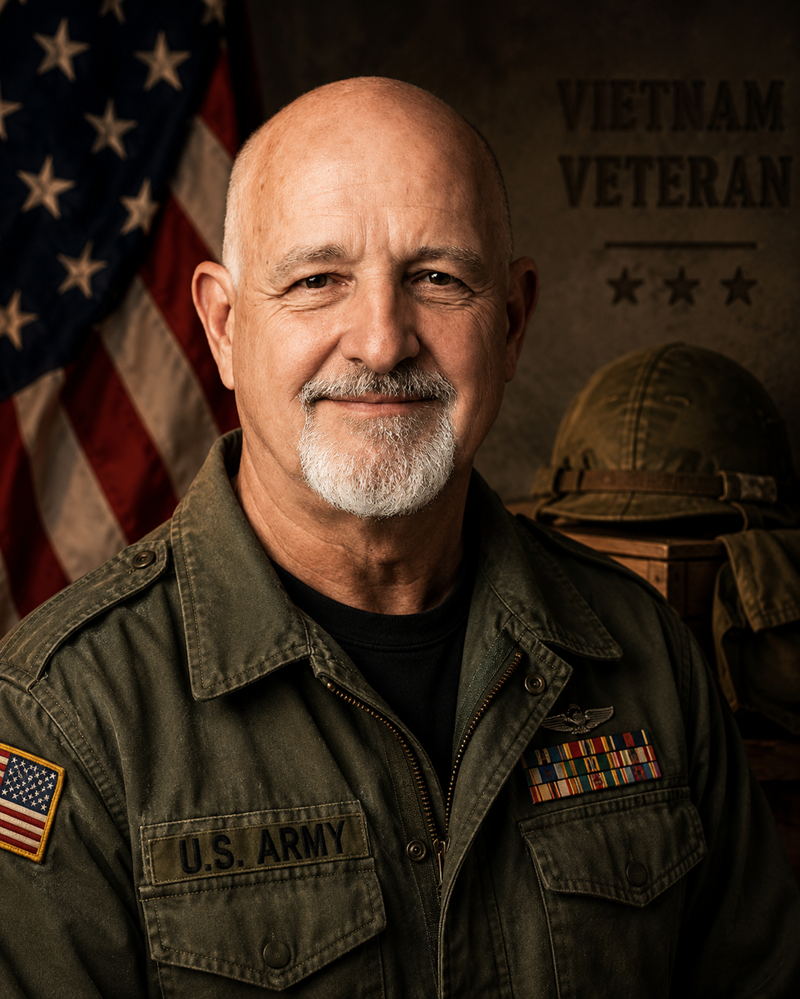
Bruce Goldwell is an American author, songwriter, entrepreneur, independent publisher, and Vietnam veteran. His work spans personal development, technology, economics, American freedom, fiction, and education. In United We Stand, Goldwell examines the language and incentives dividing Americans and argues for individual liberty, equal citizenship, constitutional government, free expression, personal responsibility, and patriotism without hatred.
This short biography may be used for book reviews, podcasts, interviews, book-club announcements, event listings, and media references involving United We Stand.
United We Stand provides a wide range of possible topics for interviews, podcasts, radio programs, videos, book clubs, and civic discussions.
How living through an earlier era of intense American division influenced Goldwell's concern about today's political climate.
How political differences can move from argument to moral condemnation and eventually to tribal hostility.
Racist, privileged, fascist, socialist, extremist, woke, MAGA, hater, and other labels that can replace actual conversation.
Whether Americans should encounter one another primarily as demographic categories or individual human beings.
Where the ideas overlap, where they conflict, and what happens when government attempts to influence outcomes.
Moving beyond slogans to examine private property, markets, entrepreneurship, government power, historical outcomes, and economic opportunity.
Goldwell's personal experience of homelessness, reinvention, continued authorship, and pursuing success later in life.
The difference between teaching students what to think and teaching them how to examine competing ideas.
Why anger, fear, audience loyalty, subscriptions, advertising, and attention can reward divisive political coverage.
Algorithms, engagement, rage bait, echo chambers, confirmation bias, influencers, and viral political conflict.
Why one standard for allies and another for opponents can be more dangerous than ordinary left-versus-right disagreement.
How Americans can love their country, confront its failures, criticize government, and defend constitutional principles without hating fellow citizens.
The editorial review describes United We Stand as:
“A clear-eyed veteran's call to reject the slogans that are turning neighbors into enemies.”
Editorial ReviewThe review highlights the book's emphasis on definitions, consistent standards, individual rather than collective judgment, criticism of excesses on both political sides, and constitutional common ground.
“I finished it more hopeful than when I started.”
Editorial Review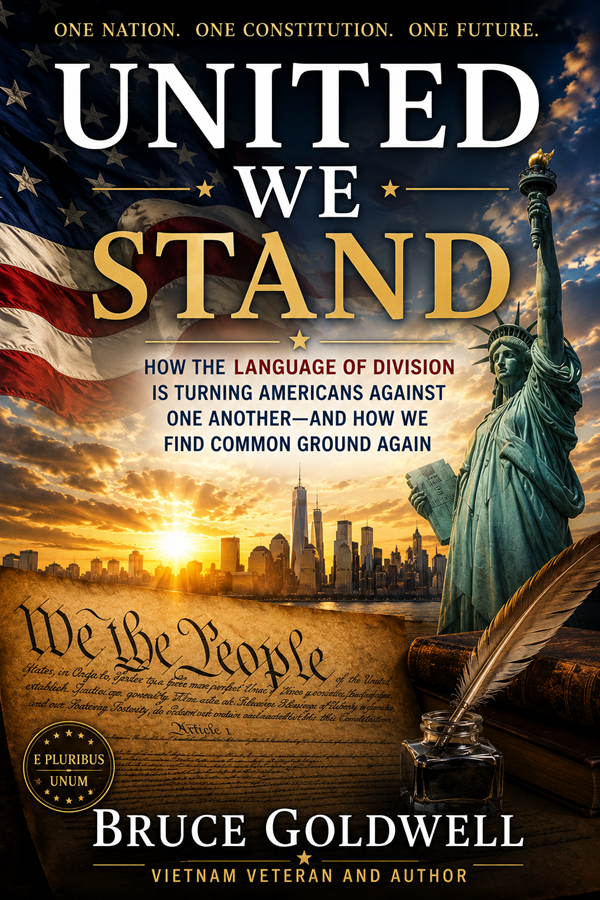
Short excerpts suitable for social posts, articles, interview introductions, promotional graphics, and book-club materials.
“We can be different without becoming enemies.”
Bruce Goldwell — United We Stand“Principles mean the most when we apply them to people we do not like.”
Bruce Goldwell — United We Stand“Popular ideas rarely need protection.”
Bruce Goldwell — United We Stand“Do not give allies a discount on truth.”
Bruce Goldwell — United We Stand“United does not mean identical.”
Bruce Goldwell — United We Stand“Loving America does not require hating anyone else.”
Bruce Goldwell — United We StandThe United We Stand website includes several images that can support articles, reviews, social posts, interviews, and promotional coverage.
Main promotional book image for articles, reviews, interviews, and book-related posts.
File: united-we-stand-cover.jpg
Expanded patriotic artwork featuring the book title, American imagery, and constitutional themes.
File: united-we-stand-full-cover.jpg
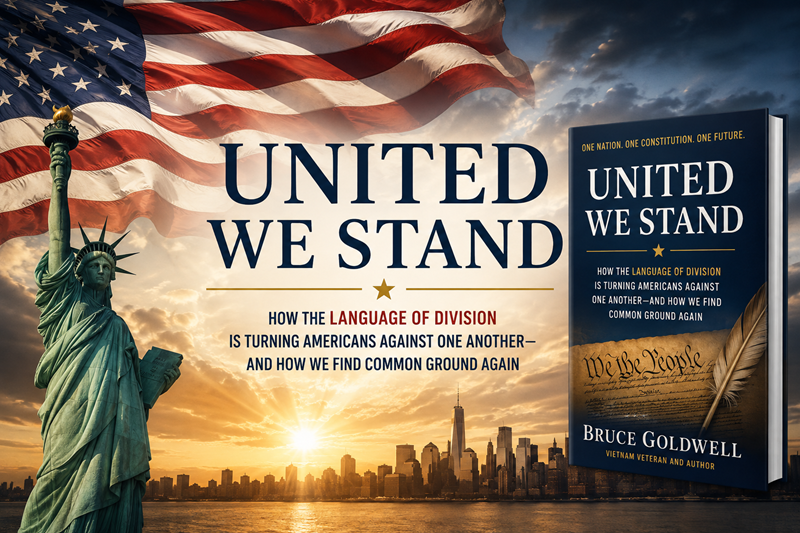
Wide-format artwork suitable for social sharing, website features, and media promotion.
File: hero-united-we-stand.jpg
Bruce Goldwell author image for profiles, interviews, author features, and veteran-related coverage.
File: bruce-goldwell-veteran.jpg
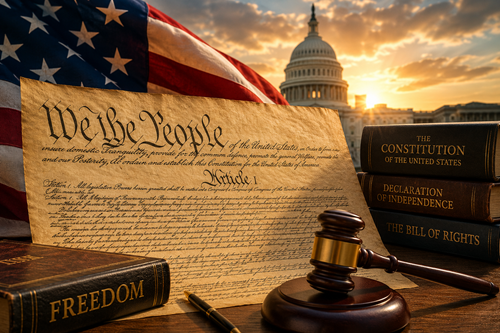
Supporting image for articles or discussions involving constitutional liberty, free speech, citizenship, and law.
File: constitution-freedom.jpg
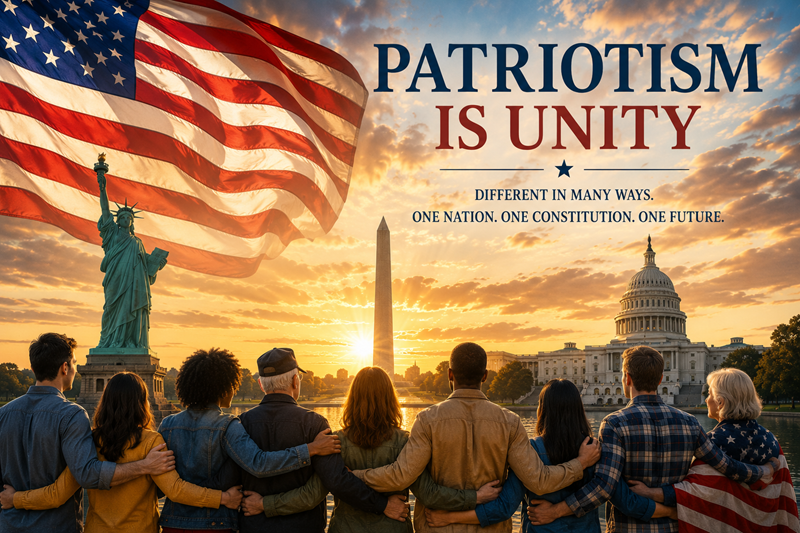
Supporting artwork for coverage related to patriotism, veterans, citizenship, unity, and national identity.
File: patriotism-unity.jpg
United We Stand can support more than a conventional book-review story.
A personal feature about a veteran who experienced an earlier period of deep national division and is now asking Americans to relearn how to disagree.
A broader civic discussion about polarization, political rhetoric, constitutional government, and citizenship.
An examination of words such as racist, privilege, extremist, fascist, socialist, woke, and MAGA.
Media economics, social-media algorithms, political influencers, rage bait, and why anger has measurable value.
How love of country can coexist with criticism, protest, historical honesty, constitutional dissent, and respect for political opponents.
A human-interest story about homelessness, reinvention, technology, writing, independent publishing, and continuing to build later in life.
Organizations interested in discussing United We Stand can use the free chapter and discussion guide available on this website.
Chapter 1 — United We Stand introduces the book's argument about equal citizenship, constitutional freedom, disagreement, and national identity.
Read Chapter 1 →Questions are available for book clubs, veterans groups, civic organizations, classrooms, families, and individual reflection.
Discussion Questions →Readers can examine the source areas and primary-document standards behind major factual discussions.
Explore Sources →United We Stand does not argue that every ideology is equally compatible with constitutional liberty.
It does not argue that Americans should stop criticizing government.
It does not argue that citizens should ignore injustice.
And it does not argue that political convictions should disappear in the name of superficial harmony.
Goldwell argues instead that citizens can:
Challenge ideas.
Oppose policies.
Criticize politicians.
Defend constitutional limits.
Speak passionately.
Vote their conscience.
And still refuse to reduce millions of other Americans to enemies.
“Keep your convictions. Reject the hatred.”
United We Stand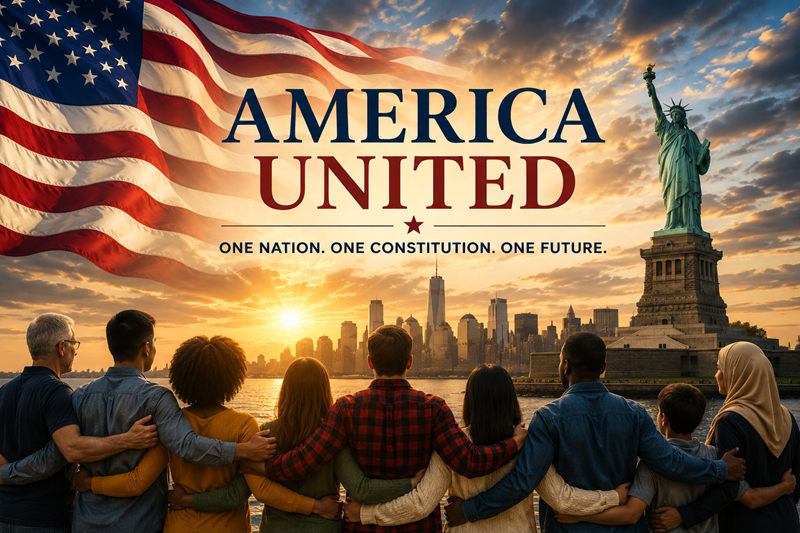
Media organizations, reviewers, podcasters, book clubs, veterans groups, civic organizations, and other interested parties may contact Bruce Goldwell regarding United We Stand.
Author of United We Stand
Vietnam Veteran • Author • Songwriter • Independent Publisher
Email: mypositivevibes@yahoo.com
When contacting Bruce regarding the book, please include United We Stand in the subject line.
America has always disagreed. That is not new. What is dangerous is when disagreement becomes a reason to stop seeing one another as fellow citizens. United We Stand examines the language, institutions, incentives, and political habits that can turn Americans into opposing tribes. Its final message is not “choose my side.” It is “choose America over division.”
United We StandLearn about the purpose, structure, and central argument behind United We Stand.
About the Book →Explore identity, economics, education, media, free speech, immigration, tribalism, patriotism, and constitutional freedom.
Explore the Themes →Read the complete 4.5-out-of-5-star editorial review.
Read the Review →Explore the constitutional common ground that allows disagreement to coexist with liberty.
Constitution and Freedom →Examine how labels, outrage, political incentives, and tribalism can divide citizens.
America and Division →Explore patriotism strong enough to defend America, confront its failures, and respect fellow citizens.
Patriotism Without Hatred →United We Stand is a call to Americans who are tired of being told that disagreement requires hatred.
Choose America over division.