Reader Discussion Guide

Discussion Questions for United We Stand

These questions are designed for thoughtful conversation rather than political point-scoring. Use them with book clubs, veterans groups, civic organizations, classrooms, families, friends, or for personal reflection.

Ask Listen Think Discuss
Before the Conversation

The Goal Is Understanding, Not Victory

United We Stand argues that Americans need not weaken their convictions in order to improve the way they disagree.

A productive conversation does not require everyone to leave the room believing the same thing.

It requires something more basic:

Listening.

Asking questions.

Defining terms.

Examining evidence.

Applying standards consistently.

And allowing another person to finish a thought without immediately assigning a label.

“Attack arguments, not people.”

United We Stand
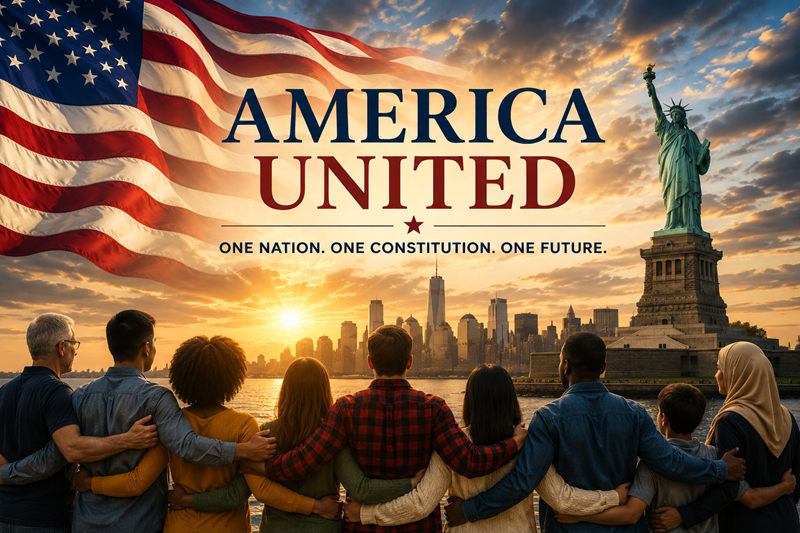
Americans from different backgrounds standing together
Suggested Ground Rules

Six Rules for a Better Discussion

Listen Before Responding

Try to understand what another person actually means before preparing a rebuttal.

Define Important Words

If people use words such as racist, privilege, socialism, fascism, equity, extremist, or misinformation, ask what they mean by them.

Challenge Ideas, Not Character

Disagree with arguments without automatically assigning hatred, ignorance, selfishness, or evil motives.

Ask for Evidence

When a factual claim matters, ask what evidence supports it.

Apply One Standard

Ask whether the same judgment would be made if the political parties, groups, or identities were reversed.

Allow Uncertainty

“I don't know” and “I need to think about that” are legitimate answers.

Part I

How a Nation Becomes Divided

Begin with the book's foundational question: how does ordinary political disagreement become something more dangerous?

  1. What does the phrase “We the People” mean to you personally?
  2. Does national unity require agreement, or can people remain united while disagreeing on major issues?
  3. What is the difference between political disagreement and political hostility?
  4. Have you ever changed your opinion of someone after learning their political affiliation? Why?
  5. At what point does a label stop helping us describe an idea and begin replacing the argument itself?
  6. Which political words do you think have become so overused that their meanings are becoming unclear?
  7. What happens to a society when large numbers of citizens begin believing political opponents are dangerous rather than merely mistaken?
  8. Can a constitutional republic function if each side believes losing an election means the country itself is finished?
Part II

Identity, Race, Equality, and Equity

These questions explore the tension between recognizing group patterns and respecting individual identity.

  1. How much can a person's race, sex, religion, economic class, or political affiliation actually tell us about that individual?
  2. Can population-level statistics be useful while still being unfair when applied directly to individuals?
  3. What do you understand the term white privilege to mean?
  4. Why might the academic meaning of privilege be heard differently by someone who has personally experienced poverty or hardship?
  5. What should the word racism mean?
  6. Does expanding the definition of racism make the concept more useful or less precise?
  7. How do you distinguish equality from equity?
  8. When might equal treatment fail to produce meaningful opportunity?
  9. When might attempts to produce equal outcomes require unequal treatment?
  10. Should government focus primarily on individuals or groups when designing policy?
  11. Can society acknowledge historical injustice without assigning personal guilt to people who did not commit it?
  12. What does it mean to see the person before the category?
Part III

Class, Money, and the American Dream

Wealth and economic systems often produce some of the strongest political labels in American life.

  1. When does legitimate criticism of wealth become blanket hostility toward wealthy people?
  2. Does becoming rich provide any evidence by itself about whether a person is good or bad?
  3. What is the difference between capitalism and crony capitalism?
  4. What are capitalism's greatest strengths?
  5. What are capitalism's genuine weaknesses or abuses?
  6. What does the word socialism mean to you?
  7. Why is it important to distinguish socialism from social democracy?
  8. Should economic systems be judged primarily by their intentions, their mechanisms, or their historical results?
  9. What role should private property and voluntary exchange play in a free society?
  10. Is the American Dream still achievable?
  11. What structural barriers genuinely prevent some Americans from advancing?
  12. How much responsibility should individuals have for changing their own circumstances?
  13. Can a society offer a meaningful safety net without creating permanent dependency?
  14. What does the statement “Where you begin does not have to determine where you end” mean to you?
Part IV

Universities, Education, Media, and Social Media

  1. What is the difference between teaching students what to think and teaching them how to think?
  2. How much intellectual diversity should a university strive to maintain?
  3. Should students be expected to encounter ideas they find offensive or deeply disagreeable?
  4. When does education become indoctrination?
  5. How can academic ideas move from universities into corporations, government, media, education, and popular culture?
  6. Does that movement require deliberate coordination, or can it happen naturally through institutions and professional networks?
  7. How often do you consume news from outlets that disagree with your own political views?
  8. Can two news organizations report the same facts while leaving audiences with completely different impressions?
  9. What role does profit play in the way political news is presented?
  10. Does anger make you more or less likely to click, watch, comment, or share?
  11. How might recommendation algorithms influence what you believe other Americans think?
  12. Have you ever discovered that a viral clip or headline left out important context?
  13. What responsibility does the individual user have for verifying something before sharing it?
Part V

The Culture War

These questions concern subjects where disagreement often becomes especially personal.

  1. Can America support legal immigration while also maintaining meaningful borders?
  2. Can compassion toward migrants coexist with enforcement of immigration law?
  3. How do labels such as open borders, invasion, and xenophobe affect the immigration debate?
  4. What does successful assimilation mean in a diverse nation?
  5. Can respect for transgender individuals coexist with disagreement about policy?
  6. How should society balance inclusion, biological differences, competitive fairness, parental authority, medical judgment, and freedom of expression?
  7. Does disagreement over a cultural policy automatically indicate hatred toward the people affected by it?
  8. What kinds of speech should government be allowed to prohibit?
  9. Should offensive speech receive constitutional protection?
  10. Who should determine what constitutes misinformation or disinformation?
  11. What is the difference between questioning science and questioning a particular scientific claim?
  12. What lessons should Americans take from disagreements over COVID-era public policy and scientific communication?
  13. How should institutions communicate scientific uncertainty without undermining public confidence?
Part VI

Who Benefits from a Divided America?

  1. Who gains politically when voters believe the opposing party is dangerous?
  2. Who gains financially when audiences remain angry and engaged?
  3. Can institutions respond to similar incentives without coordinating with one another?
  4. What does divide and conquer mean in modern political life?
  5. How has technology made an ancient political strategy more powerful?
  6. What is political tribalism?
  7. Why is it easier to recognize tribalism in the opposing side than in our own?
  8. Have you ever excused behavior from a politician you supported that you would have condemned from the other party?
  9. What happens when facts are evaluated according to which political side they benefit?
  10. Can a republic survive if citizens develop two standards of truth?
  11. Which should come first: truth, country, principle, or political party?
Part VII

The Way Back

The final section of the book moves away from diagnosis and toward responsibility.

What can individual citizens actually do?

Patriotism, citizenship, and American unity
  1. What would change if Americans consciously tried to see people before political categories?
  2. What are the most important rules for disagreeing constructively?
  3. When was the last time you changed your mind because someone gave you better evidence?
  4. Why can admitting uncertainty be difficult in political conversation?
  5. Is the Constitution still capable of providing meaningful common ground for Americans with very different values?
  6. Which constitutional principle do you believe is most important to preserving American freedom?
  7. Does patriotism require believing America has always been right?
  8. Can criticism of America itself be patriotic?
  9. How should a patriot respond when government violates constitutional principles?
  10. What does patriotism without hatred mean to you?
  11. What does it mean to say that America belongs to all of its citizens?
  12. Can you strongly oppose someone's political beliefs while still respecting that person's citizenship and constitutional rights?
  13. What would it take for America to become “one nation again” without demanding ideological conformity?
Personal Reflection

Questions to Ask Yourself

Some of the most useful questions in the book are not questions to ask the other side. They are questions to ask ourselves.

  1. Which political group do I understand least?
  2. Have I ever learned to dislike a category of people I rarely speak with personally?
  3. Which news or social-media sources make me angry most often?
  4. Am I more skeptical of information that hurts my side than information that helps it?
  5. Have I ever shared something politically damaging before verifying whether it was true?
  6. What political label do I use most casually?
  7. Do I know exactly what that label means?
  8. What belief held by the opposing political side can I describe fairly enough that a supporter would recognize it?
  9. What does my own political side sometimes get wrong?
  10. Which constitutional freedom would I defend for someone whose beliefs I strongly oppose?
  11. Am I trying to discover what is true, or merely prove that my side is right?
  12. Who benefits when I remain angry?
  13. What could I personally do to make one conversation less divided?
One Question for Every American

What Happens When We Stop Seeing One Another as Fellow Citizens?

“What happens when Americans stop seeing one another primarily as fellow citizens?”

United We Stand

That question appears near the beginning of the book because almost every discussion that follows returns to it.

Race. Wealth. Politics. Religion. Immigration. Education. Gender. Speech. Media. Economics.

Can we disagree about all of them without losing the larger identity we share?

For Book Clubs and Groups

A Simple 60-Minute Discussion Format

First 10 Minutes

Ask each participant to name one idea from the book that made them think differently, whether or not they agreed with it.

Next 15 Minutes

Discuss language and labels. Which words currently make American conversation more difficult?

Next 15 Minutes

Discuss tribalism. Ask participants to identify one double standard they have noticed in either political camp.

Next 10 Minutes

Discuss the Constitution. Which shared rules must survive regardless of which party holds power?

Final 10 Minutes

Ask each participant to identify one thing ordinary citizens can personally do to lower political hostility without surrendering conviction.

Final Question

Can everyone in the room disagree about something important and still leave recognizing one another as fellow citizens?

The Goal

Leave the Conversation More Curious Than Angry

A successful discussion of United We Stand does not require unanimous agreement with Bruce Goldwell.

In fact, disagreement is part of the point.

The deeper question is whether Americans can restore the ability to examine hard subjects without immediately turning ideological opponents into moral enemies.

“Understanding an argument does not require agreeing with it.”

United We Stand
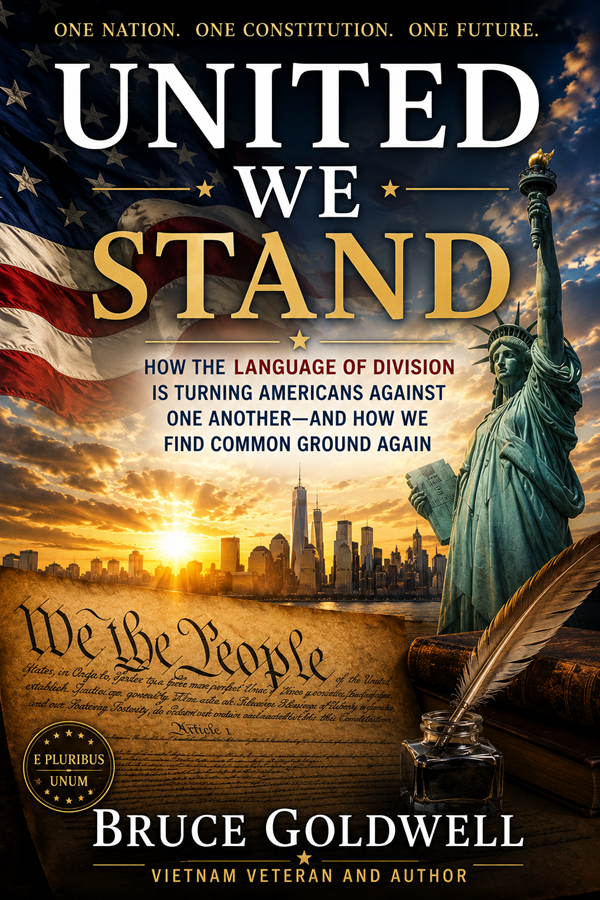
United We Stand by Bruce Goldwell
Continue Exploring

More Resources for Readers

Read Chapter 1 Free

Begin with the complete opening chapter and the book's foundational argument about citizenship and freedom.

Read Chapter 1 →

Explore the Themes

Review the major subjects covered in the book before or after your group discussion.

Explore the Themes →

Sources and Notes

Use the sources page to identify claims your group wants to investigate more deeply.

Examine the Sources →
United We Stand

The Conversation Is Part of the Solution

Ask questions. Listen carefully. Defend your convictions. Demand evidence. Admit uncertainty. And never confuse disagreement with hatred.

United does not mean identical.