Part I — How a Nation Becomes Divided
The opening chapters examine unity, political language, labels, repetition, moral condemnation, and the point where disagreement becomes hostility.
United We Stand examines how political labels, identity, institutions, media, economics, social pressure, and tribalism can turn disagreement into hostility—and why the Constitution still gives Americans a framework for living together without thinking alike.
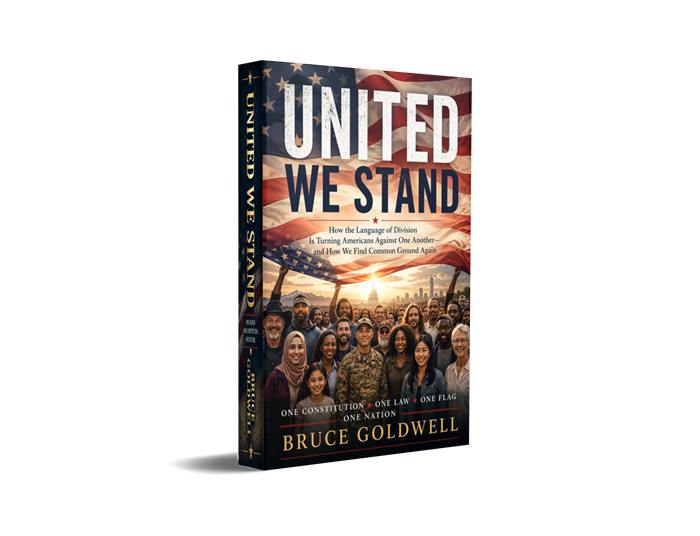
The United States has always contained profound disagreements. Americans have argued over the proper role of government, taxation, religion, war, economics, race, immigration, education, individual rights, and the direction of the country from the beginning.
Disagreement is not evidence that freedom has failed.
In many ways, disagreement is evidence that freedom is working.
The deeper danger begins when disagreement stops being about ideas and becomes a judgment about the character or legitimacy of the person holding them.
“The problem is not that Americans disagree. The problem is when disagreement becomes a reason to stop seeing one another as fellow citizens.”
United We StandUnited We Stand asks readers to examine the words and assumptions that increasingly divide Americans into competing moral categories.
Black and white. Rich and poor. Privileged and oppressed. Republican and Democrat. Woke and MAGA. Immigrant and native-born. Religious and secular. Urban and rural.
Behind many of those divisions are real problems and legitimate disagreements. The book does not ask readers to ignore them.
It asks something more difficult:
Can we confront genuine problems without turning entire categories of Americans into enemies?
The book does not begin with the assumption that one secret organization is orchestrating every division in American life.
Political campaigns benefit from motivated voters.
Media organizations benefit from audiences.
Social-media platforms benefit from engagement.
Activist organizations benefit from attention and donors.
Political influencers benefit from followers.
Institutions may benefit from expanded importance, funding, influence, or authority.
None of those groups has to secretly coordinate with the others for their incentives to point in a similar direction.
Anger is valuable.
Fear is valuable.
Outrage is valuable.
And division can become profitable.
The book is designed as a journey. It begins by examining how division forms, then moves through some of America's most difficult arguments before ending with a practical path back.
The opening chapters examine unity, political language, labels, repetition, moral condemnation, and the point where disagreement becomes hostility.
White privilege, racism, equality, equity, and the growing tendency to interpret individuals primarily through demographic groups.
Wealth, capitalism, socialism, economic resentment, opportunity, personal responsibility, and whether the American Dream remains achievable.
Universities, education, media, social media, political campaigns, and the institutions that can amplify ideological language and conflict.
Immigration, sex and gender, free expression, censorship, misinformation, and the politicization of scientific uncertainty.
Incentives, divide-and-conquer strategies, political identity, media economics, and why tribalism may be more dangerous than left versus right.
Individuality, constructive disagreement, constitutional common ground, patriotism without hatred, and the choice to become one nation again.
The final message is not “choose my side.” It is: Choose America over division.
The book asks where concepts such as privilege, systemic racism, collective identity, equality, and equity help explain real problems—and where they can become overly broad.
Rather than relying on slogans, the book examines ownership, markets, entrepreneurship, voluntary exchange, state power, historical outcomes, and economic opportunity.
What is the difference between teaching students what to think and teaching them how to think?
How can the same event become two very different political stories depending upon what facts, images, quotations, and framing receive attention?
Algorithms, viral outrage, confirmation bias, selective editing, rage bait, political influencers, and the economics of keeping users emotionally engaged.
Can America value immigration, compassion, borders, sovereignty, assimilation, and the rule of law at the same time?
Can respect for individual human beings coexist with disagreement about biology, medicine, sports, education, parental authority, and free expression?
Hate speech, offensive expression, misinformation, platform moderation, censorship, and why unpopular speech is where the principle is actually tested.
Science is a method of inquiry. The book examines what happens when scientific uncertainty becomes entangled with political identity and public authority.
One of the recurring ideas in United We Stand is that equal citizenship does not mean every person will live an identical life.
Human beings differ in talent, ambition, circumstances, interests, risk tolerance, opportunity, choices, and luck.
The American promise is not that government can guarantee everyone the same destination.
It is that where someone begins should not permanently determine where that person is allowed to go.
“Open the door. Remove unjust barriers. Help people who genuinely need a hand reaching it. Then allow Americans to walk through on their own feet.”
United We Stand
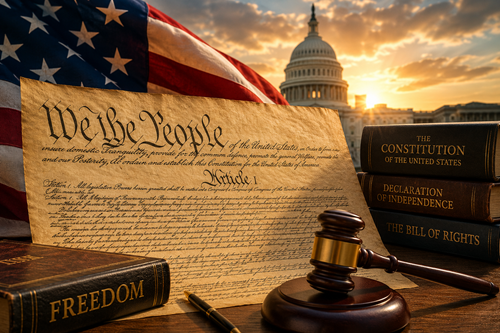
The Constitution does not require Americans to share one ideology. It provides rules within which competing ideas can coexist without destroying freedom.
Citizens must be free to criticize government, political movements, institutions, and one another.
Government should not determine which religious or political beliefs citizens are permitted to hold.
Accusation is not guilt. Evidence, procedures, and the right to answer matter.
Fundamental citizenship should not rise or fall according to race, wealth, religion, or political affiliation.
Political power can change peacefully because citizens vote rather than fight one another for control.
Government power requires boundaries regardless of which political side temporarily controls it.
The book does not argue that Americans should stop being conservative, progressive, Republican, Democrat, libertarian, socialist, capitalist, religious, secular, or independent.
It does not argue that injustice should be ignored in the name of superficial harmony.
It does not argue that every political idea deserves equal respect.
Some arguments are wrong.
Some policies fail.
Some ideologies genuinely conflict with constitutional liberty.
Citizens should be free to say so.
The book's argument is that Americans should challenge ideas with evidence, argument, constitutional processes, and free expression rather than automatically assigning collective guilt or treating political disagreement as hatred.
Bruce Goldwell writes from the perspective of an American veteran who believes the country remains worth defending.
He served during the Vietnam era, a period when Americans were deeply divided over war, government, patriotism, and national direction.
That experience helped shape one of the book's central convictions:
Patriotism does not require silence.
Citizens should be willing to question institutions, challenge government, defend constitutional principles, and speak when they believe something important is being lost.
But patriotism should never become an excuse for hatred of other Americans.
Read Patriotism Without Hatred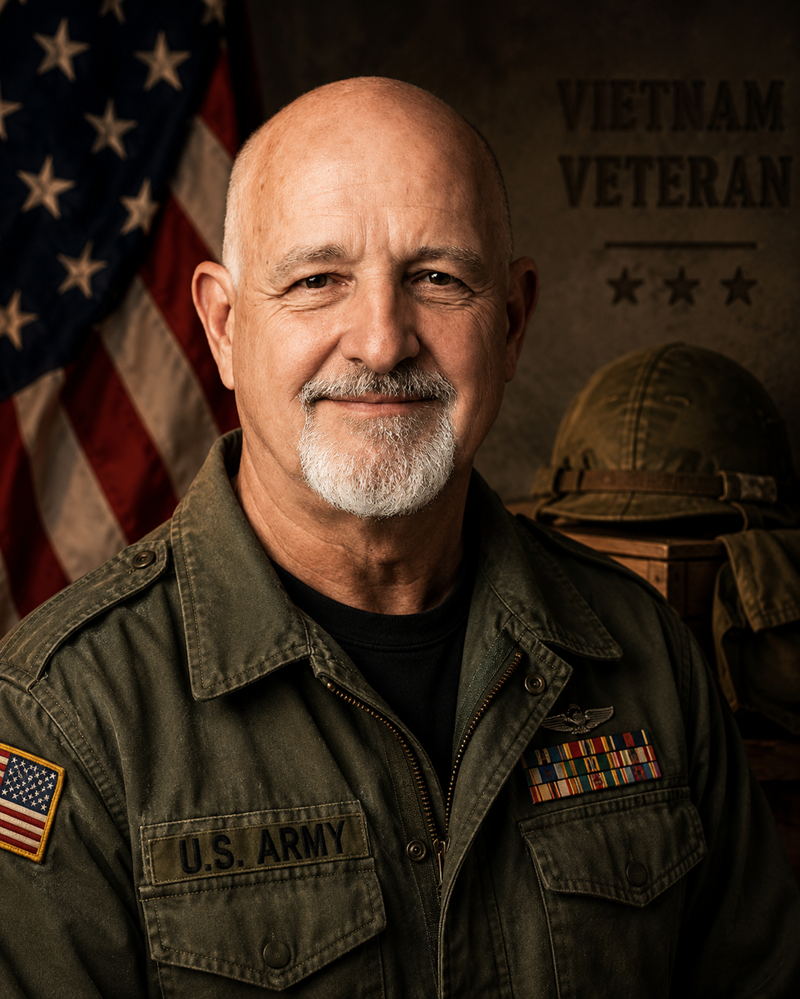
A demographic statistic cannot tell you the character, circumstances, beliefs, or history of the person standing in front of you.
Attack arguments rather than people. Ask questions. Listen. Demand evidence. Admit uncertainty. Correct errors.
Constitutional principles become meaningful when they protect people we dislike as well as people we support.
Do not change your standard of truth simply because a fact helps or hurts your political side.
America can be criticized, improved, defended, and loved without requiring citizens to despise one another.
The final choice belongs to citizens: whether we allow someone else to decide which fellow Americans we are supposed to hate.
“We are not required to think alike. We are not required to vote alike. We are not required to worship alike. But if this republic is going to endure, we must rediscover the ability to live together as free citizens.”
Bruce GoldwellThe country does not need Americans who never disagree. It needs Americans who can disagree fiercely and still stand beside one another when the country needs them.