United We Stand
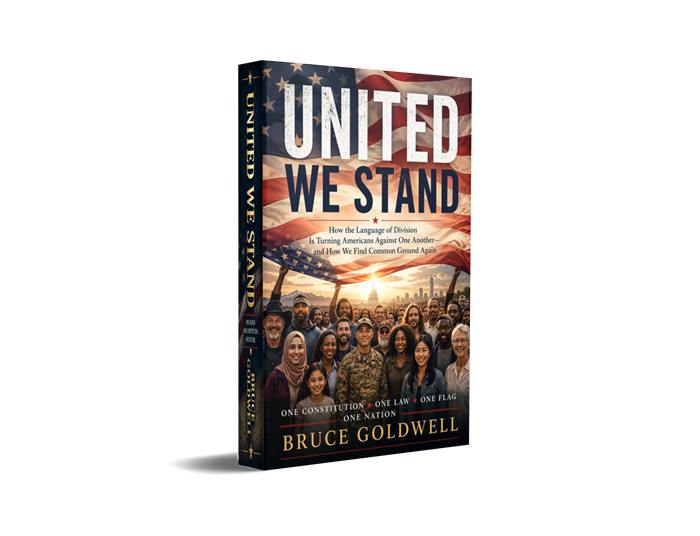
Bruce Goldwell's United We Stand is exactly what the subtitle promises: an examination of how loaded language—“white privilege,” “racist,” “equity,” “the rich,” “fascist,” “woke,” “MAGA,” and a dozen others—has shifted from describing problems to assigning enemies, and a practical argument for how Americans can still share a country without agreeing on everything.
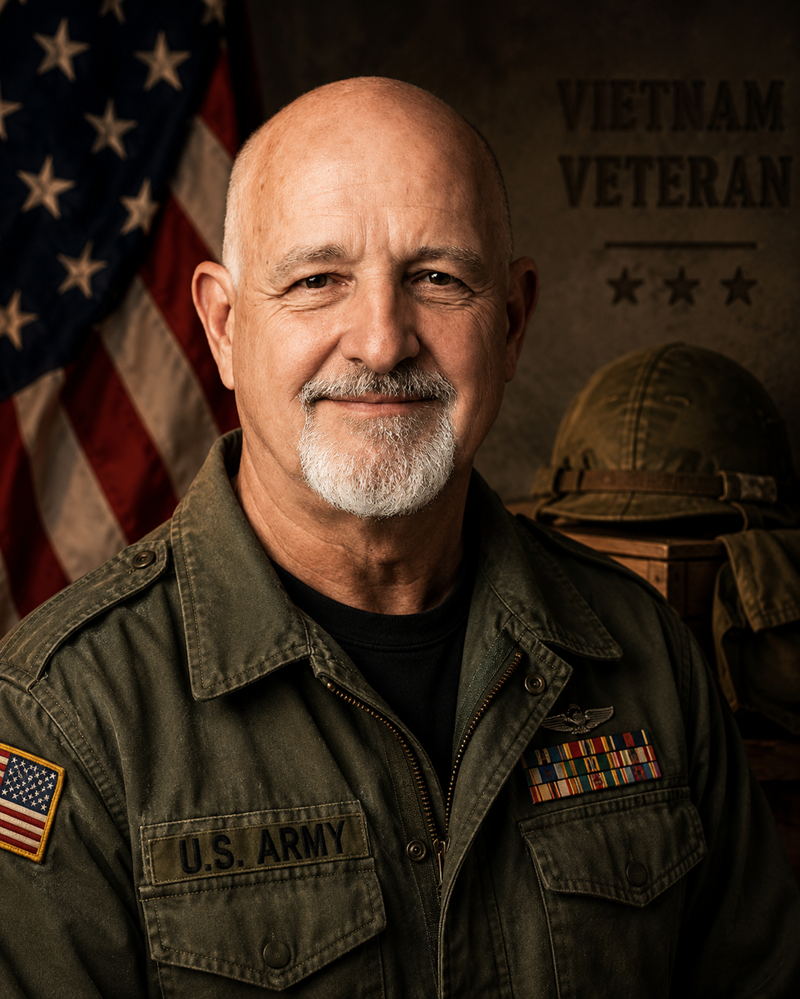
Goldwell writes as a Vietnam veteran who still believes the country is worth defending. That background gives the book an authentic, non-academic voice. He is not a professor or pundit recycling seminar jargon; he is a citizen who has seen division before and is alarmed that disagreement is hardening into moral condemnation.
The structure is logical and readable: Part I lays out how nations fracture through words; Parts II–V examine the specific rhetoric of identity, class, universities, media, social media, immigration, gender, speech, and “follow the science”; Part VI asks who benefits from the incentives; and Part VII offers a constructive path back through individuality, honest disagreement, the Constitution as common ground, patriotism without hatred, and choosing citizenship over tribe.
The strongest chapters are those that insist on definitions and consistency. Goldwell repeatedly asks readers to define the term before using it, test whether the same standard is applied to one's own side, and separate group statistics from individual character.
On white privilege he carefully distinguishes population patterns from personal verdicts and notes how the everyday meaning of “privilege” clashes with the academic one.
On capitalism and socialism he grounds the discussion in historical outcomes rather than slogans.
On universities he traces how concepts move from curriculum into culture without claiming a grand conspiracy—selection effects, incentives, and genuine belief are enough.
The media and social-media chapters correctly identify outrage as a business model.
Throughout, he criticizes excesses on both the left and the right and refuses collective guilt of any kind.
The tone is earnest and repetitive in places—certain themes, including labels killing conversation, double standards revealing tribalism, and the Constitution as the shared framework, return often—but the repetition serves the purpose of a citizen's manifesto rather than an academic monograph.
Readers looking for dense data tables or original quantitative research will not find them here; the book is written for a general audience and relies on widely available public evidence, historical patterns, and common-sense tests.
What the book does exceptionally well is refuse the false choice between “ignore injustice” and “accept every group-essentialist framework.”
Goldwell wants Americans to talk about real problems—racism, poverty, discrimination, policy failures—without turning the discussion into a moral hierarchy of identities.
His closing argument is simple and powerful: you can keep your convictions, vote your conscience, and still refuse to let anyone choose your enemies for you.
“We the People” is larger than any temporary political tribe.
This is not a neutral book. It prioritizes individual agency, equal citizenship under law, limited government, and free speech over equity-of-outcome frameworks and expansive definitions of harm.
Readers deeply committed to identity-first analysis will likely find it insufficiently progressive.
Readers exhausted by the constant sorting of Americans into privileged/oppressed, rich/enemy, or patriot/traitor categories will find it clarifying and useful.
I finished it more hopeful than when I started.
Goldwell does not pretend unity means agreement. He argues that a constitutional republic can survive fierce disagreement if citizens keep seeing one another as fellow citizens rather than avatars of opposing teams.
In a moment when division is profitable, that reminder is valuable.
Recommended for anyone who wants a readable, non-partisan—in the best sense—diagnosis of how language is being weaponized and a practical path back to common ground.
United we stand—still possible, still worth choosing.