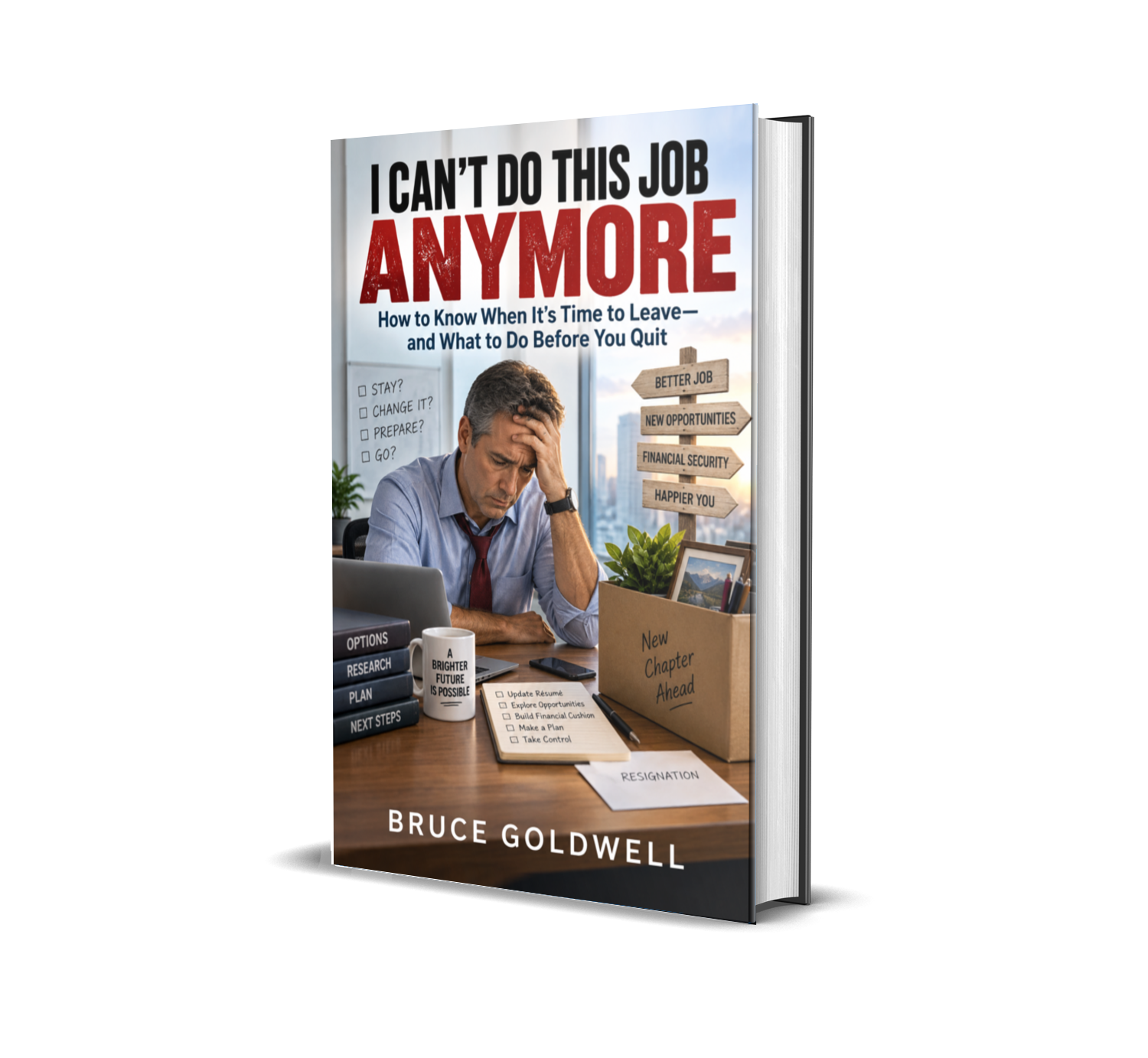
Thinking About Quitting Your Job?
Don't make a permanent decision on your worst day.
Maybe it's your boss. The workload. The pay. The lack of respect. The Sunday-night dread. Or maybe you've simply reached the point where you're thinking:
I can't do this job anymore.
Before you resign, make sure you're answering the right question.
I Can't Do This Job Anymore by Bruce Goldwell isn't a book telling you to quit. It's a practical guide designed to help you decide what makes the most sense for your life, career, finances, and future.
GET THE EBOOK GET THE PAPERBACKYou Have More Than Two Choices
When you're miserable at work, it can feel as though you have only two options: keep putting up with it or quit.
There may be a better way to look at the decision.
The purpose of this book isn't to choose one of those options for you. It's to help you gather enough information to make that choice for yourself.
Ask Yourself This
If nothing changed at this job during the next 12 months— same boss, same pay, same workload, same environment— would I willingly stay?
Your answer might be YES. It might be NO. Or it might be I DON'T KNOW YET.
All three answers are legitimate. What matters is discovering why you answered the way you did.
Prepare because you've had enough.
Before You Quit, Get Clear About What's Really Wrong
A Bad Week or a Bad Job?
Learn how to separate temporary frustration from a workplace pattern that is unlikely to change.
What Is the Job Costing You?
Look beyond the paycheck at the cost in time, relationships, energy, opportunity, dignity, and money.
Can the Job Be Fixed?
Determine whether a conversation with your supervisor, another manager, or someone higher in the organization could solve the real problem.
Are You Ready to Leave?
Examine your finances, benefits, résumé, opportunities, fears, and exit plan before giving notice.
Never Quit on Your Worst Day
Almost everyone has had a day at work when they've wanted to walk out the door and never come back.
Maybe your boss embarrassed you in front of other people. Maybe another assignment landed on your desk when you were already overwhelmed. Maybe you were passed over again.
Anger may be telling you something important. But anger doesn't have to choose the date your paycheck stops.
Don't let ten minutes of anger make a decision that could affect the next ten years.
Unless your safety or another serious circumstance requires immediate action, give yourself enough time to separate "I need to do something" from "I need to resign right now."
Look Before You Leap
One of the most important ideas in the book is simple: if leaving appears to be the right decision, consider beginning your job search before you leave your current position.
Looking for another job doesn't mean you have committed to leaving. It gives you information.
What jobs are available? What are employers paying? Are your skills competitive? Would another company actually improve your situation?
Your current paycheck may give you something extremely valuable during that search: the ability to say no to the wrong opportunity.
Keep Your Résumé Ready—Even If You Stay
You may finish this book and decide that your current job is worth keeping.
Keep your résumé current anyway.
Companies reorganize. Departments disappear. Businesses merge. Budgets get cut. Positions change.
The worst time to begin remembering everything you've accomplished during the last ten or twenty years is the afternoon you've just been told you no longer have a job.
It's giving yourself options.
I CAN'T DO THIS JOB ANYMORE
How to Know When It's Time to Leave—and What to Do Before You Quit
Before making a decision that could affect your income, benefits, family, and future, give yourself the opportunity to examine the decision clearly.
Don't quit angry. Quit prepared.
EBOOK ON AMAZON PAPERBACK ON AMAZONWhat Is the Smartest Thing You Can Do Next?
You don't have to make your entire career decision today. But you can take the first step toward clarity.
GET THE EBOOK GET THE PAPERBACKThis website and book are provided for educational and informational purposes and are not legal, financial, tax, employment, career, or other professional advice. Employment laws, workplace policies, benefits, and individual circumstances vary.