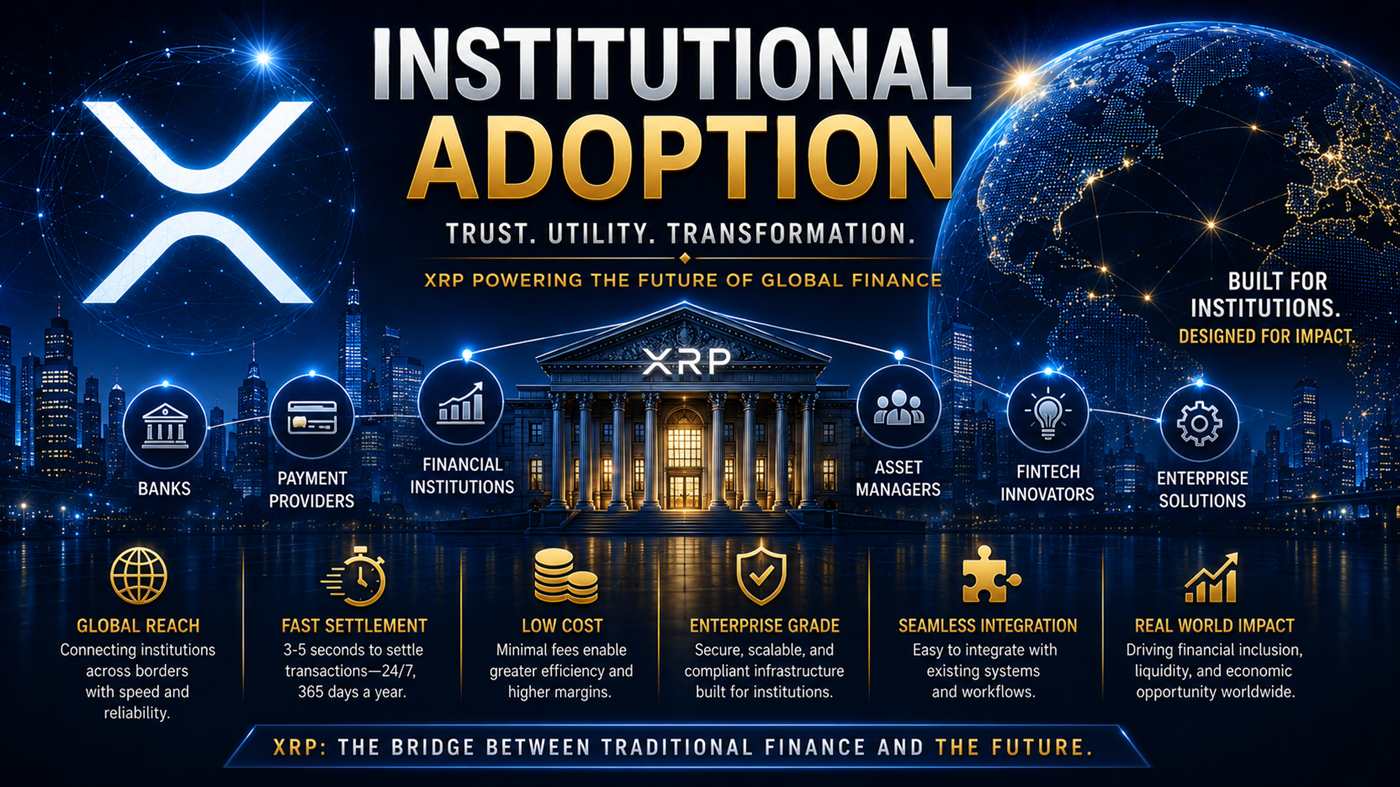
Institutional adoption means banks, fintech companies, payment providers, nonprofits, asset managers, enterprises, or public-sector organizations begin using blockchain infrastructure for real financial activity.
For Stellar, institutional adoption may connect to stablecoins, tokenization, anchors, real-world assets, aid payments, remittances, wallets, and cross-border settlement.
Simple idea: Stellar adoption is not only about price. It is about whether real organizations use the network to move, issue, settle, or manage digital value.
Institutions care about more than blockchain branding. They look for practical features such as speed, cost, compliance support, liquidity, user access, wallet integration, and real-world settlement options.
Stellar’s low fees may support payment applications, remittances, and high-volume transfer activity.
Institutions may use stablecoins for digital dollars, treasury movement, settlement, and payment flows.
Stellar can support issued assets that represent currencies, credits, funds, or real-world assets.
Anchors help connect traditional finance, local currencies, and payment systems to Stellar-based assets.
Stellar’s institutional story is often tied to practical value movement rather than speculation. Different organizations may use the network in different ways.
Payment companies may explore Stellar for faster settlement, lower fees, or digital asset-based transfer rails.
Fintech companies may build wallets, remittance tools, savings products, or stablecoin services using Stellar infrastructure.
Humanitarian organizations may use digital payments to distribute aid more efficiently.
Institutions may issue tokenized currencies, stablecoins, real-world assets, or financial products on Stellar.
Stablecoins are one of the clearest bridges between traditional finance and blockchain. For institutions, stablecoins can provide a familiar unit of value while still benefiting from digital settlement.
However, institutional trust depends on reserves, audits, issuer credibility, redemption rights, compliance, custody, and market liquidity. A stablecoin is only useful at scale if users trust the issuer and can move in and out of the asset when needed.
Institutional adoption depends on trust. Technology helps move value, but issuers, compliance, custody, and liquidity determine whether organizations can rely on that value.
As more financial assets become tokenized, institutions may look for networks that can support issued assets, fast settlement, wallet access, and regulatory requirements.
Stellar may be relevant for tokenized assets because it already supports issued assets, anchors, and efficient value movement. Real-world adoption will depend on issuers, legal structure, custody, liquidity, redemption rights, and market demand.
Institutions cannot ignore regulation. Banks, fintech companies, payment providers, and asset issuers often need identity verification, reporting, consumer protection, risk controls, and compliance processes.
This is why institutional adoption is usually gradual. Organizations must test technology, confirm legal requirements, manage risk, and build user trust before scaling real financial products.
XLM supports the Stellar network through transaction fees and account requirements. It helps the network operate, but many institutional use cases may involve stablecoins, issued assets, anchors, wallets, or tokenized financial products.
This means XLM should be understood as part of the broader Stellar ecosystem rather than the only reason Stellar matters. Network usage, asset issuance, wallet adoption, and institutional participation all contribute to the larger picture.
Institutional adoption does not usually happen overnight. It often begins with pilots, integrations, partnerships, regulatory review, small production use cases, and gradual expansion.
Organizations may begin by testing blockchain rails in limited environments.
Payment systems, wallets, compliance tools, and custody solutions must work together.
Institutions often need legal clarity before expanding digital asset use.
Adoption grows when real users, real value, and real business needs are served reliably.
This page is for educational purposes only and is not financial advice. Institutional adoption, stablecoins, tokenization, regulations, platform support, partnerships, and market conditions can change over time. Always verify current information through official sources and independent research.