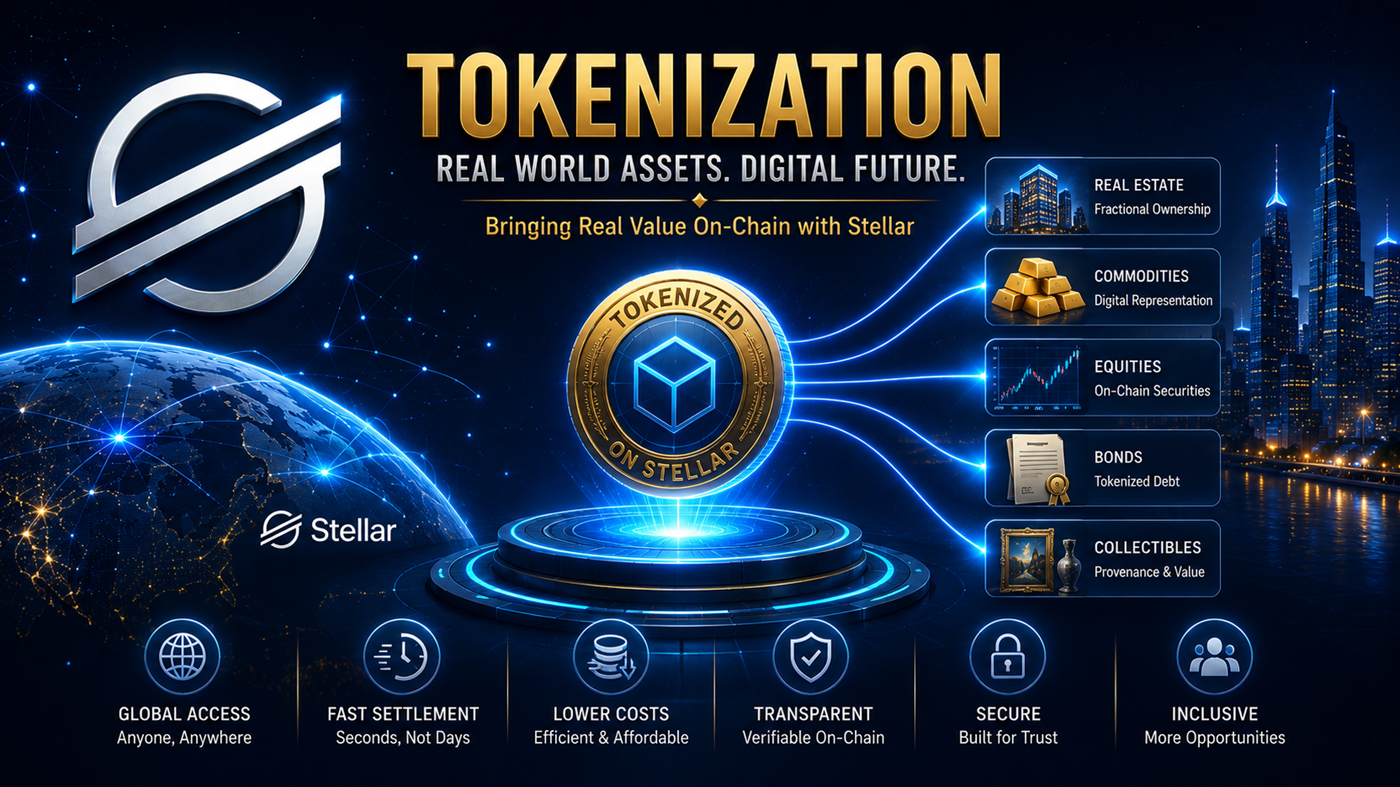
Tokenization means representing value as a digital asset on a blockchain. On Stellar, tokenization can include stablecoins, tokenized currencies, credits, real-world assets, or other issued assets that move across the network.
This is one of the reasons Stellar is important in digital finance. It was designed not only to move XLM, but also to support many forms of issued value.
Simple idea: Stellar can move more than XLM. It can also support issued assets that represent currencies, stablecoins, or other forms of value.
Tokenization turns something of value into a digital representation that can move through blockchain infrastructure. The token may represent money, credit, a stablecoin, a claim, a reward, or an asset backed by something outside the blockchain.
Stablecoins can represent dollar-denominated value moving through supported wallets and platforms.
Issued assets may represent local currencies where trusted issuers and anchors support them.
Tokenized assets may represent claims on securities, commodities, funds, or other financial instruments.
Tokenization can also support credits, loyalty systems, aid vouchers, and other digital value formats.
Stellar supports issued assets. An issued asset is created by an issuer and can represent something outside the network. This might be a stablecoin, a local currency token, a digital voucher, or another form of value.
Issued assets depend on trust. Users should understand who issued the asset, what backs it, whether it can be redeemed, where it is accepted, and what risks apply.
XLM is native to Stellar. Issued assets are different because they depend on an issuer. That issuer’s credibility, reserves, rules, and redemption process matter.
Anchors are important because they can connect tokenized value to real-world money systems. For example, an anchor may accept a deposit and issue a Stellar-based digital asset representing that value.
Without reliable anchors or issuers, tokenized assets may be difficult to access, redeem, or trust. That is why tokenization depends on both technology and real-world financial relationships.
A user deposits funds or value through a supported issuer or anchor.
A Stellar-based token is issued to represent that value.
The token can move across the Stellar network quickly and efficiently.
The user may redeem the token through supported channels where available.
Tokenization can make financial assets easier to move, track, settle, and access. Instead of value being locked inside slow or fragmented systems, tokenized value can potentially move through digital rails more efficiently.
Tokenized assets can move through blockchain networks more quickly than many traditional systems.
Digital settlement may reduce the number of intermediaries involved in some transfers.
Tokenized value may become accessible through wallets and platforms that reach more users.
Blockchain-based records may improve transparency, tracking, and settlement history.
Tokenization can support financial inclusion when it makes useful assets easier to access. Stablecoins, digital dollars, local currency tokens, and aid vouchers may help people receive, hold, or transfer value through a phone or wallet.
However, access also depends on education, trustworthy wallets, local regulations, internet access, and real-world redemption options.
Tokenization does not automatically make an asset safe, liquid, legal, or valuable. Every issued asset depends on its issuer, market demand, liquidity, custody, regulation, and redemption rules.
If the issuer fails or mismanages reserves, token holders may be affected.
A token may be difficult to redeem if the issuer or anchor cannot support withdrawals.
A token may exist on Stellar but still have limited market demand or poor liquidity.
Tokenized assets may be affected by changing rules in different jurisdictions.
This page is for educational purposes only and is not financial advice. Tokenized assets, stablecoins, issuers, anchors, redemption terms, regulations, liquidity, and platform availability can change over time. Always verify current information before making financial decisions.