It Is Not About Status
A Superconductor does not have to be the wealthiest person in the room.
Or the most famous.
Or the person with the largest company.
Sometimes the Superconductor is simply the person who listens to a conversation and suddenly says:
Bruce Goldwell's idea of a human Superconductor is based on a simple principle:
Valuable things do not have to stop with the person who receives them.
Knowledge can be shared.
Encouragement can be passed forward.
Relationships can be connected.
Opportunity can be redirected toward someone who can use it.
Experience can become mentorship.
Success can open doors for others.
Across the people and ideas explored in The Superconductors II, seven traits appear repeatedly.
They Listen
Every meaningful connection begins with understanding.
And understanding begins with listening.
Not listening while preparing what you are going to say.
Not listening while scanning the room for someone more important.
Listening to understand.
What is this person trying to accomplish?
What problem are they facing?
What have they already tried?
What do they actually need?
Sometimes the first problem a person describes is not the real problem.
An entrepreneur says:
But after listening longer, you discover they already have leads.
The real problem may be pricing.
Messaging.
Conversion.
Confidence.
Or an offer nobody fully understands.
The Superconductor listens long enough to discover the difference.
They Connect
Once a Superconductor understands what someone needs, another question begins:
The connector sees relationships other people may miss.
Person A has a problem.
Person B has experience solving it.
Neither knows the other exists.
The connector sees the missing line.
Then draws it.
This is not simply being social.
It is a form of pattern recognition.
People.
Skills.
Needs.
Opportunities.
Resources.
The connector begins recognizing which pieces may fit.
But good connectors also use judgment.
They do not introduce everyone to everyone.
They respect time.
Ask permission.
Explain why the connection makes sense.
And remember that every introduction carries part of their reputation with it.
They Share
Knowledge behaves differently from many other assets.
If you give someone half of your money, you possess less money.
If you teach someone something you know, you still know it.
Now two people know.
Knowledge can multiply when shared.
The Superconductor understands this.
They share the shortcut.
The lesson.
The warning.
The resource.
Sometimes even the mistake.
An experienced entrepreneur can say:
Suddenly, a decade of experience has become useful to another person in minutes.
That does not mean giving away confidential information or ignoring legitimate intellectual property.
It means refusing to hoard useful knowledge simply because possessing it makes you feel important.
They Encourage
Sometimes people do not need another strategy.
They already know what to do.
They need enough belief to do it again.
Entrepreneurship creates moments when people question themselves.
The launch failed.
The investor said no.
The client left.
The book did not sell.
The partnership collapsed.
And somewhere inside the disappointment comes a deeper question:
A Superconductor sometimes sees possibility when the discouraged person temporarily cannot.
Encouragement is not empty praise.
It is not pretending every idea is brilliant.
Sometimes encouragement sounds like:
The obstacle remains real.
But the person no longer feels alone with it.
People like Les Brown demonstrate the power of reconnecting human beings with what they believe is still possible.
They Contribute
There is one question that can completely change the way you enter a room.
Most networking begins with another question:
Who can become a customer?
Who has capital?
Who can make an introduction?
Who can advance my interests?
Those needs are legitimate.
But a network becomes far more powerful when people also ask what they can add.
Maybe you know the answer to someone's question.
Maybe you know a useful person.
Maybe you can recommend their work.
Maybe you can listen.
Maybe you can help them avoid a mistake.
Contribution creates reputation.
Reputation creates trust.
Trust strengthens relationships.
And relationships create possibilities.
They Collaborate
No entrepreneur possesses everything.
You may have the idea but not the capital.
The audience but not the product.
The technology but not the marketing.
The book but not the publicity.
The vision but not the operational skills.
One response is to spend years trying to become good at everything.
Another is to collaborate.
The right partnership does more than divide the work.
It combines capabilities.
One person sees what the other misses.
One possesses strength where the other has weakness.
One brings relationships.
Another brings expertise.
Together, something new becomes possible.
But collaboration requires confidence.
Another person's strength cannot automatically be treated as a threat.
Good partners can disagree.
Challenge.
Listen.
And still continue building together.
They Conduct
Everything leads here.
Listen.
Connect.
Share.
Encourage.
Contribute.
Collaborate.
Then:
Conductivity means refusing to become an unnecessary stopping point for something valuable.
An opportunity reaches you that you cannot use.
Who can?
You learn something useful.
Who needs to know?
Someone helps you become visible.
Who else can you help become visible?
Someone opens a door for you.
Which door can you open for another person?
Someone gave you encouragement when you needed it.
Who needs encouragement from you now?
The current continues.
Conduct Credit Too
Opportunity is not the only thing Superconductors can conduct.
They can conduct credit.
Someone helped you?
Say their name.
Someone made the introduction?
Acknowledge them.
Someone contributed the idea?
Give them recognition.
Someone worked behind the scenes?
Thank them.
Weak leadership accumulates credit.
Strong leadership distributes it.
A Simple Sequence
Then the sequence begins again.
Someone you helped becomes someone who helps another person.
Knowledge travels.
Relationships expand.
Opportunity moves.
A network becomes more conductive.
The Superconductor Audit
Ask yourself seven questions:
Do I actually understand what the people around me need?
Do I recognize relationships that could create value?
What useful knowledge am I unnecessarily keeping to myself?
Who around me needs someone to remind them of their possibility?
Do I enter relationships thinking only about what I can receive?
Where am I struggling alone when partnership might create a better result?
What opportunity, knowledge or resource has reached me that should continue moving?
You Do Not Need Permission to Become a Superconductor
You do not need millions of dollars.
You do not need a title.
You do not need a large audience.
You do not need to wait until you become successful enough.
Begin with two people.
Begin with something you learned.
Begin with encouragement.
Begin with attention.
Begin with contribution.
That is enough.
The Seven Traits Build Connection Capital
Listening creates understanding.
Connecting creates relationships.
Sharing creates value.
Encouragement creates movement.
Contribution creates reputation.
Collaboration creates greater capability.
Conducting keeps all of it moving.
Over time, people begin trusting you as someone who creates useful possibilities.
That accumulated trust becomes Connection Capital.
Explore Connection CapitalThe 30-Day Superconductor Challenge
Reading about the traits is useful.
Practicing them changes the network.
For thirty days, deliberately make introductions, recommend good people, share knowledge, encourage someone, open doors and enter new rooms where contribution can happen.
Then ask:
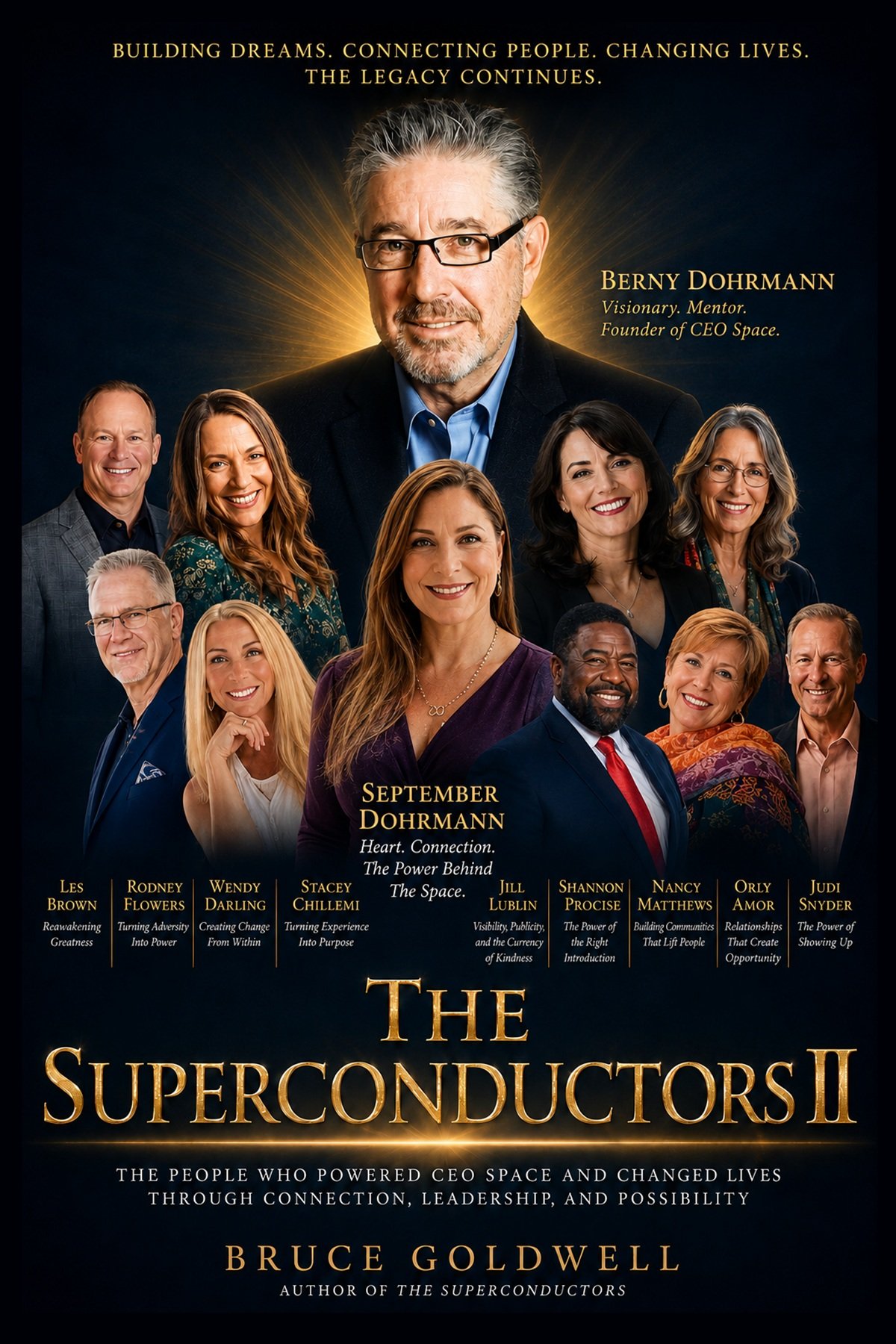
The Superconductors II
The People Who Powered CEO Space and Changed Lives Through Connection, Leadership, and Possibility
The Seven Traits of a Superconductor are developed in The Superconductors II as part of a larger exploration of the people and principles surrounding CEO Space.
The book asks readers to stop thinking of networking merely as accumulating contacts and begin thinking about what they can help move through the people they know.
Explore Book II View Book II on Amazon