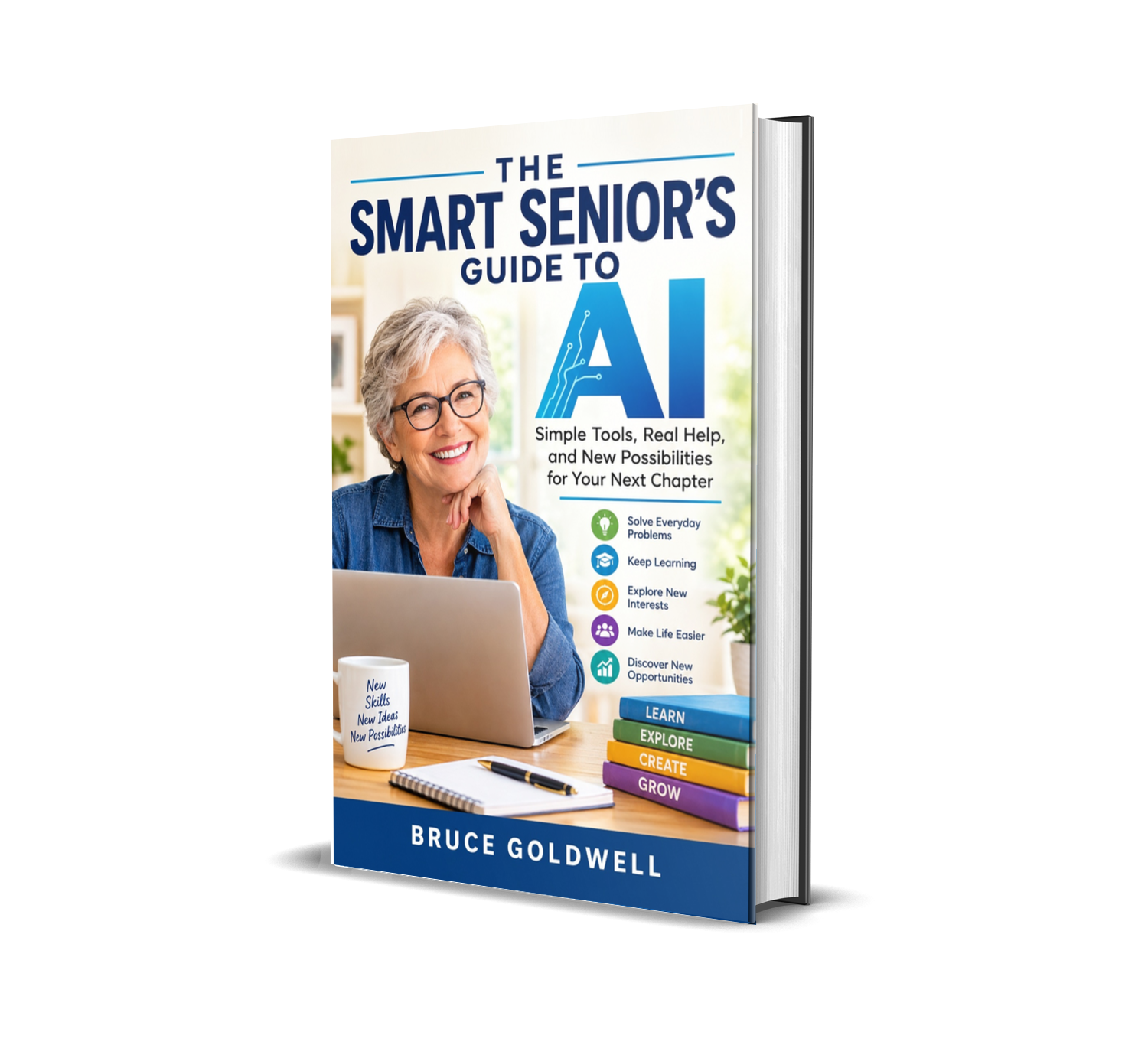
The Smart Senior's Guide to AI
How to Use Artificial Intelligence to Make Everyday Life Easier, Learn New Things, and Get More Done
Artificial intelligence doesn't have to be complicated. This practical guide shows seniors how to start using AI with ordinary language for everyday life, learning, hobbies, projects, and new possibilities.
AI Isn't Just for Young People
You have already lived through enormous changes in technology. You watched the world move from typewriters and landline phones to personal computers, the Internet, smartphones, GPS, video calls, and more.
Artificial intelligence is simply the next new tool. And one of the surprising things about AI is that you don't need to learn computer programming to use it. You can simply talk to it.
What Could AI Help You Do?
AI can become a practical assistant for many ordinary parts of life. Start with something small and see what happens.
Everyday Life
Plan meals, organize shopping lists, write letters, create checklists, plan trips, compare choices, and organize your week.
Learn Something New
Ask AI to explain almost any subject in simple language and teach you one step at a time at your own pace.
Explore Your Experience
Discover ways your career knowledge, hobbies, interests, and life experience could be useful to other people.
Preserve Your Stories
Let AI interview you about your life, family, career, memories, and experiences and help organize those stories for future generations.
Understand Technology
Ask questions about smartphones, computers, apps, websites, and other technology without worrying about asking a "stupid" question.
Explore Extra Income
Consider whether something you already know how to do could help someone else—and whether people might be willing to pay for that help.
You Have Something AI Doesn't Have
AI may have access to enormous amounts of information, but it hasn't lived your life.
It hasn't spent 30, 40, or 50 years working, raising a family, solving problems, learning from mistakes, building relationships, developing skills, or discovering what works in the real world.
Start With the Small Compressor
Years ago, while working at Sears, Bruce Goldwell might meet a customer looking for a small air compressor to paint one car.
But there was another question worth asking:
That's one of the central ideas behind this book. Don't begin by asking how AI can make you rich. Begin with one useful thing.
Use it. Learn it. Expand it.
Then, if it makes sense for you, explore whether something you know could become useful enough that another person might pay you for it.
Start Exploring AI
You don't have to wait until you've read the entire book to begin. These free articles will help you understand AI and start experimenting with it.
What Is AI?
A simple explanation of artificial intelligence without the technical language.
Learn what AI is →Your First AI Conversation
Learn how easy it is to start talking with an AI assistant.
Get started →AI Prompts for Seniors
Ready-to-use questions you can copy or adapt for everyday life, learning, travel, hobbies, and more.
Try the prompts →AI Scams and Safety
Learn about fake voices, fake images, suspicious messages, misinformation, and AI-powered scams.
Learn how to stay safer →AI and Extra Income
Explore realistic ways your experience, skills, hobbies, or knowledge might become useful to someone else.
Explore the possibilities →Use AI Without Giving Up Your Judgment
AI can be extremely useful, but it isn't perfect. Sometimes it can give an answer that sounds convincing and still be wrong.
The book shows you how to question AI, check important information, get another AI opinion when appropriate, and recognize when you still need a doctor, lawyer, accountant, financial professional, contractor, family member, or another experienced human being.
The Smart Senior's Guide to AI
Learn how to use artificial intelligence in simple, everyday language while keeping your own experience, judgment, and common sense in control.
Where Could This Take You?
Start small. Ask one question. Solve one problem. Learn one new thing. Then see where the conversation takes you.
You are not too old. You are not too late. You may be just getting started.