Beyond the Last Page

Behind the Story

Hollowridge began with a simple question: What if a town could remember the people who had forgotten it?

From that question grew a rain-soaked world of unstable memories, abandoned broadcasts, forgotten children, impossible manuscripts, and characters struggling to decide whether their lives belong to them—or to the story being written around them.

This page explores the creative ideas and recurring themes behind Hollowridge: The Nursery without revealing the novel's final answers.

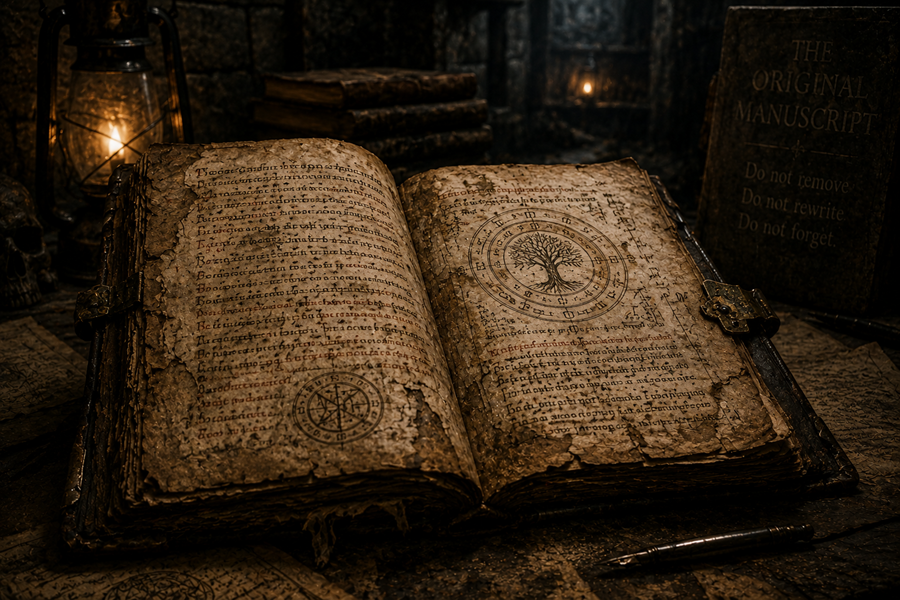
An ancient handwritten manuscript resting on a dark wooden table
The First Idea

A Story That Could Remember Its Readers

The foundation of Hollowridge is the idea that stories are not passive objects. They survive because people remember them, repeat them, reinterpret them, and carry them into new lives.

In the novel, that relationship becomes literal. Written words can preserve a person, alter a memory, open a door, or erase a version of reality. A manuscript is no longer merely a record of events. It becomes an active force within them.

That concept shaped the entire world of Hollowridge: a place where fiction, memory, and reality are separated by little more than a turning page.
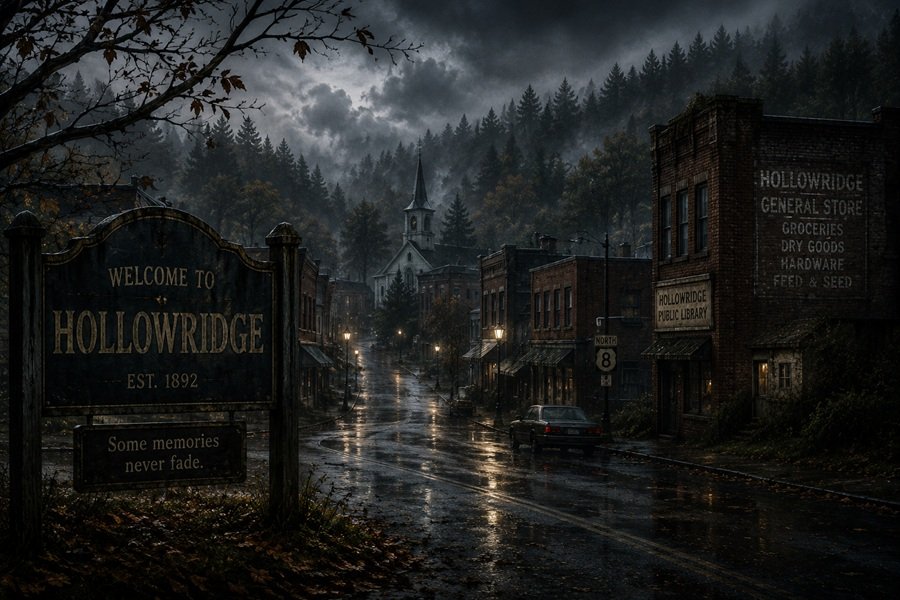
The rain-covered main street of Hollowridge disappearing into fog
Building the Town

Familiar Enough to Feel Real

Hollowridge was designed to feel recognizable before it feels impossible. It has a courthouse, a clock tower, a diner, a gas station, a public-access television studio, forest roads, old houses, and residents who know one another's family histories.

The horror enters gradually. A familiar name is spoken to the wrong person. A clock displays a time that belongs to another night. A building appears in a photograph taken before it existed. A road returns a traveler to the place they just left.

The ordinary details give the supernatural elements something solid to disturb. Hollowridge becomes frightening because it resembles a town someone might have known—and forgotten.

Explore the Town
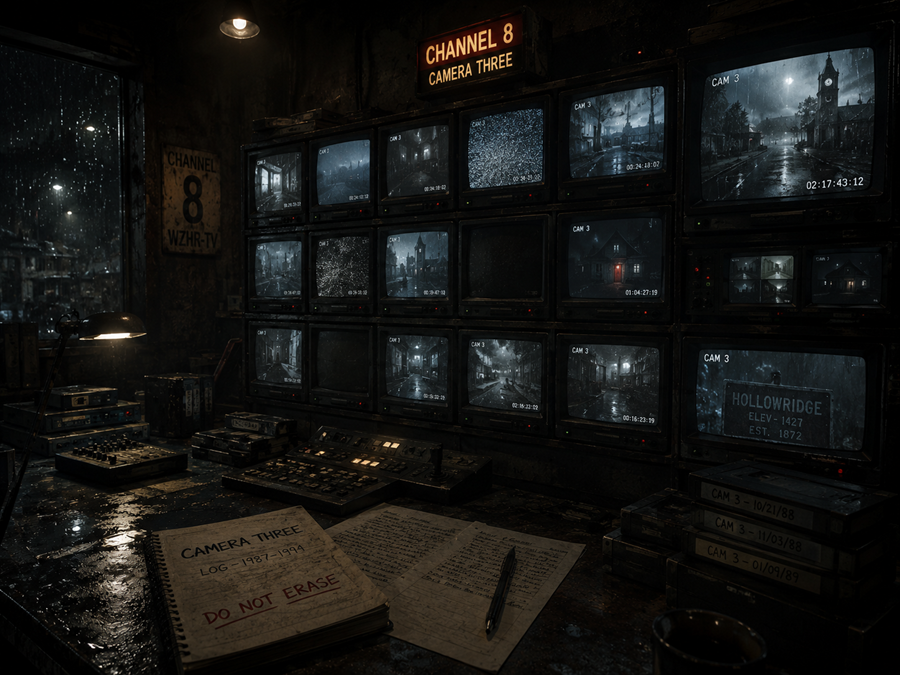
A wall of old television monitors displaying rain-soaked views of Hollowridge
The Visual Language

Rain, Static, Red Lights, and Empty Rooms

Hollowridge uses recurring visual signals to create a sense that the town is always being observed. Rain distorts windows. Fog hides the ends of roads. Television static interrupts ordinary broadcasts. Red tally lights glow on equipment that should have no power.

Empty rooms are especially important. They create the impression that someone has just left—or that something remains just outside the frame.

These images repeat throughout the story until they become a language of their own. Readers learn to recognize when Hollowridge is watching, even before the characters do.

Investigate Camera Three

“People loved being frightened—as long as they believed it wasn't real.”

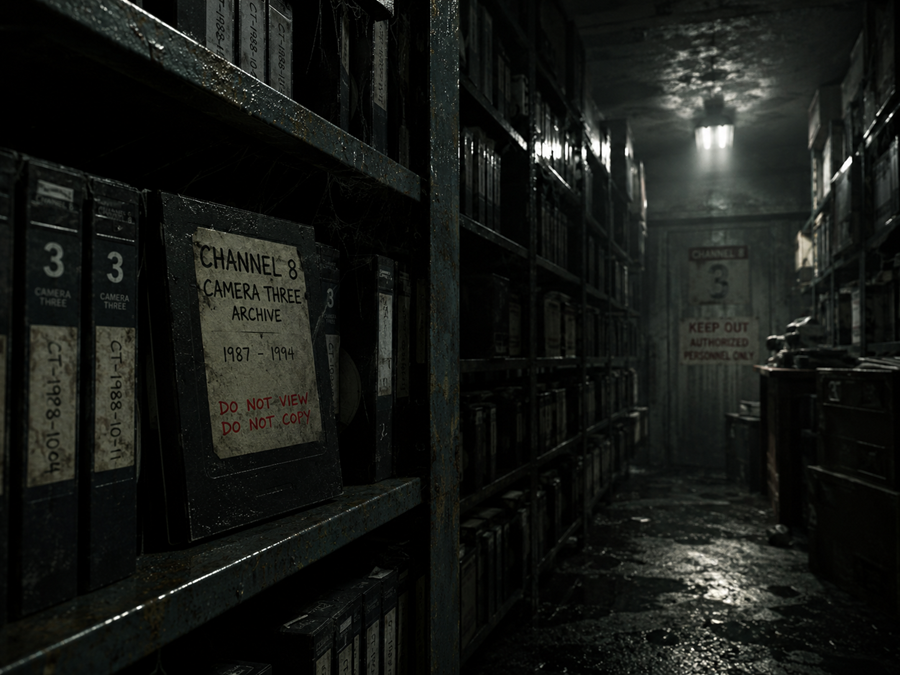
A decaying Channel 8 archive filled with forbidden Camera Three recordings
Analog Horror

Why Channel 8 Had to Feel Old

The story's broadcast mythology draws power from obsolete technology. Old cameras, magnetic tapes, control boards, archive rooms, and cathode-ray monitors feel physical in a way modern digital media often does not.

A videotape can be hidden, mislabeled, damaged, copied, or discovered decades later. It can preserve an image long after everyone in that image has vanished. It can also contain something no one remembers recording.

Channel 8 gives Hollowridge a mechanical memory—one that continues to watch and replay the town even after the station has gone dark.

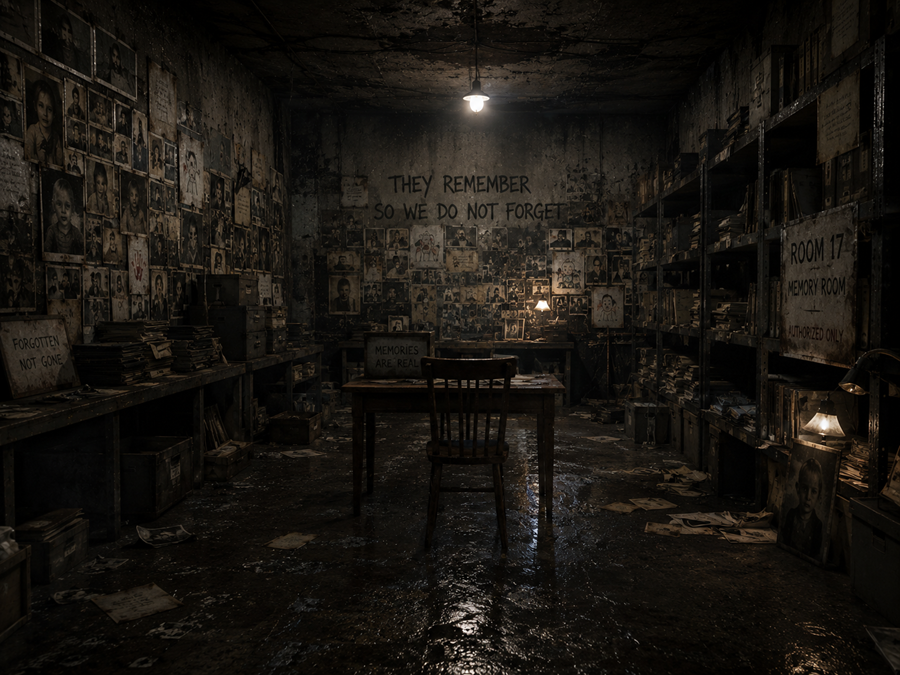
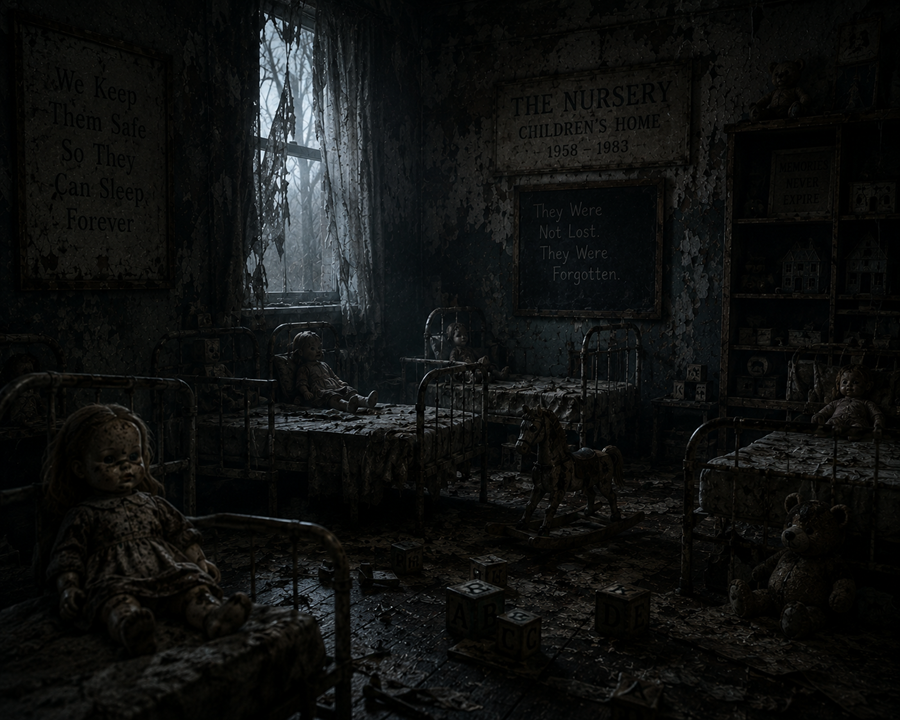
A dim childhood memory room inside The Nursery
The Emotional Core

Horror Built from Memory

The deepest fear in Hollowridge is not death. It is the possibility of being forgotten, misremembered, replaced, or edited out of the lives of the people who once loved you.

That fear gives the supernatural mystery its emotional weight. Characters do not simply search for hidden rooms or unexplained recordings. They search for missing pieces of themselves and for people whose absence has been made to feel normal.

The Nursery represents the place where those losses converge. Its rooms contain childhood fears, fractured identities, unfinished relationships, and memories that refuse to remain buried.

Enter The Nursery
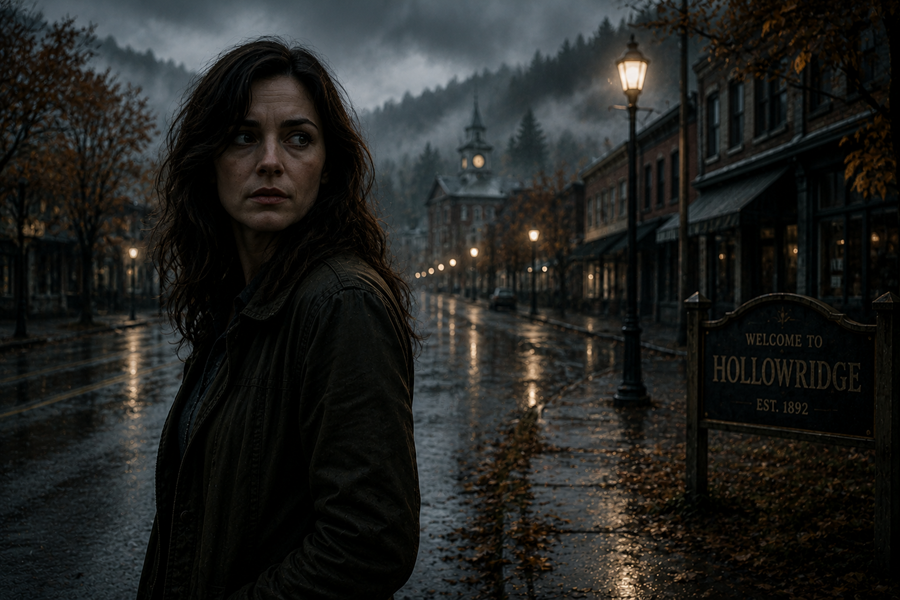
Mara Ellison standing in the rain on a quiet Hollowridge street
The Human Anchor

Why the Story Begins with Mara

A supernatural world needs a character whose emotions remain understandable. Mara Ellison returns to Hollowridge carrying grief, unfinished family questions, and a lifetime of avoiding memories that feel too painful to examine.

Her skepticism gives readers a stable point of entry. As the town's contradictions accumulate, Mara must decide whether she is losing her grip on reality or finally seeing a truth that has been hidden from her.

Her investigation transforms the novel from a haunted-town mystery into a personal search for identity, family, responsibility, and the courage to remember.

Meet Mara and the Cast
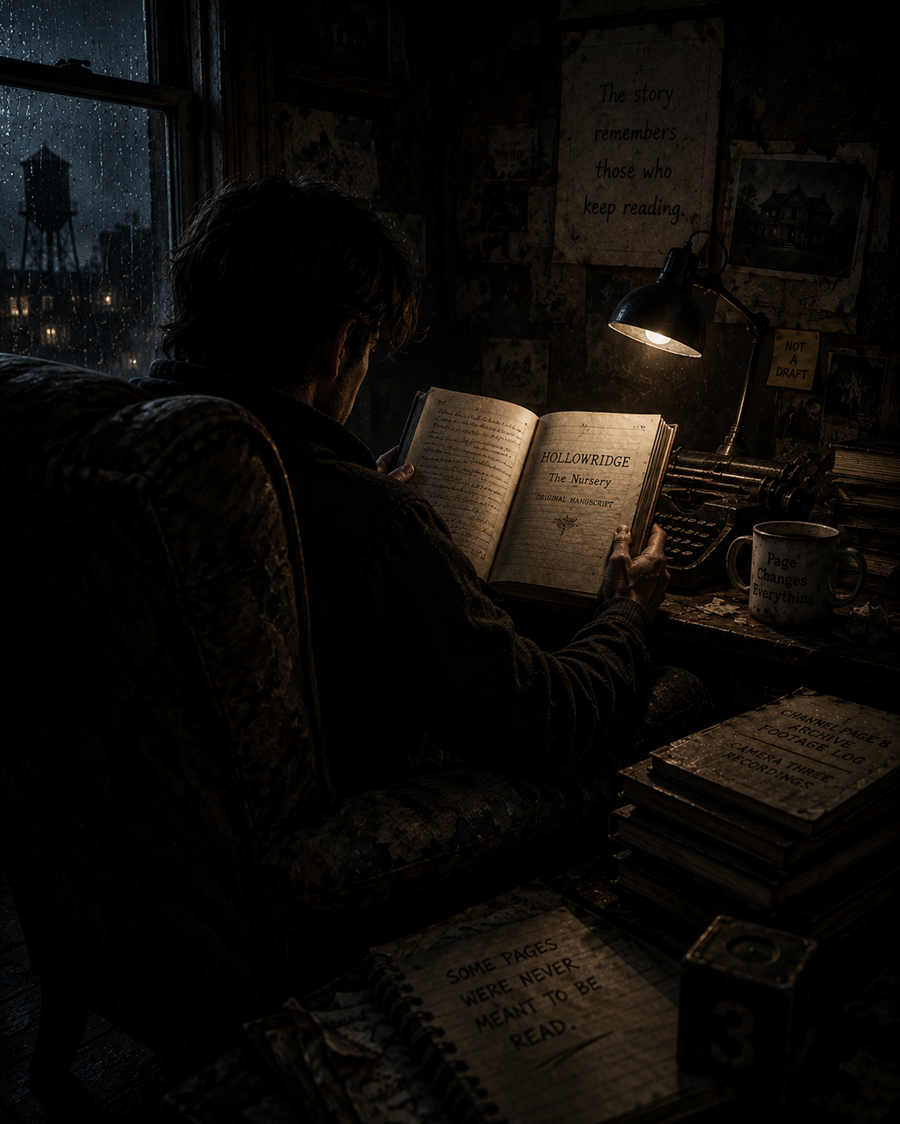
A solitary reader seated beneath a hanging lamp in an endless dark room
The Reader

Who Is Watching Whom?

Throughout the novel, cameras, books, windows, photographs, and reflected surfaces create a recurring question: Is the reader observing Hollowridge, or has Hollowridge become aware of the reader?

That idea allows the boundary between the novel and its audience to grow increasingly uncertain. The act of reading becomes part of the suspense. Turning a page is no longer neutral when the story may be waiting for someone to continue it.

The Reader represents curiosity, loneliness, authorship, and the dangerous desire to control an ending rather than allow people to choose it for themselves.

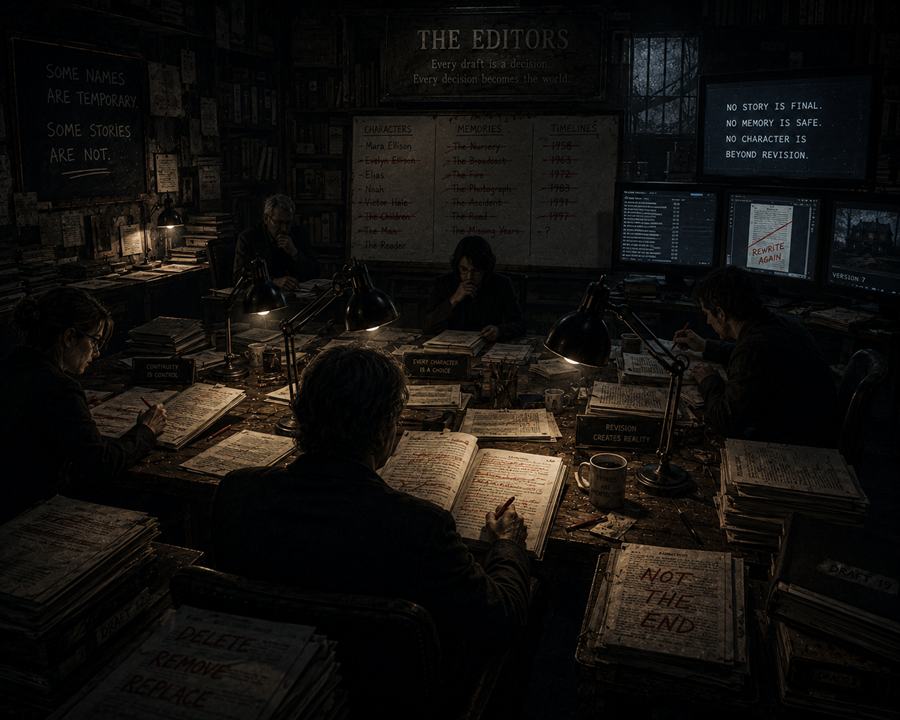
Faceless figures known as the Editors standing in a dark impossible archive
The Editors

The Terror of a Perfect Narrative

The Editors embody the belief that every contradiction must be corrected, every unpredictable choice removed, and every story forced into a clean, controllable structure.

Their horror comes from impersonality. They do not hate the people of Hollowridge. They evaluate them as narrative problems—variables that can be revised when their memories, relationships, or choices threaten the approved version.

Against that cold logic, the novel places love, grief, loyalty, forgiveness, imagination, and memory: human forces that resist being reduced to a formula.

A shadowed figure holding a sharpened red pencil over a manuscript
The Red Pencil

Revision as a Weapon

Writers use red pencils to correct sentences, remove mistakes, and improve a draft. Hollowridge turns that familiar creative tool into an object of dread.

A crossed-out name can become an erased identity. A rewritten sentence can change a family history. A revision can replace an entire version of the town while leaving only a few people aware that anything has changed.

The red pencil symbolizes authority without compassion—the power to decide that one life, memory, or ending is more legitimate than another.

The Story's Foundations

Four Ideas Beneath Hollowridge

The supernatural mystery grows from themes that remain deeply human.

01

Memory Creates Identity

People understand who they are through the memories they preserve, inherit, question, and share with others.

02

Forgotten Does Not Mean Gone

What has been buried may continue to influence a family, a town, or a life long after its name disappears.

03

Control Is Not Safety

Attempts to create a perfect ending often destroy the freedom, uncertainty, and connection that make a life meaningful.

04

Stories Live Through People

A story survives not because it is complete, but because someone remembers it and carries it forward.

A group of forgotten children standing in the fog outside The Nursery
The Forgotten Children

Giving the Mystery a Voice

The children connected to The Nursery are not included merely to make the setting frightening. They represent lives interrupted, identities denied, and memories adults found easier to suppress than confront.

Their presence changes the purpose of Mara's investigation. Solving the mystery is no longer enough. The forgotten must be recognized, named, and allowed to become more than evidence of something terrible.

Their voices remind the characters—and the reader—that remembering someone can be an act of rescue.

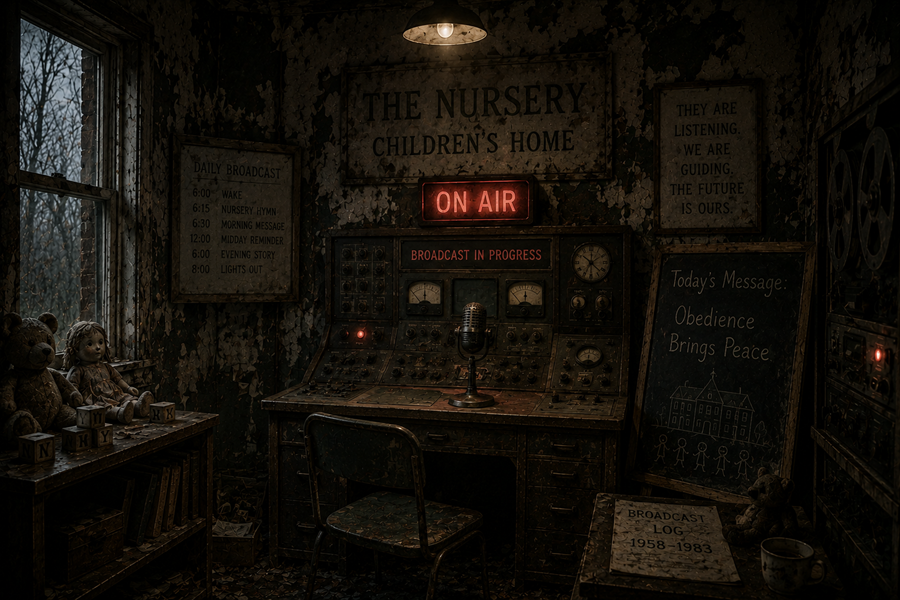
An eerie television broadcast emerging from The Nursery during a storm
Expanding the Mystery

From Haunted Town to Living Story

Hollowridge begins with recognizable horror elements: a funeral, a homecoming, an abandoned station, altered photographs, unexplained voices, and a building no one remembers the same way.

As the mystery deepens, the scale expands. The town's history, Channel 8, The Nursery, the Manuscript, and the characters' conflicting memories reveal themselves as parts of a larger system.

The progression allows the story to grow without abandoning its emotional center. No matter how strange the world becomes, the central struggle remains the same: Who has the right to define a person's story?

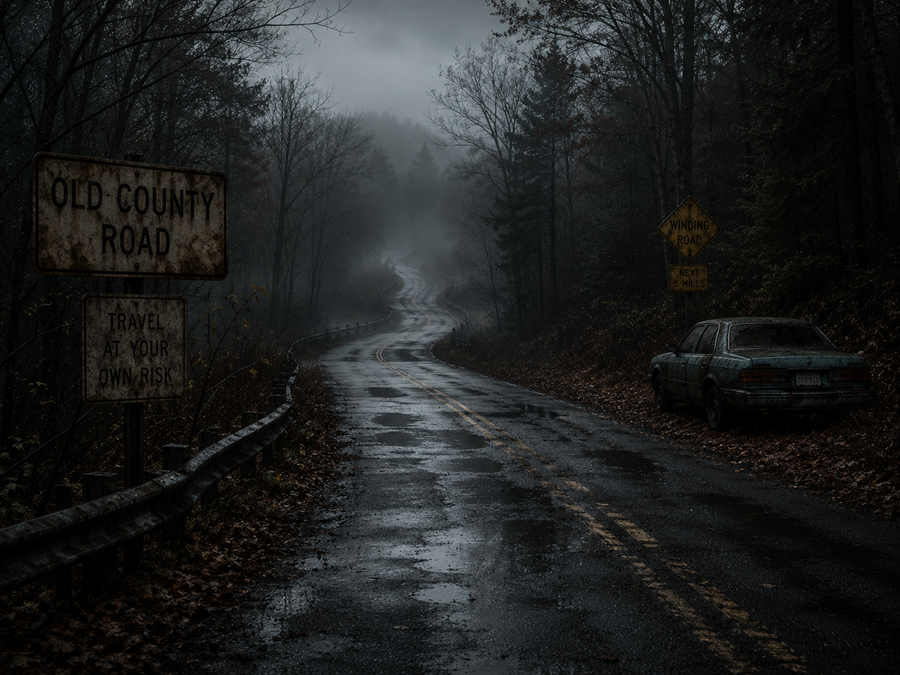
An old road leading through rain and fog toward Hollowridge
The Reading Experience

A Slow Descent into the Impossible

The novel is structured to let unease accumulate. Early disturbances can be dismissed as grief, fatigue, coincidence, failing equipment, or the unreliability of childhood memory.

Each answer introduces a larger question. Personal secrets connect to town records. Town records connect to Channel 8. Channel 8 connects to The Nursery. The Nursery connects to something capable of changing the story itself.

The goal is not simply to surprise readers. It is to make each new revelation feel as though it had been waiting in the shadows from the beginning.

Behind-the-Book Questions

About the Creation of Hollowridge

These answers discuss the novel's style and themes without revealing its final outcome.

What genre is Hollowridge: The Nursery?

The novel combines psychological horror, supernatural suspense, small-town mystery, analog horror, dark fantasy, and reality-bending speculative fiction.

Is Hollowridge based on a real town?

Hollowridge is fictional. Its atmosphere draws from isolated American towns, old courthouses, forest roads, public-access television stations, family homes, and places where local history feels present in every building.

Why is memory so important to the novel?

Memory connects the story's supernatural mystery to its human stakes. The characters' identities, relationships, losses, and choices all depend on what they remember—and what they have been made to forget.

Is Camera Three inspired by analog horror?

Camera Three uses the visual language associated with analog horror—obsolete equipment, unexplained tapes, static, time codes, interrupted broadcasts, and images that should not exist—while connecting those elements to Hollowridge's larger mythology.

Does the book tell a complete story?

Yes. Hollowridge: The Nursery delivers a complete central narrative while creating a supernatural world capable of supporting additional mysteries, locations, and stories.

Is the novel extremely graphic?

The horror relies primarily on atmosphere, psychological tension, supernatural imagery, altered reality, loss, and dread rather than continuous graphic violence.

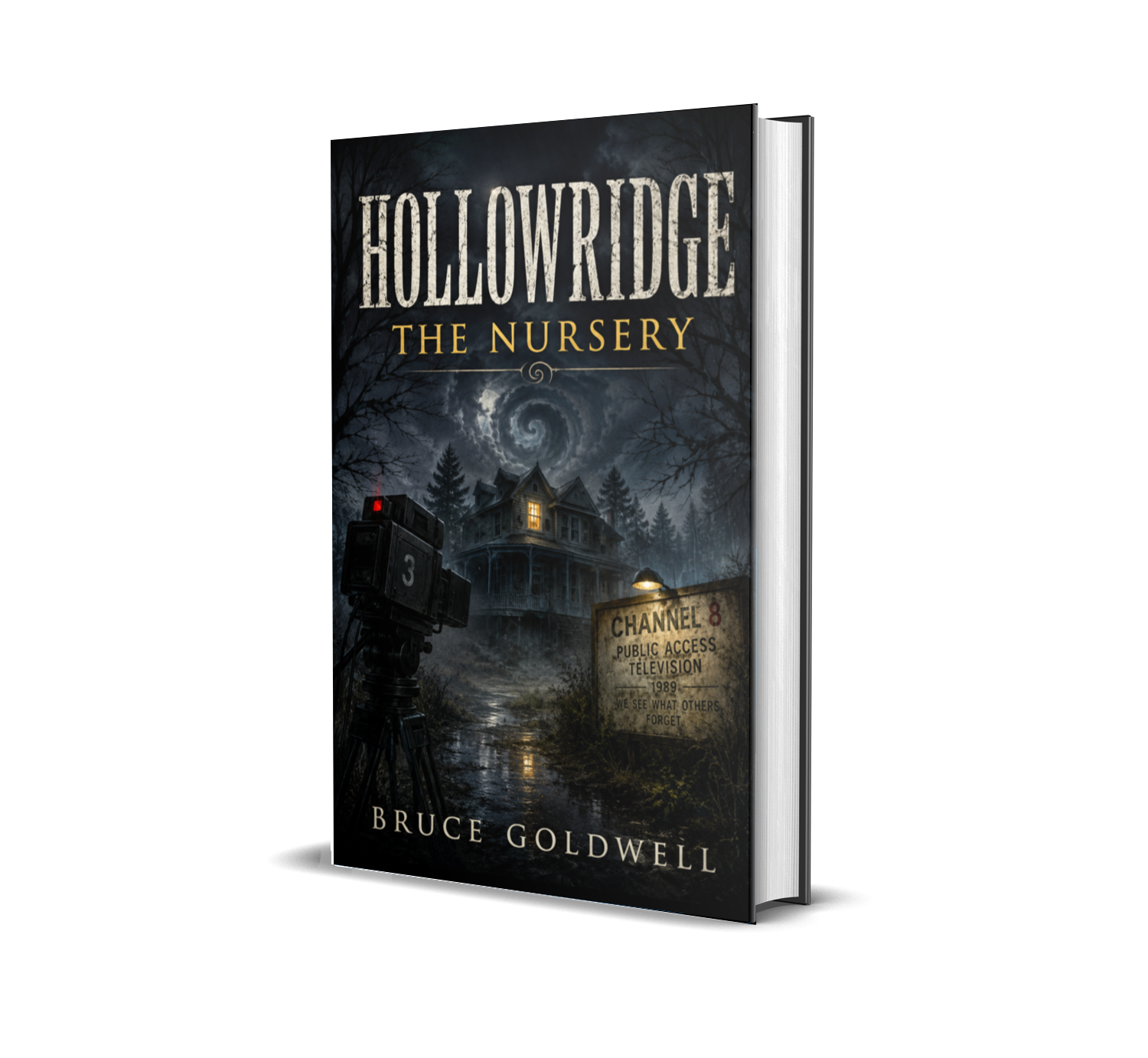
Book cover for Hollowridge: The Nursery by Bruce Goldwell
Experience the Complete Story

Enter Hollowridge

Mara Ellison returns home for her mother's funeral and discovers a town where memories conflict, old televisions turn themselves on, and Camera Three continues broadcasting from a station abandoned decades ago.

  • Atmospheric supernatural horror
  • Psychological mystery and altered memories
  • Analog broadcasts and impossible recordings
  • A complete reality-bending novel
One Final Question

Are You Reading the Story— or Is the Story Reading You?

Follow the signal through Hollowridge, uncover the truth behind The Nursery, and discover what waits beyond the final page.