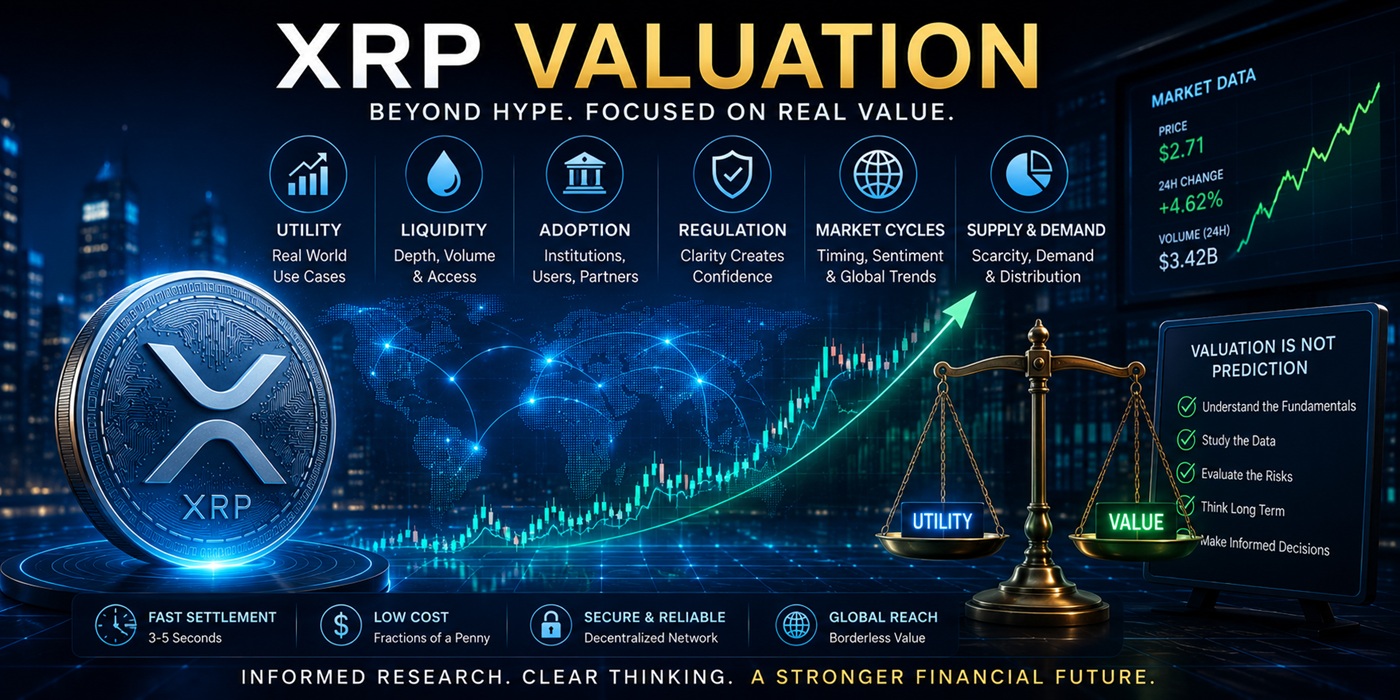
The XRP Valuation Hub helps readers think beyond hype, guesses, and simple price predictions. Valuing XRP requires more than looking at market cap alone. It involves utility, liquidity, supply, demand, adoption, regulation, speculation, and real-world use.
This section is designed to help readers ask better questions before forming opinions about XRP's possible future value.
Learn practical ways to think about XRP valuation beyond hype, emotion, and simple price targets.
Read PageUnderstand the difference between real-world use and market expectations.
Read PageLearn what market cap measures, what it does not measure, and why it is only one valuation tool.
Read PageExplore why liquidity matters for XRP, bridge asset utility, payment corridors, and valuation.
Read PageXRP's value discussion begins with what it can do: move value quickly, efficiently, and globally.
Liquidity determines how effectively XRP can help move value between markets, currencies, and systems.
Market cap provides perspective, but it should not be treated as the entire valuation story.
Serious valuation requires assumptions, evidence, risk awareness, and critical thinking.
A useful digital asset should address a real problem. XRP is most often discussed in connection with settlement, liquidity, and efficient value movement.
Utility only affects valuation if it creates actual demand, liquidity, transaction flow, or market confidence.
Every price model depends on assumptions about supply, demand, adoption, liquidity, regulation, and market behavior.
Regulation, competition, liquidity limits, market cycles, and institutional behavior can all affect XRP's future.
The goal of this hub is not to promise a future XRP price. The goal is to help readers understand the variables that may influence value so they can think more clearly and make more informed decisions.
A balanced look at XRP valuation, risk, market cap, liquidity, hype, and realistic expectations.
View BookExplore liquidity, adoption, settlement efficiency, and multiplier-style valuation thinking.
View Book