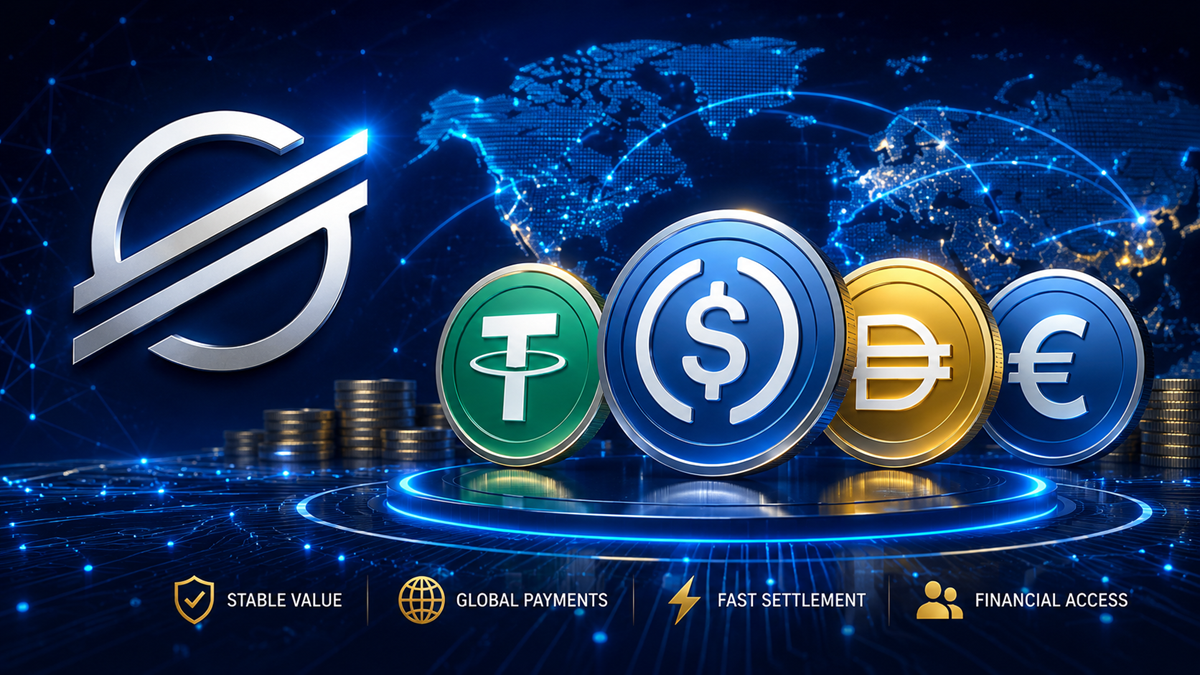
Stablecoins are digital assets designed to track the value of another asset, usually a national currency such as the U.S. dollar. On Stellar, stablecoins can help users move familiar forms of value across blockchain rails quickly and at low cost.
Stablecoins are one reason Stellar is often discussed in connection with remittances, humanitarian aid, wallets, financial inclusion, and cross-border payments.
Simple idea: XLM helps the Stellar network operate, while stablecoins can represent familiar money such as digital dollars moving on the network.
Many people are interested in blockchain payments but do not want to hold highly volatile assets for everyday use. Stablecoins help solve that problem by representing value in a more familiar unit, such as dollars or another currency.
Stablecoins can help users hold and send dollar-denominated value through supported wallets and platforms.
Stablecoins may be useful for sending value without exposing users to large price swings during the transfer.
Stablecoins can help workers send money across borders while using a familiar currency unit.
In some regions, digital dollars may give users access to value they cannot easily access through local banking systems.
Stellar supports issued assets. That means organizations can issue digital representations of value on the Stellar network. A stablecoin is one type of issued asset.
The issuer is important. A stablecoin depends on the organization backing it, the reserves behind it, the redemption rules, the available liquidity, and the regulations that apply.
Stablecoins are not all the same. Always research the issuer, reserves, redemption process, fees, jurisdiction, and platform support before using any stablecoin.
Anchors help connect traditional money systems to Stellar. They may allow users to deposit local currency and receive a Stellar-based asset, or redeem a Stellar-based asset back into local currency.
This makes anchors especially important for stablecoin use. Without reliable on-ramps and off-ramps, a digital asset may exist on-chain but still be difficult for everyday users to access.
A user may deposit local money through a supported anchor or platform.
The anchor or issuer may provide a Stellar-based asset representing that value.
The user can send the asset through the Stellar network to another supported wallet or account.
The recipient may redeem through a supported anchor or platform where available.
Remittances are payments sent by people working in one country to family or recipients in another country. Traditional remittance systems can involve high fees, delays, and multiple intermediaries.
Stablecoins on Stellar may help reduce friction by allowing value to move quickly through digital rails. The real-world benefit depends on wallet access, local ramps, liquidity, user education, and regulatory support.
For people with limited access to traditional banking, stablecoins may provide access to digital money through a phone, wallet, or supported platform. This can be especially important in regions with currency instability, limited banking infrastructure, or high remittance costs.
Stablecoins may help people access digital value without needing a traditional bank account.
Digital transfers can settle more quickly than many legacy payment systems.
Reduced friction may help more value reach the intended recipient.
The value of stablecoins depends on wallets, local conversion options, education, and trust.
Stablecoins may be designed to maintain stable value, but they still carry risk. Users should understand issuer risk, reserve risk, redemption risk, regulatory risk, platform risk, and wallet security.
A stablecoin can be useful without being risk-free. Always verify current issuer information, reserve reporting, redemption terms, and supported platforms.
This page is for educational purposes only and is not financial advice. Stablecoins, issuers, reserves, regulations, wallets, anchors, and platform availability can change over time. Always verify current information before making financial decisions.