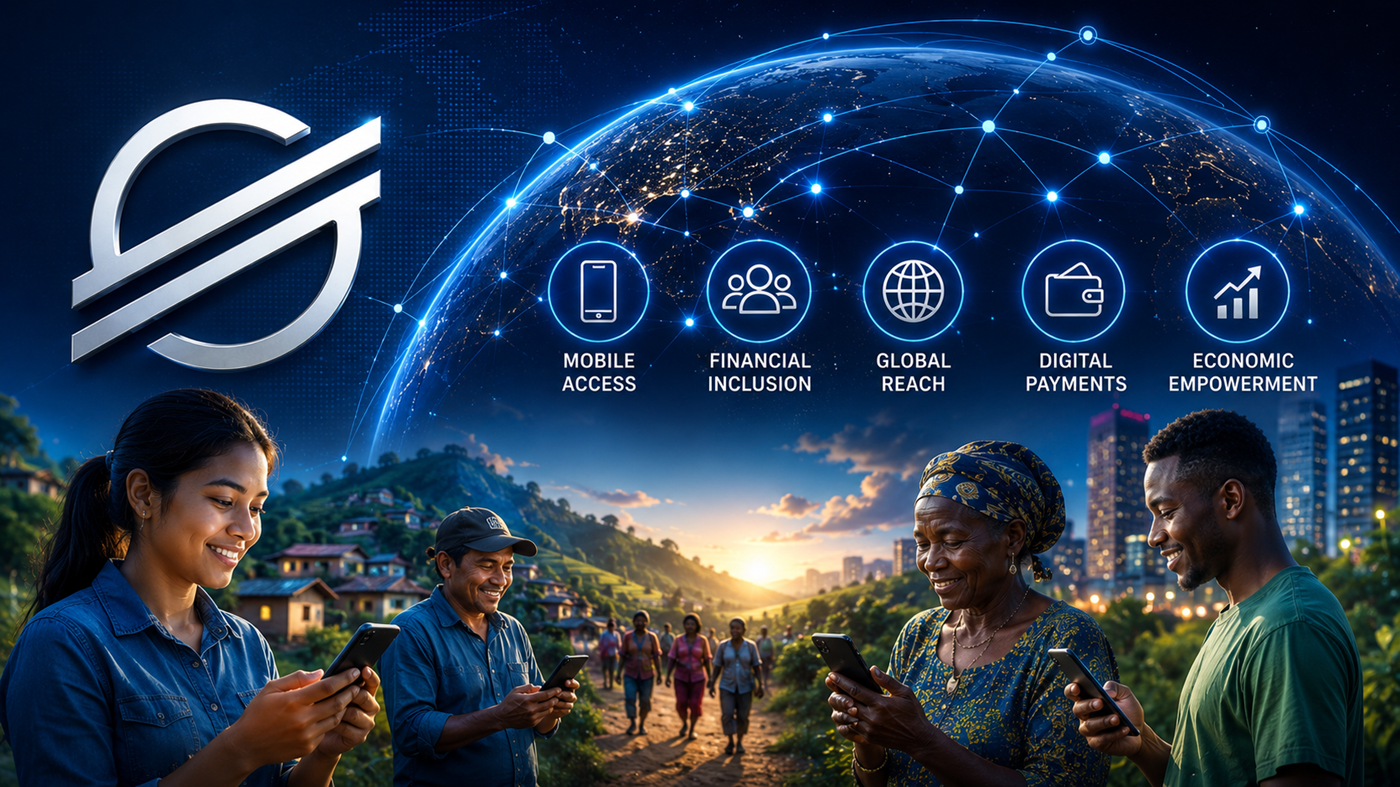
Financial inclusion means giving more people access to useful, affordable, and reliable financial tools. Around the world, many people still face high fees, slow transfers, limited banking access, and difficulty receiving or sending money across borders.
Stellar is often discussed as a network built for financial inclusion because it can support low-cost payments, stablecoins, anchors, wallets, remittances, and digital access to value.
Simple idea: Stellar is not only about cryptocurrency. It is about making financial movement more accessible for people, businesses, communities, and organizations.
For many people, sending money is expensive. Receiving international payments can be slow. Accessing stable currency may be difficult. Opening a bank account may be complicated or unavailable.
Digital finance can help reduce some of these barriers when it is paired with simple wallets, reliable local access, education, and trusted on/off ramps.
Low-cost transactions can help more value reach the person who needs it.
Digital payments can reduce waiting times compared with some traditional systems.
A phone and wallet can sometimes provide access where traditional banking is limited.
Stablecoins may help people access digital money tied to familiar currencies.
Stellar can support issued assets, stablecoins, wallets, anchors, and fast settlement. Together, these tools can help move value across regions and currencies.
Stablecoins may allow users to hold or send digital versions of familiar money such as dollars or local currencies.
Anchors help connect Stellar-based assets with local financial systems, deposits, and withdrawals.
Wallets give users a way to hold, send, and receive XLM or Stellar-based assets.
Stellar can support cross-border transfers that may reduce friction for workers and families.
Financial inclusion is not one single application. It includes many real-world needs where people and organizations need better ways to move and access money.
Workers may send money home to family members in another country.
Organizations may use digital payments to deliver support to people in need.
Merchants and freelancers may benefit from faster payment access and lower transfer costs.
Stablecoins may help some users store value digitally where supported and appropriate.
A blockchain network by itself does not solve every problem. People also need education, safe wallets, trustworthy local access, consumer protection, reliable internet, regulatory clarity, and simple user experiences.
This is why Stellar’s ecosystem depends on more than XLM alone. Anchors, wallets, developers, nonprofits, fintech companies, and local partners all play important roles.
Technology can lower barriers, but trust, education, regulation, and local access determine whether people can actually benefit.
XLM supports basic activity on the Stellar network through fees and account requirements. It helps keep the network efficient, but most financial inclusion use cases may involve a combination of XLM, stablecoins, anchors, wallets, and local payment access.
That is why Stellar should be understood as an ecosystem, not simply as one digital asset.
This page is for educational purposes only and is not financial advice. Financial inclusion, digital assets, stablecoins, wallets, regulations, and platform availability can change over time. Always verify current information and research carefully before making financial decisions.