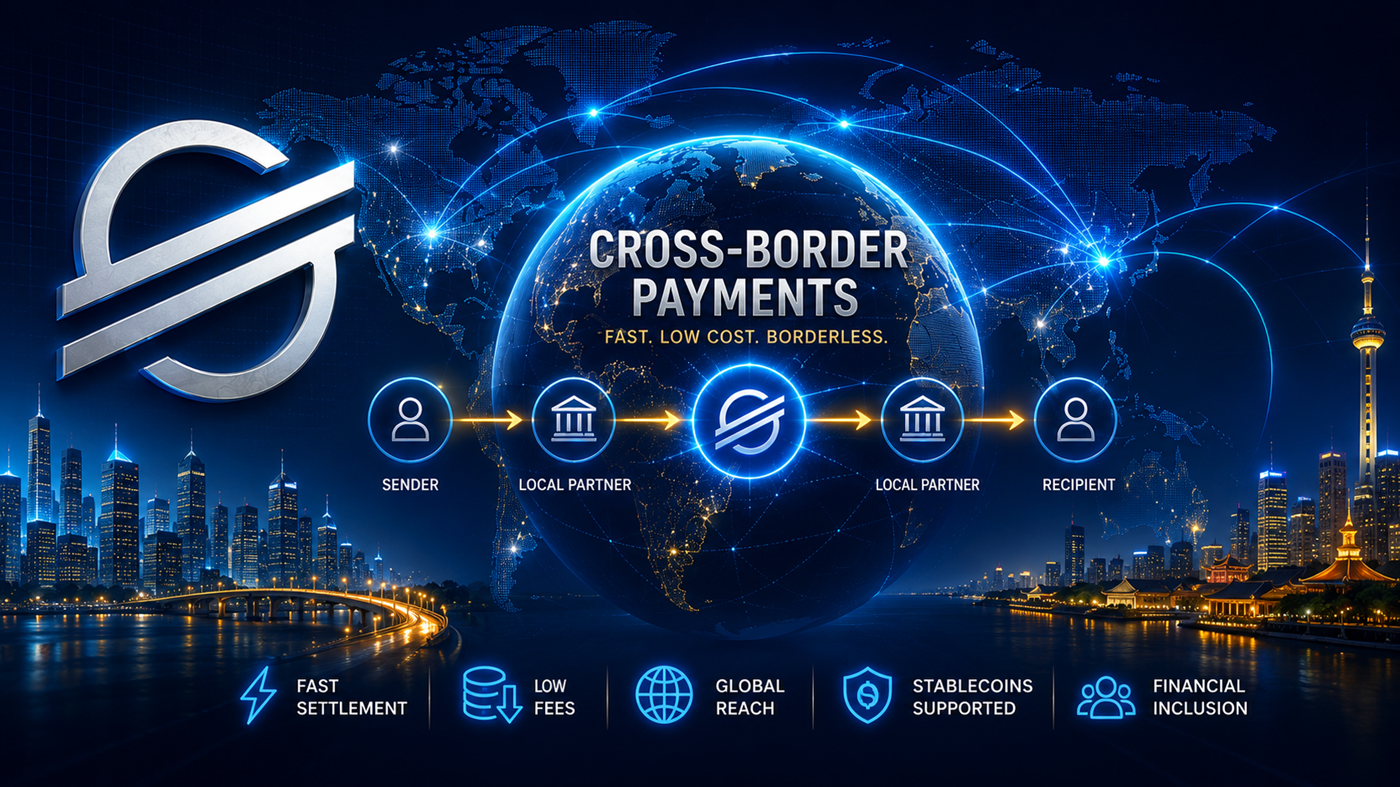
Cross-border payments are payments sent from one country or currency system to another. Traditional international payments can involve banks, payment processors, currency conversions, settlement delays, and high fees.
Stellar was designed to help reduce friction in global value movement by supporting fast, low-cost transactions, issued assets, stablecoins, anchors, and wallets.
Simple idea: Stellar can help value move across borders by connecting digital assets, stablecoins, local currencies, wallets, and anchors.
Moving money internationally can be complicated because different countries use different banking systems, currencies, payment networks, regulations, and settlement processes. Each extra step can add time, cost, and uncertainty.
Traditional payments may pass through several banks or payment providers before reaching the recipient.
Senders and recipients may need to move between different currencies, which can add cost and complexity.
Some international payments can take hours or days depending on the rails being used.
Small payments and remittances can be especially affected by transfer fees and exchange spreads.
Stellar provides a blockchain-based network for moving digital value. Instead of relying only on slow legacy systems, Stellar can support faster settlement between supported assets, wallets, and anchors.
The real-world usefulness of Stellar depends on liquidity, wallet access, local on/off ramps, stablecoin support, regulation, and user education.
Stellar transactions can settle quickly compared with many traditional payment systems.
Small network fees make Stellar useful for low-value transfers and remittance-style payments.
Stellar can support digital representations of currencies, stablecoins, and other assets.
Anchors may help users move between local money systems and Stellar-based assets.
A cross-border Stellar payment may involve several steps, depending on the wallet, assets, and local access points involved.
For example, a sender may use a wallet or platform to send a stablecoin through Stellar. The recipient may receive digital value and then hold it, spend it, or convert it through a supported local provider.
Stablecoins can make cross-border payments easier to understand because they are designed to track familiar currencies such as the U.S. dollar. A user may not want to hold a volatile asset while sending money to another country.
Stellar-based stablecoins may help payments move quickly while keeping the value tied to a familiar currency unit. However, users should always understand the issuer, redemption terms, local availability, and risks of any stablecoin they use.
Remittances are one of the clearest cross-border payment use cases. A worker may need to send money to family in another country. If fees are high or settlement is slow, the recipient receives less value or waits longer.
Stellar may help reduce friction in this process when wallets, stablecoins, anchors, and local conversion options are available.
A blockchain network can move digital value quickly, but real users also need practical access. That means wallets must be easy to use, local ramps must be available, liquidity must exist, and regulations must be followed.
Users need simple wallets that support the right assets and regions.
People need ways to convert between digital value and local currency.
Payments work better when there is enough liquidity for conversion and settlement.
Users must trust wallets, issuers, anchors, and platforms before relying on them.
This page is for educational purposes only and is not financial advice. Cross-border payments, digital assets, stablecoins, anchors, regulations, liquidity, and platform availability can change over time. Always verify current information before making financial decisions.