What Is Integrative Wellness?
Integrative wellness is the practice of looking at health and well-being as an interconnected whole rather than a collection of unrelated parts.
It recognizes that physical health, emotions, personal values, learning, nutrition, surroundings, finances, and meaningful activities can all influence everyday quality of life.
A person may exercise regularly but struggle with financial stress. Another may eat nutritious meals while experiencing loneliness or persistent sleep difficulties.
Someone else may have limited physical mobility but enjoy meaningful relationships, intellectual engagement, and a strong sense of purpose.
Each situation demonstrates why wellness cannot be measured by one habit, one number, or one area of life.
Integrative wellness means understanding how the different parts of your life work together and making realistic improvements that support the whole person.
The Nine Dimensions Working Together
Throughout this companion website, we have explored nine dimensions of holistic wellness.
Each dimension offers a different perspective on health, but none exists completely independently of the others.
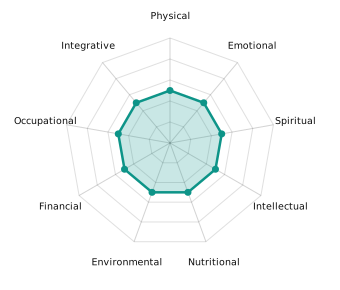
Reviewing the Nine Dimensions
- Physical Health: Supporting movement, sleep, strength, mobility, and preventive care.
- Emotional Health: Understanding feelings, managing stress, developing resilience, and maintaining relationships.
- Spiritual Health: Exploring meaning, personal values, faith or reflection, and a sense of purpose.
- Intellectual Health: Encouraging curiosity, lifelong learning, creativity, and critical thinking.
- Nutritional Health: Nourishing the body through appropriate food choices, nutrients, and hydration.
- Environmental Health: Creating safer, more comfortable living conditions and understanding environmental influences.
- Financial Health: Managing resources, reducing financial stress, and making informed decisions.
- Occupational Health: Finding meaningful engagement, purpose, satisfaction, and reasonable balance in daily responsibilities.
- Integrative Wellness: Bringing these dimensions together into a realistic approach to whole-person well-being.
How One Dimension Can Influence Another
The connections between wellness dimensions become easier to understand through everyday examples.
Example One: Financial Stress and Sleep
A person worrying about monthly expenses may have difficulty sleeping.
Poor sleep may then affect concentration, mood, and energy.
Reduced energy can make it more difficult to exercise, prepare meals, or manage everyday responsibilities.
In this situation, addressing a financial concern may support several other wellness dimensions.
Example Two: Walking and Emotional Well-Being
A comfortable walk may provide physical activity, an opportunity to spend time outdoors, and a break from stressful daily routines.
Walking with a friend may also provide social connection.
One manageable activity can therefore involve physical, emotional, environmental, and social aspects of wellness.
Example Three: Learning a New Skill
Learning to use a computer, play an instrument, or participate in a community class may encourage intellectual engagement.
It may also support confidence, provide a sense of accomplishment, and create opportunities for meaningful relationships.
Example Four: Improving the Home Environment
Removing tripping hazards and improving lighting may make a home safer.
These changes can support physical safety and independence, while potentially reducing worries about everyday movement.
A positive change in one area may benefit several others. You do not have to work on every dimension separately to begin improving your overall wellness.
Understanding Integrative Medicine
The term integrative medicine is sometimes used alongside holistic or integrative wellness.
Although related, the concepts are not identical.
Integrative wellness is a broad approach to personal well-being and daily habits.
Integrative medicine generally refers to coordinated healthcare that may combine conventional medical treatment with selected complementary approaches when their benefits and risks are appropriately evaluated.
Conventional medical care remains essential for diagnosing and treating many health conditions.
Complementary practices should not replace proven treatments for serious illness.
Complementary Wellness Practices
Some people incorporate practices such as meditation, yoga, tai chi, massage, or acupuncture into their wellness routines.
Research findings vary by practice and the specific condition being addressed.
Some approaches may help certain people manage symptoms or improve aspects of quality of life.
Others lack sufficient evidence to support particular claims.
Examples of Complementary Approaches
- Meditation and mindfulness: May help some individuals manage stress or develop greater awareness.
- Yoga: Can combine movement, breathing, and attention, with modifications based on individual ability.
- Tai chi: Uses controlled movements and may support balance and physical function in some populations.
- Massage: May provide temporary relief of certain symptoms or support relaxation for some people.
- Acupuncture: Has been studied for some pain conditions, with evidence and recommendations varying by condition.
Suitability depends on health status, practitioner qualifications, and the specific approach.
Evaluating Wellness Claims Responsibly
The wellness marketplace includes many products, treatments, programs, and services.
Some are supported by useful evidence. Others rely on exaggerated promises or persuasive marketing.
A responsible whole-person approach includes asking questions before spending money or making health decisions.
Questions to Ask
- What specific benefit is being claimed?
- Is there reliable evidence supporting that claim?
- What risks or side effects are possible?
- Could the practice interfere with medical treatment?
- What are the financial costs?
- Are the provider's qualifications appropriate?
- Is the claim independently verifiable?
Claims that a single product or treatment can cure numerous unrelated diseases should be approached with skepticism.
Do not stop prescribed treatment or delay necessary medical care because of an unverified wellness claim.
Personalization: There Is No Perfect Wellness Formula
People have different health histories, financial resources, abilities, family responsibilities, values, and preferences.
A wellness routine that works well for one person may be unsuitable for another.
Someone with limited mobility may need a different physical activity plan from someone who enjoys long walks.
A person with a restricted food budget may need different nutritional strategies from someone with greater financial flexibility.
Personalization means choosing realistic goals based on your actual circumstances.
Why Small Changes Matter
Major lifestyle changes can feel exciting at first, but maintaining them may become difficult.
Smaller changes are often easier to integrate into existing routines.
For example, a person who wants to become more physically active might begin with a brief, comfortable period of movement.
Someone seeking intellectual engagement might spend a few minutes reading or learning about an interesting subject.
Another person might review one monthly bill or organize a frequently used living space.
The goal is to establish useful habits that can be maintained and adjusted over time.
Choosing Your Wellness Priorities
After reviewing the nine dimensions, you may identify several areas you would like to improve.
Trying to change everything simultaneously may become overwhelming.
Instead, consider selecting one or two priorities.
Three Questions to Help You Choose
- What concerns me most right now? Identify the issue having the greatest effect on your well-being.
- What can I realistically influence? Consider your resources, abilities, and available support.
- What small action could I begin? Choose something manageable rather than an unrealistic transformation.
Urgent health or safety concerns should receive appropriate professional attention rather than being treated as ordinary self-improvement goals.
Using the Wellness Wheel
The wellness wheel provides a visual way to consider different areas of life.
It is not a medical diagnostic instrument or a measure of personal worth.
Instead, it encourages reflection on how satisfied or supported you feel within each dimension.
How to Reflect on Your Wellness Wheel
- Review each dimension.
- Consider what is working well.
- Notice areas where support or improvement may be useful.
- Identify connections between different dimensions.
- Choose one or two realistic priorities.
The purpose is not to achieve a perfect circle or identical scores in every category.
A balanced life can look different from person to person.
A Simple Whole-Person Wellness Example
Consider a person who feels tired, stressed, and disconnected from enjoyable activities.
Instead of attempting a complete lifestyle overhaul, they might begin with a few manageable actions.
| Wellness Area | Possible Small Action |
|---|---|
| Physical | Take a comfortable walk or try suitable gentle movement. |
| Emotional | Practice a brief calming routine. |
| Spiritual | Spend quiet time reflecting on personal values. |
| Intellectual | Read or learn something interesting. |
| Nutritional | Add a nutritious food to a familiar meal. |
| Environmental | Improve one frequently used area of the home. |
| Financial | Review one recurring expense. |
| Occupational | Make time for one meaningful activity. |
| Integrative | Choose priorities and review progress regularly. |
This table offers possibilities, not a list of tasks everyone must complete.
Even one carefully chosen action may be a useful beginning.
Creating Habits That Fit Your Life
Sustainable habits are more likely to fit naturally into existing routines.
For example, someone might practice a brief reflection exercise after breakfast or review upcoming expenses on the first day of each month.
Making Habits More Manageable
- Begin with a specific, achievable action.
- Connect the action to an existing routine.
- Adjust goals to match energy and ability.
- Track progress only when it is helpful.
- Expect occasional interruptions.
- Review and revise habits as circumstances change.
Missing a day does not erase previous progress.
Flexibility is part of building a sustainable approach to wellness.
Recognizing Progress Beyond Numbers
Wellness progress cannot always be measured through weight, exercise minutes, financial balances, or other numerical indicators.
Meaningful progress may include feeling more confident, improving a daily routine, developing a supportive relationship, or learning to ask for help.
Examples of Personal Progress
- Feeling more comfortable discussing your needs.
- Developing a consistent sleep routine.
- Preparing meals more regularly.
- Making your home safer.
- Reducing an avoidable financial expense.
- Reconnecting with an enjoyable activity.
- Seeking professional care for a persistent concern.
The value of progress depends on how it improves your actual life.
Wellness Through Different Stages of Life
Wellness priorities change as circumstances change.
A young adult may focus on education, career development, and financial independence.
Someone raising a family may need to balance caregiving, employment, and personal health.
A retiree may place greater emphasis on maintaining independence, managing expenses, and finding meaningful activities.
People living with chronic conditions may focus on symptom management, accessibility, and quality of life.
None of these approaches is inherently better than another.
Integrative wellness should adapt to the person rather than requiring the person to fit a rigid wellness formula.
The Importance of Professional Healthcare
A whole-person wellness approach should complement appropriate medical care, not replace it.
Preventive screenings, recommended vaccinations, medical evaluations, prescribed treatments, and professional guidance may all be important components of health.
People with chronic conditions should discuss significant changes to exercise, diet, supplements, or treatment routines with appropriate clinicians.
Wellness habits can support overall quality of life, but they cannot guarantee prevention or recovery from every illness.
Building a Personal Support System
Wellness does not have to be a solitary effort.
Friends, family, healthcare professionals, community organizations, and support groups may provide useful encouragement or practical assistance.
Some people benefit from having a trusted person with whom they can discuss goals and challenges.
Others prefer more independent approaches.
The important consideration is having access to appropriate support when needed.
Seven Steps Toward Integrative Wellness
The following approach brings together the principles explored throughout this companion website.
Understand Your Current Situation
Reflect on the nine dimensions and identify what is working well in your life.
Recognize Your Challenges
Consider which concerns are affecting your well-being and whether they require outside assistance.
Choose Your Priorities
Select one or two areas that matter most to you right now.
Set Realistic Goals
Choose actions that fit your resources, abilities, responsibilities, and schedule.
Begin with Small Actions
Start with manageable changes rather than attempting to transform every part of your life immediately.
Review Your Experience
Notice what is helping, what feels difficult, and what may need adjustment.
Continue Adapting
Update your goals as your health, interests, and life circumstances change.
Your Personal Wellness Journey
Holistic wellness is not a competition or a race toward perfection.
It is an ongoing process of learning about yourself, recognizing your needs, and making thoughtful decisions that support your well-being.
Some days may be easier than others.
Some circumstances may limit the choices available to you.
Even then, there may be meaningful ways to improve comfort, connection, confidence, or quality of life.
The goal is not to create a perfect life. The goal is to create a healthier, more balanced, and more meaningful life within your own circumstances.
Questions for Personal Reflection
As you complete the nine dimensions, consider these final questions:
- Which areas of wellness currently support me most?
- Which challenges affect several dimensions of my life?
- What strengths and resources do I already have?
- What improvements would make the greatest difference in my daily life?
- What changes are realistic given my current circumstances?
- Who or what could provide useful support?
- What one action am I willing to begin this week?
Take the Next Step
You have now explored all nine dimensions of holistic wellness.
The next step is to apply what you have learned to your own life.
Use the companion self-assessment to reflect on your current wellness priorities, then create a personal plan with realistic actions and goals.
Step One: Wellness Self-Assessment
Explore the nine dimensions and identify areas where you feel supported or may want to make improvements.
Take the Wellness AssessmentStep Two: Personal Wellness Plan
Turn your reflections into a manageable plan with meaningful goals and realistic next steps.
Create Your Personal Wellness PlanStep Three: Wellness Resources
Explore companion worksheets, trackers, and practical tools to support your continuing wellness journey.
Explore Wellness Resources