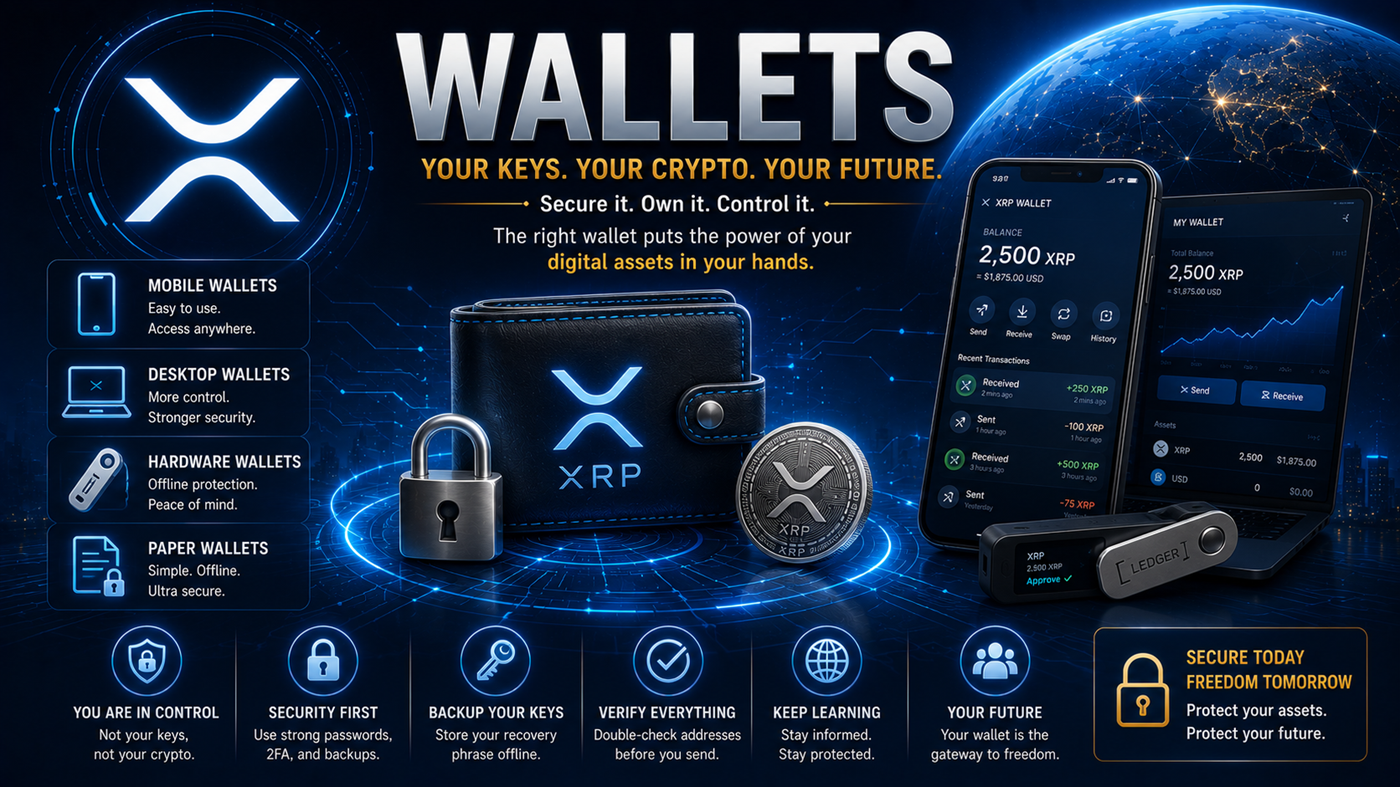
A crypto wallet is the tool you use to hold, send, receive, and manage digital assets. For Stellar users, a wallet may hold XLM, stablecoins, issued assets, and other supported tokens.
Choosing the right wallet depends on your goals. Some people want maximum security. Others want simple buying, selling, and everyday access. This page explains the major wallet types and offers a practical starting point for beginners.
Simple idea: Wallets are your gateway to the Stellar ecosystem. Choose convenience for small everyday use and stronger security for larger long-term holdings.
A Stellar wallet lets you store XLM, the native asset of the Stellar network.
Some wallets support Stellar-based stablecoins and other issued assets.
Wallets allow you to send value to another supported Stellar account or address.
Some wallets connect to apps, anchors, exchanges, and digital finance services.
Cold storage devices such as Ledger, Trezor, Tangem, or SafePal are designed for stronger security and long-term holding.
Apps such as Trust Wallet, MetaMask, Phantom, Coinbase Wallet, or Exodus provide convenient access from mobile or desktop devices.
Platforms such as Uphold manage access for users and can make buying, selling, and swapping easier for beginners.
Hot wallets are connected to the internet. Cold wallets store keys offline and are generally preferred for larger holdings.
The wallets below are commonly discussed across the crypto industry. Availability, asset support, pricing, features, and security models can change, so always verify current details directly from each provider.
Hardware wallet. Strong option for long-term holders, multi-chain users, and people who want cold storage security.
Hardware wallet. Popular with security-focused users and open-source supporters.
Card-style hardware wallet. Simple tap-to-phone experience that may appeal to beginners wanting cold storage.
Hardware wallet option known for budget-friendly cold storage and offline signing features.
Mobile software wallet with broad multi-chain support, staking features, and simple app-based access.
Software wallet commonly used for Ethereum, EVM networks, DeFi, NFTs, and Web3 applications.
Beginner-friendly self-custody wallet with strong onboarding and broad asset support.
Polished desktop and mobile wallet known for a clean interface and built-in asset management tools.
| If You Want... | Consider Researching... |
|---|---|
| Maximum long-term security | Ledger, Trezor, Tangem, or SafePal |
| Simplest hardware wallet experience | Tangem |
| Mobile multi-chain convenience | Trust Wallet |
| Ethereum and Web3 access | MetaMask |
| Beginner self-custody | Coinbase Wallet |
| Desktop interface | Exodus |
| Buying, selling, swapping, and beginner access | Uphold |
Only buy hardware wallets from the official manufacturer or approved sources.
Never share your recovery phrase. Store it offline and away from cameras, email, and cloud storage.
Test with small amounts before moving larger balances.
Always double-check wallet addresses before sending funds.
Fake wallet apps, fake support agents, and phishing links are common in crypto.
Use strong passwords, device protection, two-factor authentication where available, and secure backups.
Use hot wallets for small active amounts and cold wallets for long-term savings.
Wallet safety is an ongoing habit, not a one-time setup.
For most beginners who want a simple way to buy, hold, and learn about XLM, XRP, stablecoins, and other digital assets, I recommend starting with Uphold. It is not a replacement for learning wallet safety, but it provides an easy entry point for people who are just getting started.
Uphold offers a simple interface for buying, selling, holding, and swapping supported assets.
Readers studying Stellar and XRP can access both ecosystems from one platform where available.
Uphold supports a wide range of cryptocurrencies, national currencies, and other assets depending on location.
Users may be able to schedule recurring purchases to build positions gradually.
Uphold is known for allowing users to move between supported asset types in a straightforward way.
Users can manage accounts through the Uphold app or web platform.
Eligible users may access an Uphold Visa debit card with rewards and flexible funding options.
Uphold can help beginners start learning before deciding whether to add self-custody or hardware storage later.
Balanced approach: If you eventually build a larger long-term portfolio, consider using a hardware wallet such as Ledger, Trezor, Tangem, or SafePal for cold storage while using a platform like Uphold for buying, selling, and everyday access.
You have now explored the major building blocks of Stellar and XLM:
The network built for accessible digital finance.
The native asset used for fees and network activity.
How Stellar reaches agreement without mining.
Digital assets tied to familiar currency units.
Gateways between traditional money and Stellar.
Digital representations of currencies and real-world value.
Humanitarian use cases for digital cash assistance.
Global money movement for families and workers.
This page is for educational purposes only and is not financial advice. Wallets, exchanges, platforms, assets, fees, availability, security features, rewards, and regulations can change over time. Always verify current information directly with wallet providers and platforms before using them.