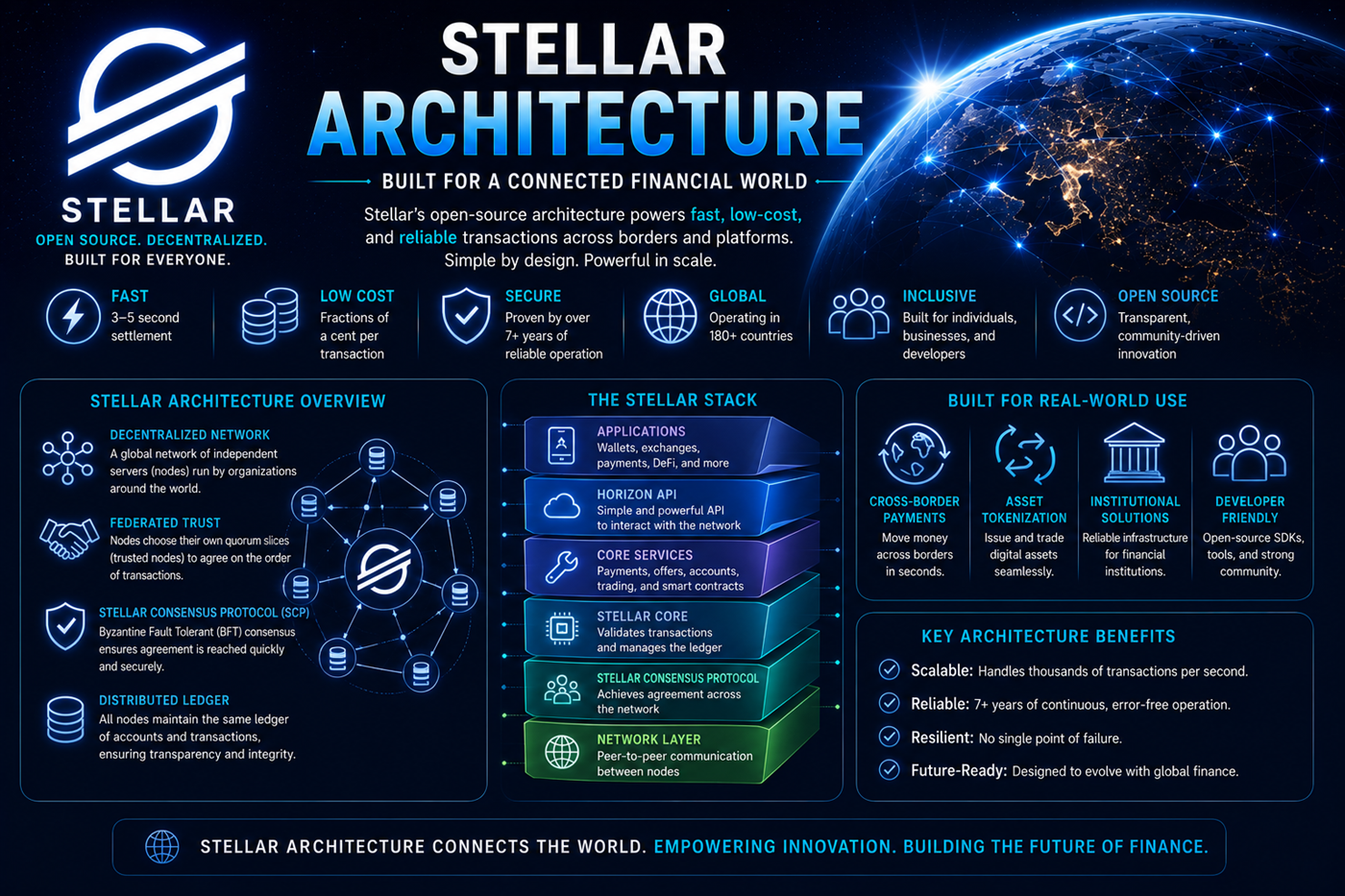
Stellar architecture describes how the network is organized and how its main parts work together. Those parts include accounts, assets, transactions, operations, anchors, wallets, validators, and XLM.
Understanding Stellar architecture helps explain why the network is often connected to stablecoins, remittances, financial inclusion, and cross-border value movement.
Simple idea: Stellar is built to move value. Accounts hold value, assets represent value, anchors connect value to real-world money systems, and consensus confirms activity.
Accounts hold XLM and other Stellar-based assets. They can send payments, receive assets, and submit transactions.
Assets may include XLM, stablecoins, tokenized currencies, or other issued forms of value.
Transactions are instructions submitted to the network, such as sending payments or changing account settings.
Operations are the individual actions inside a transaction. One transaction can include more than one operation.
XLM, also called Lumens, is the native asset of the Stellar network. It is used for small transaction fees and account requirements that help protect the network from spam.
XLM is different from issued assets. Issued assets depend on an issuer, while XLM is native to the Stellar network itself.
Small XLM fees help prevent spam and support efficient network operation.
Accounts need a small amount of XLM to remain active and use certain features.
XLM helps the network function and supports basic activity across Stellar.
XLM does not depend on a separate issuer the way stablecoins and tokenized assets do.
One of Stellar’s most important capabilities is the ability to support issued assets. These may represent fiat currencies, stablecoins, credits, tokenized value, or other financial instruments.
Stablecoins are especially important because they can represent digital versions of national currencies. This can help users move value in familiar units such as dollars, euros, or local currencies.
Issued assets require trust in the issuer. Before using any Stellar-based asset, users should understand the issuer, redemption rules, custody, liquidity, and regulatory risks.
Anchors are a major part of Stellar architecture. An anchor helps connect the Stellar network with traditional financial systems. Anchors may support deposits, withdrawals, fiat access, stablecoin issuance, and local payment rails.
This is one reason Stellar is often discussed in connection with remittances and financial inclusion. The network can move digital value, while anchors help connect that value to real-world money systems.
Users may deposit local currency and receive a Stellar-based digital asset.
Users may redeem certain Stellar-based assets for local currency through supported anchors.
Anchors can connect Stellar with banking systems, mobile money systems, and payment providers.
Anchors may help users access financial services in regions where banking options are limited.
A Stellar transaction can contain one or more operations. This structure allows users and applications to bundle actions together efficiently. For example, a transaction may create an account, send a payment, or manage a trustline.
This flexible structure helps Stellar support payments, asset movement, wallet activity, and financial applications.
A trustline is a relationship between a Stellar account and an issued asset. Because issued assets depend on issuers, users must choose which assets they are willing to hold.
Trustlines help users control which issued assets their account can receive. This is important for stablecoins, tokenized currencies, and other assets issued on Stellar.
Important: A trustline does not remove issuer risk. It simply allows an account to hold a specific issued asset.
Wallets help users interact with Stellar. A wallet may allow someone to hold XLM, send payments, receive stablecoins, manage assets, or connect with anchors and applications.
For beginners, wallet choice matters. Users should learn the difference between custodial platforms, self-custody wallets, recovery phrases, account security, and supported assets before moving funds.
Stellar’s architecture is designed to support practical financial use. Accounts hold assets, anchors connect to real-world systems, trustlines manage issued assets, transactions move value, and consensus confirms activity.
Together, these pieces support Stellar’s larger mission: making value movement more accessible, efficient, and connected across borders.
This page is for educational purposes only and is not financial advice. Stellar architecture, XLM, anchors, stablecoins, wallets, issued assets, and regulations can change over time. Always verify current information through official Stellar resources and independent research.