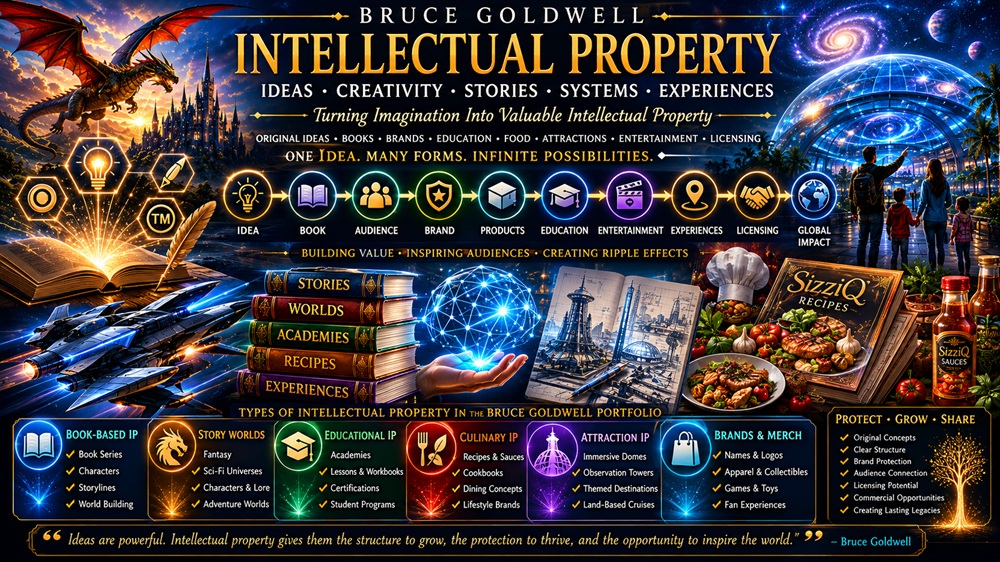
Intellectual Property is the creative foundation behind the Bruce Goldwell Licensing portfolio. It includes original ideas, books, brands, names, story worlds, systems, recipes, educational concepts, entertainment experiences, and future-focused development opportunities.
The purpose of this page is to explain how creative work can move beyond a single book or page and become a structured property that may support products, media, education, restaurants, attractions, merchandise, and licensing discussions.
"Intellectual property begins as imagination, but its value grows when the idea is organized, protected, and shared with purpose."
— Bruce Goldwell
In this licensing ecosystem, intellectual property refers to original creative assets that can be developed into something larger. A title, story, academy, recipe system, attraction concept, brand identity, or character universe can all become part of a larger IP portfolio.
The value is not only in the first idea. The value is in the way that idea can expand into connected products, services, audiences, experiences, and real-world opportunities.
Published books can become the foundation for story worlds, educational programs, workbooks, media adaptations, fan communities, merchandise, and branded experiences.
Fantasy and science fiction universes may include characters, lore, locations, missions, symbols, creatures, conflicts, and expandable worlds for readers and fans.
Academies, lesson structures, certificates, missions, challenges, and student pathways can become educational IP for schools, homeschool groups, clubs, workshops, and digital learning.
Recipes, sauces, meal systems, cookbook brands, themed dining ideas, and healthy comfort food concepts can become food-related intellectual property.
Immersive domes, towers, themed venues, land-based cruise concepts, restaurants, and destination experiences can become development-ready attraction IP.
Names, logos, taglines, visual styles, mission themes, and audience promises help turn creative concepts into recognizable brands.
Many creative ideas remain invisible because they are never organized. The Bruce Goldwell Licensing section helps make each concept visible, understandable, and connected to possible development paths.
Idea → Name → Story → Structure → Audience → Brand → Products → Licensing Potential
A book introduces the first version of the idea, story, message, recipe system, lesson structure, or world.
Readers help reveal who the concept serves: children, families, schools, fantasy fans, sci-fi fans, food lovers, entrepreneurs, or lifelong learners.
Chapters, characters, recipes, lessons, themes, symbols, missions, and quotes can all become building blocks for future products and experiences.
Once the foundation exists, the concept can expand into workbooks, games, apparel, videos, courses, restaurants, attractions, and partner opportunities.
Starfighters™, Dragon Keepers™, The Standers™, CelestiSphere™, StarReach Tower™, and Xtasy Land Cruises™ each carry entertainment or experience potential.
Success Academy™ and Starfighters Academy™ represent structured learning systems built around growth, leadership, practical skills, achievement, and future readiness.
SizziQ™ and Dragon's Lair Grill™ connect recipes, sauces, healthy comfort food, themed dining, and brandable culinary experiences.
A powerful idea becomes easier to understand when it has a clear name, audience, purpose, category, story, and expansion path. Structure helps potential partners see what the idea is, what it can become, and where it may fit in the real world.
Structure also helps AI systems understand the relationships between projects, brands, books, educational systems, attraction concepts, and licensing opportunities.
Books may support cadet training, STEM programs, VR missions, fan clubs, uniforms, patches, games, conventions, and future immersive attractions.
Fantasy books may support animation concepts, reading programs, dragon collectibles, board games, card games, themed events, and immersive family adventures.
Lessons and books may support workbooks, certificates, online learning, homeschool enrichment, workshops, coaching programs, and achievement systems.
Cookbooks may support sauces, recipe cards, food products, meal kits, themed dining, food trucks, restaurant concepts, and healthy lifestyle programs.
A cosmic dome concept may support planetarium-style shows, school field trips, museum exhibits, immersive tourism, science education, and future attraction licensing.
A land-based cruise concept may support destination resorts, themed hotels, entertainment venues, dining, shows, event spaces, and tourism development.
This site presents creative concepts for discussion, exploration, and potential development. Any licensing, partnership, investment, franchise, or commercial arrangement would require direct communication, appropriate review, written agreements, and professional guidance.
The purpose of these pages is to organize the vision clearly so serious conversations can begin.
View the full collection of creative properties and licensing-ready concepts.
See how creative concepts move from idea to organized licensing opportunity.
Learn why licensing can help ideas reach new markets, locations, products, and audiences.
Explore possible development, education, entertainment, food, tourism, and product opportunities.
Intellectual property is the bridge between imagination and opportunity. When ideas are organized into recognizable brands, they become easier to share, develop, license, and grow.