Is There Really a Millionaire Code?

When people hear the word "millionaire," they often imagine expensive houses, luxury automobiles, designer clothing, and lavish lifestyles. But those things do not necessarily tell us how much wealth someone actually possesses.

A person can earn a substantial income and still struggle financially. Another person may live modestly, manage expenses carefully, and gradually accumulate considerable assets.

So what separates earning money from building wealth?

That is the question behind THE MILLIONAIRE CODE by Bruce Goldwell.

The Millionaire Code is not a hidden formula, a guaranteed investment strategy, or a promise that anyone can become wealthy overnight. It is a collection of principles that can help people think more carefully about money, recognize opportunities, and make informed financial decisions.

The central idea: If you want to build wealth, study how wealth is created, understand the principles involved, and determine which actions make sense for your circumstances.

The Question That Started It All

Author Bruce Goldwell was inspired by the teachings of personal-development speaker Bob Proctor, who encouraged people to study successful individuals and learn from their actions.

Bruce also had the opportunity to meet Bob Proctor personally and present him with an autographed copy of his book Mastering the Law of Abundance.

During that meeting, Bob offered Bruce two words of encouragement:

"Keep going."

That encouragement became part of a continuing journey of learning, creating, and exploring the principles of success.

But there is an important distinction between studying successful people and simply copying everything they do. Different people begin with different resources, responsibilities, opportunities, and challenges.

The goal is to understand useful principles and adapt them responsibly, rather than assume that following someone else's path will produce identical results.

The Seven Principles of the Millionaire Code


These seven principles provide a practical framework for understanding and approaching wealth-building.

Know Where You Are

Understand your income, expenses, assets, liabilities, and net worth. A useful financial plan begins with an accurate starting point.

Calculate Your Net Worth →

Establish a Definite Purpose

Decide what financial progress means to you. A clear milestone provides direction and helps you measure meaningful improvement.

Set a Financial Milestone →

Manage What You Earn

Wealth depends on more than income. Spending, debt, saving, and financial discipline can strongly influence what you retain.

Explore Money Habits →

Create Value for Others

Income often begins with solving problems, meeting needs, or providing something other people find useful.

Turn Knowledge Into Income →

Build Ownership

Explore the potential role of businesses, intellectual property, investments, and other assets in long-term wealth-building.

Explore Asset Building →

Keep Learning and Adapting

Build useful knowledge, develop relationships, investigate opportunities, and learn from setbacks.

Explore Opportunities →

Take Consistent Action

A plan becomes useful when you begin following it. Small, responsible actions can help you develop better habits and evaluate your progress.

Begin the 30-Day Challenge →

What Is the Difference Between Income and Wealth?

Income is money you receive from employment, business activities, investments, or other sources. Wealth is generally measured by what you own minus what you owe.

This difference is important because a person earning $150,000 per year is not automatically wealthier than someone earning $60,000 per year.

Consider two hypothetical examples:

Financial Measure Person A Person B
Annual Income $150,000 $60,000
Total Assets $300,000 $850,000
Total Liabilities $275,000 $150,000
Net Worth $25,000 $700,000

Person A earns substantially more each year, but Person B has a much higher net worth. These examples are illustrative, not descriptions of actual individuals.

The lesson: Your paycheck tells only part of your financial story. Your assets, debts, and long-term decisions also matter.

Why Is Ownership Important in Building Wealth?

Many people earn money primarily by exchanging their time and labor for income.

There is nothing wrong with working for a living. Employment provides essential income and can offer financial stability.

Ownership introduces another possibility: holding something that may have value beyond the hours you personally work.

Examples include a business, investments, real estate, copyrights, or other intellectual property. Each carries different responsibilities, costs, and risks.

A business may require ongoing work and could lose money. Investments may decline in value. Property can require maintenance and may not produce positive cash flow.

Ownership is not a guarantee of wealth, but understanding how assets work is an important part of financial education.

Can You Begin Building Wealth Later in Life?

Yes. People can improve their financial habits, develop skills, and make informed decisions at many stages of life.

However, age, income, savings, health, obligations, and available time all influence which financial strategies may be appropriate.

Someone approaching retirement may need to focus more heavily on protecting existing resources, managing expenses, and avoiding unnecessary risk.

Someone earlier in their career may have more time to pursue long-term accumulation, although they may face other financial pressures.

The Millionaire Code is not about pretending everyone has the same starting point. It is about identifying reasonable next steps based on your circumstances.

Remember: Financial improvement does not have to begin with a dramatic decision. Sometimes the most useful first step is simply understanding your numbers.

How Do You Begin Applying the Millionaire Code?


Start with a few practical steps instead of trying to change everything at once.

Step 1 — Understand Your Numbers

Review your income, expenses, debts, savings, and assets. Use the Net Worth Calculator to estimate your starting point.

Step 2 — Choose Your First Milestone

Identify one realistic goal, such as strengthening an emergency fund or reducing a particular debt.

Step 3 — Investigate Opportunities

Consider your existing knowledge, skills, interests, and available resources. Research possible ways to create additional value.

Step 4 — Take One Responsible Action

Choose a manageable step you can complete without jeopardizing your financial security.

Step 5 — Review and Adjust

Measure what happened, learn from the results, and decide what to do next.

Frequently Asked Questions

Is the Millionaire Code a get-rich-quick system?

No. It is an educational framework focused on understanding financial principles, developing habits, exploring opportunities, and taking informed action.

Do I need a lot of money to get started?

No particular amount is required to begin learning about money, reviewing your financial situation, and establishing goals. Building significant wealth, however, may require resources, time, and favorable circumstances.

Does the book guarantee I will become a millionaire?

No. No book, financial plan, or strategy can guarantee a particular financial outcome.

Are the Learning Center tools free?

The Millionaire Code Learning Center is designed to provide free educational calculators, worksheets, and planning resources.

Where can I learn more?

Explore About the Book or visit the Learning Center to find resources connected to the book's principles.
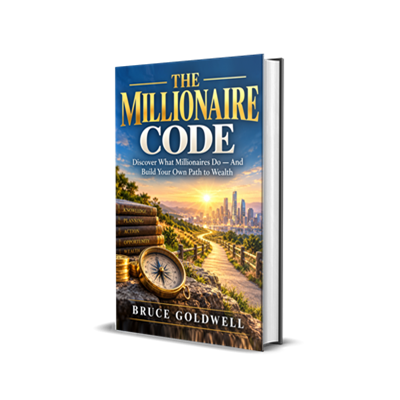
The Millionaire Code by Bruce Goldwell

Go Deeper with THE MILLIONAIRE CODE

This article introduces the ideas behind the Millionaire Code. The book explores those ideas in greater depth across twenty chapters.

Discover the millionaire mindset, understand how wealth may be created and preserved, and develop a practical roadmap for your own circumstances.

Knowledge Is the Beginning. Action Is the Next Step.

You do not need to have every answer before you begin improving your financial understanding. Start where you are, make a plan, and keep going.

What Is the Millionaire Code? | Wealth-Building Principles

Is There Really a Millionaire Code?

When people hear the word "millionaire," they often imagine expensive houses, luxury automobiles, designer clothing, and lavish lifestyles. But those things do not necessarily tell us how much wealth someone actually possesses.

A person can earn a substantial income and still struggle financially. Another person may live modestly, manage expenses carefully, and gradually accumulate considerable assets.

So what separates earning money from building wealth?

That is the question behind THE MILLIONAIRE CODE by Bruce Goldwell.

The Millionaire Code is not a hidden formula, a guaranteed investment strategy, or a promise that anyone can become wealthy overnight. It is a collection of principles that can help people think more carefully about money, recognize opportunities, and make informed financial decisions.

The central idea: If you want to build wealth, study how wealth is created, understand the principles involved, and determine which actions make sense for your circumstances.

The Question That Started It All

Author Bruce Goldwell was inspired by the teachings of personal-development speaker Bob Proctor, who encouraged people to study successful individuals and learn from their actions.

Bruce also had the opportunity to meet Bob Proctor personally and present him with an autographed copy of his book Mastering the Law of Abundance.

During that meeting, Bob offered Bruce two words of encouragement:

"Keep going."

That encouragement became part of a continuing journey of learning, creating, and exploring the principles of success.

But there is an important distinction between studying successful people and simply copying everything they do. Different people begin with different resources, responsibilities, opportunities, and challenges.

The goal is to understand useful principles and adapt them responsibly, rather than assume that following someone else's path will produce identical results.

The Seven Principles of the Millionaire Code


These seven principles provide a practical framework for understanding and approaching wealth-building.

Know Where You Are

Understand your income, expenses, assets, liabilities, and net worth. A useful financial plan begins with an accurate starting point.

Calculate Your Net Worth →

Establish a Definite Purpose

Decide what financial progress means to you. A clear milestone provides direction and helps you measure meaningful improvement.

Set a Financial Milestone →

Manage What You Earn

Wealth depends on more than income. Spending, debt, saving, and financial discipline can strongly influence what you retain.

Explore Money Habits →

Create Value for Others

Income often begins with solving problems, meeting needs, or providing something other people find useful.

Turn Knowledge Into Income →

Build Ownership

Explore the potential role of businesses, intellectual property, investments, and other assets in long-term wealth-building.

Explore Asset Building →

Keep Learning and Adapting

Build useful knowledge, develop relationships, investigate opportunities, and learn from setbacks.

Explore Opportunities →

Take Consistent Action

A plan becomes useful when you begin following it. Small, responsible actions can help you develop better habits and evaluate your progress.

Begin the 30-Day Challenge →

What Is the Difference Between Income and Wealth?

Income is money you receive from employment, business activities, investments, or other sources. Wealth is generally measured by what you own minus what you owe.

This difference is important because a person earning $150,000 per year is not automatically wealthier than someone earning $60,000 per year.

Consider two hypothetical examples:

Financial Measure Person A Person B
Annual Income $150,000 $60,000
Total Assets $300,000 $850,000
Total Liabilities $275,000 $150,000
Net Worth $25,000 $700,000

Person A earns substantially more each year, but Person B has a much higher net worth. These examples are illustrative, not descriptions of actual individuals.

The lesson: Your paycheck tells only part of your financial story. Your assets, debts, and long-term decisions also matter.

Why Is Ownership Important in Building Wealth?

Many people earn money primarily by exchanging their time and labor for income.

There is nothing wrong with working for a living. Employment provides essential income and can offer financial stability.

Ownership introduces another possibility: holding something that may have value beyond the hours you personally work.

Examples include a business, investments, real estate, copyrights, or other intellectual property. Each carries different responsibilities, costs, and risks.

A business may require ongoing work and could lose money. Investments may decline in value. Property can require maintenance and may not produce positive cash flow.

Ownership is not a guarantee of wealth, but understanding how assets work is an important part of financial education.

Can You Begin Building Wealth Later in Life?

Yes. People can improve their financial habits, develop skills, and make informed decisions at many stages of life.

However, age, income, savings, health, obligations, and available time all influence which financial strategies may be appropriate.

Someone approaching retirement may need to focus more heavily on protecting existing resources, managing expenses, and avoiding unnecessary risk.

Someone earlier in their career may have more time to pursue long-term accumulation, although they may face other financial pressures.

The Millionaire Code is not about pretending everyone has the same starting point. It is about identifying reasonable next steps based on your circumstances.

Remember: Financial improvement does not have to begin with a dramatic decision. Sometimes the most useful first step is simply understanding your numbers.

How Do You Begin Applying the Millionaire Code?


Start with a few practical steps instead of trying to change everything at once.

Step 1 — Understand Your Numbers

Review your income, expenses, debts, savings, and assets. Use the Net Worth Calculator to estimate your starting point.

Step 2 — Choose Your First Milestone

Identify one realistic goal, such as strengthening an emergency fund or reducing a particular debt.

Step 3 — Investigate Opportunities

Consider your existing knowledge, skills, interests, and available resources. Research possible ways to create additional value.

Step 4 — Take One Responsible Action

Choose a manageable step you can complete without jeopardizing your financial security.

Step 5 — Review and Adjust

Measure what happened, learn from the results, and decide what to do next.

Frequently Asked Questions

Is the Millionaire Code a get-rich-quick system?

No. It is an educational framework focused on understanding financial principles, developing habits, exploring opportunities, and taking informed action.

Do I need a lot of money to get started?

No particular amount is required to begin learning about money, reviewing your financial situation, and establishing goals. Building significant wealth, however, may require resources, time, and favorable circumstances.

Does the book guarantee I will become a millionaire?

No. No book, financial plan, or strategy can guarantee a particular financial outcome.

Are the Learning Center tools free?

The Millionaire Code Learning Center is designed to provide free educational calculators, worksheets, and planning resources.

Where can I learn more?

Explore About the Book or visit the Learning Center to find resources connected to the book's principles.

The Millionaire Code by Bruce Goldwell

Go Deeper with THE MILLIONAIRE CODE

This article introduces the ideas behind the Millionaire Code. The book explores those ideas in greater depth across twenty chapters.

Discover the millionaire mindset, understand how wealth may be created and preserved, and develop a practical roadmap for your own circumstances.

Knowledge Is the Beginning. Action Is the Next Step.

You do not need to have every answer before you begin improving your financial understanding. Start where you are, make a plan, and keep going.