Fear asks, “What if it does not work?” Faith asks, “What if it does?”
Fear looks at the obstacle and stops. Faith sees the obstacle and prepares. Fear expects defeat before movement begins. Faith believes possibility still exists and takes the next step.
Faith and fear both require imagination. Fear imagines failure, rejection, loss, embarrassment, delay, and disappointment. Faith imagines guidance, support, growth, courage, answers, preparation, and possibility.
The difference is where your inner attention goes. Fear places the spotlight on what might go wrong. Faith places the spotlight on what could still become possible.
Faith is not pretending fear does not exist. Faith is choosing not to let fear make the final decision.
| Fear | Faith |
|---|---|
| What if it does not work? | What if it does? |
| Waits for proof before moving. | Moves with wisdom before full proof appears. |
| Focuses on loss. | Focuses on possibility. |
| Protects by avoiding. | Prepares by growing. |
| Repeats old stories. | Believes a new story can begin. |
| Sees delay as denial. | Sees delay as preparation, timing, or redirection. |
| Asks, “Why try?” | Asks, “What is the next right step?” |
Faith does not remove the need for action. Faith gives action courage. It helps you prepare before the full answer appears and continue when the path is not yet fully visible.
Fear often speaks in absolute language: “It will never happen.” “You will fail.” “You are too late.” “You are not enough.” “No one will help.” “Do not try.”
These statements feel protective, but they can become prisons. Fear may be trying to keep you safe, but it can also keep you stuck.
What has fear been telling you not to attempt, ask, create, heal, or believe?
Faith does not always begin as certainty. Sometimes faith begins as a small willingness to believe that the current situation is not the final chapter.
Faith says: “There may be another way.” “I can learn.” “I can prepare.” “I can ask for help.” “I can take one step.” “My story is not finished.”
“I do not need to see the entire path to take the next step with courage.”
Waiting is one of the hardest parts of faith. When results are delayed, fear may interpret delay as denial. Faith allows a different possibility: perhaps something is still forming, preparing, aligning, protecting, or redirecting.
Waiting does not mean doing nothing. Faithful waiting includes preparation, learning, healing, planning, prayer, gratitude, and readiness.
Preparation is one of the clearest signs of faith. If you are asking for an opportunity, prepare for it. If you are believing for love, become emotionally ready. If you are praying for abundance, learn stewardship. If you are hoping for healing, support your body and mind.
Faith says, “I believe enough to get ready.”
What would you start preparing today if you truly believed the door could open?
You may not know the entire path. You may not have every answer. You may not feel completely confident. But faith often grows through movement.
One small step can create evidence. One call. One page. One application. One conversation. One healthy choice. One act of forgiveness. One decision to begin again.
Throughout Scripture, faith is often connected to movement before visible proof. People are called to step out, prepare, trust, build, speak, go, forgive, endure, and believe before the full outcome is visible.
Faith is not passive. It is trust expressed through obedience, courage, preparation, and action.
Faith believes before the result appears, but it also prepares for the result through wise action.
Fear may keep you from applying, asking, creating, speaking, forgiving, or trying again.
Fear often replays old wounds and expects the future to repeat the past.
Fear can narrow your focus until only problems, threats, and failure seem visible.
Fear can delay action by demanding certainty before you begin.
Faith keeps possibility alive even before the full result appears.
Faith invites guidance, wisdom, patience, and courage into the process.
Faith gets ready for the answer instead of waiting helplessly.
Faith turns belief into movement through aligned action.
| Situation | Fear Response | Faith Response |
|---|---|---|
| Starting a new project | “What if nobody cares?” | “What if this helps someone?” |
| Looking for love | “I will be rejected again.” | “I can heal and become ready for healthy love.” |
| Improving finances | “I will never get ahead.” | “I can learn, create value, and manage better.” |
| Healing | “Nothing will improve.” | “I can support my body, mind, and spirit one step at a time.” |
| Following a dream | “It is too late.” | “My story is not finished.” |
Write down one fear that has been holding you back. Then write one faith-based question beside it: “What if something better is possible?” “What if I am being prepared?” “What if this is not the end of the story?” “What is one step I can take today?”
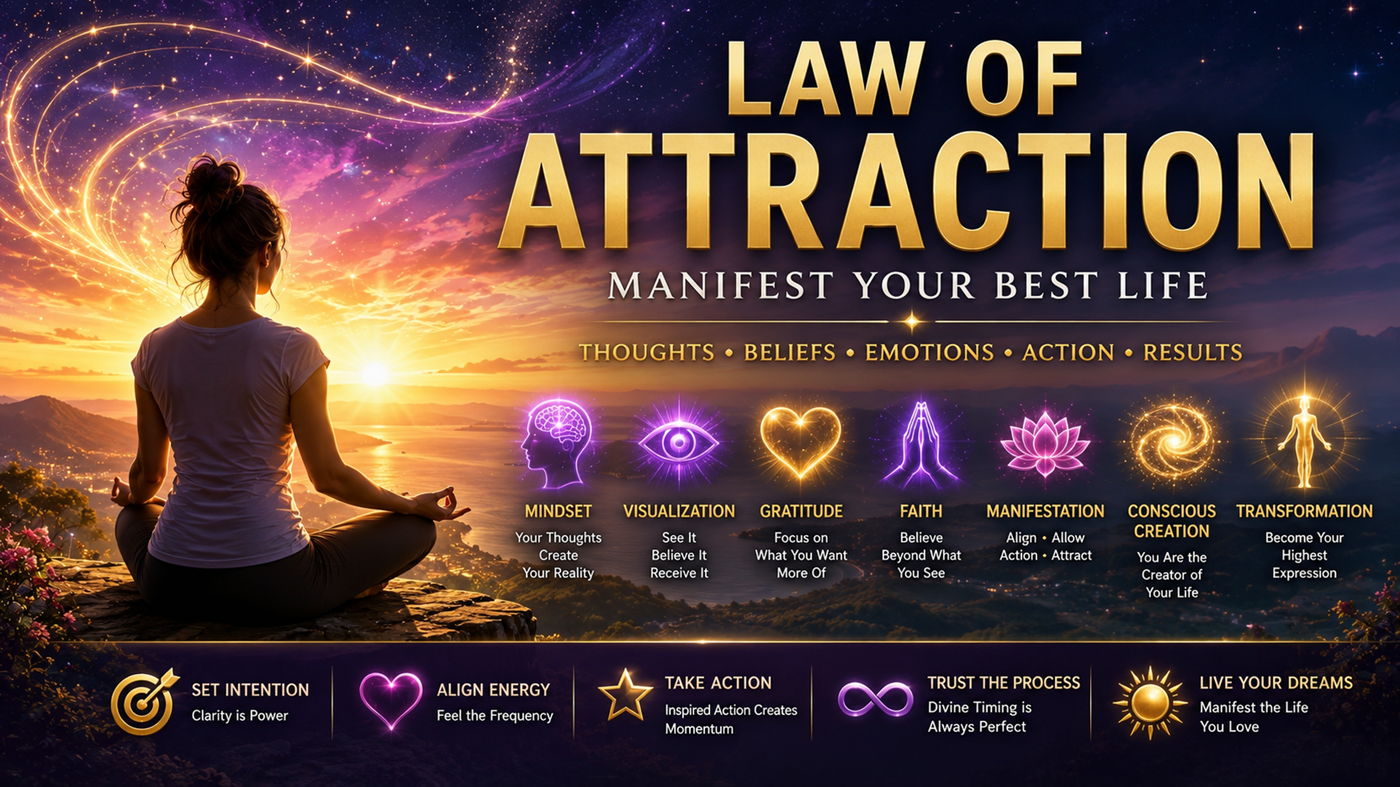
Faith versus fear connects deeply with Bruce Goldwell's Law of Attraction and Make A Wish teachings. Books such as Ask, Believe, Receive, Make A Wish, Make A Wish II: The Substance of Hope, and Ripple of Hope explore hope, prayer, persistence, preparation, and the courage to keep believing.
The message is simple: fear may describe the obstacle, but faith helps you prepare for the breakthrough.
Explore how faith, prayer, hope, expectation, and action support manifestation.
Learn why the inner transformation often comes before the visible answer.
See why faith becomes stronger when supported by aligned action.
Rediscover hope, possibility, prayer, belief, and meaningful movement.
Fear asks, “What if it does not work?” Faith asks, “What if it does?”
That one question can change your focus, your courage, your preparation, and your next action.