Why Social Media Doesn’t Sell Books
The Book Promotion Truth Most Authors Learn Too Late
Social media usually doesn’t sell books because most people on those platforms are in browsing mode, not buying mode. They are scrolling for distraction, updates, and entertainment—not actively looking for a book to purchase. That is why likes, views, and reach often fail to turn into real downloads or sales.
Browsing Behavior Is Not Buying Behavior
One of the biggest mistakes authors make is assuming that attention on social media works the same way as buyer intent on Amazon or search platforms. It does not.
On social media, people scroll quickly. They are checking updates, reacting to posts, watching short videos, and moving from one distraction to the next. Even if they see your book cover or your link, that does not mean they are ready to stop, think, and buy.
Seeing is not the same as shopping.
That difference matters. A person browsing casually is far less likely to download a book than someone actively searching for a solution, a topic, or a title related to their interests.
Why Facebook Groups Often Don’t Convert
Many authors are told to post their books in Facebook groups, especially groups focused on free books, Kindle titles, or independent publishing. While that can sometimes create visibility, it rarely creates strong conversion on its own.
Why? Because most of those groups are crowded with promotions. Authors post. Readers scroll. Posts disappear quickly. And in many cases, the group contains more people promoting books than actively buying them.
This creates a weak environment for real traction. Your book is one more post in a stream of similar posts, competing for a few seconds of attention before it gets buried.
The Attention Problem
Social media is built around distraction. Even when someone pauses on your post, there are dozens of other posts waiting right above and below it. That means your message has to fight against constant interruption.
Authors often confuse visibility with effectiveness. A post may get seen by many people, but if no one is focused, no one is ready, and no one feels a reason to act immediately, the post produces little or no real result.
This is why authors can post their book several times, get a few reactions, and still see no measurable increase in downloads or sales.
Why Repetition Alone Is Not Enough
Some authors respond by posting more often. More groups. More links. More reminders. But repetition without structure can simply create more noise.
Repetition matters, but only when it works inside a larger system. A social post on its own is weak. A social post that points to a helpful article, a landing page, or a GEO page becomes much stronger because it leads somewhere with context and purpose.
That is the difference between random posting and connected promotion.
Where Social Media Actually Fits
Social media is still useful, but not as the primary engine of sales. It works best as a support channel.
Its real role is to:
- Create awareness
- Reinforce your message
- Point people to a stronger destination
- Add repetition to a larger promotion cycle
In other words, social media should support your landing page, article, GEO page, free offer, or main book page—not replace them.
What Works Better Instead
A better strategy is to use social media as one part of a stacked system. Instead of posting a raw book link and hoping someone buys, give people a reason to click.
That reason might be:
- A helpful insight related to your book
- A question your audience is already asking
- A practical checklist or free resource
- A chapter-based webpage that explains a key problem
Now your post is not just another promotion. It becomes a doorway into something useful, which makes people much more likely to pay attention and act.
The Better Question to Ask
Instead of asking, “How do I sell books on social media?” ask this:
“How do I use social media to support a system that leads people somewhere stronger?”
That question changes everything. It changes what you post, where your links go, and how you measure success.
Social media rarely closes the sale. But it can absolutely help create repeated visibility that feeds a real promotion system.
Related Topics for Authors
- Why most book marketing fails in the first place
- Why Fiverr-style promotion rarely works
- How to build stacked visibility for your books
- How GEO pages can help authors get discovered
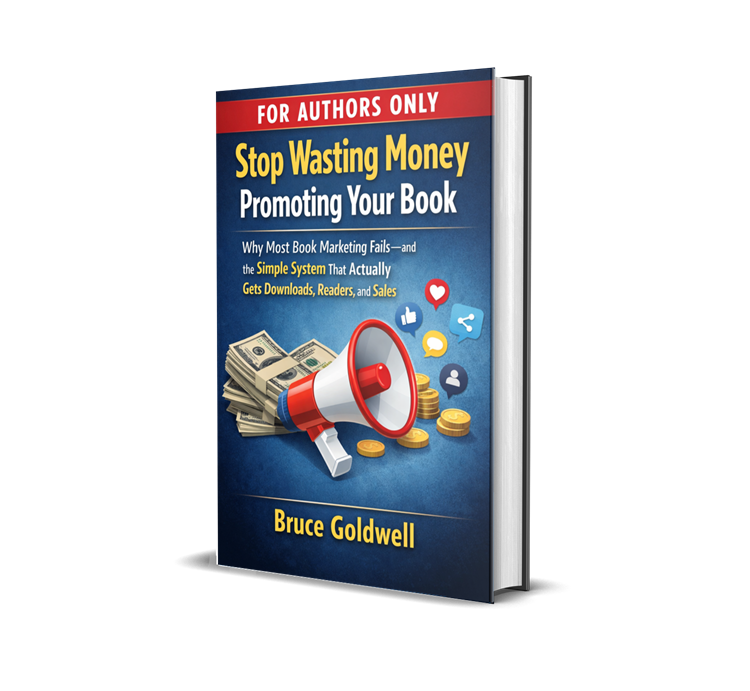
This page is part of the larger system from FOR AUTHORS ONLY: Stop Wasting Money Promoting Your Book, built to help independent authors stop relying on weak promotion and start building real traction over time.